

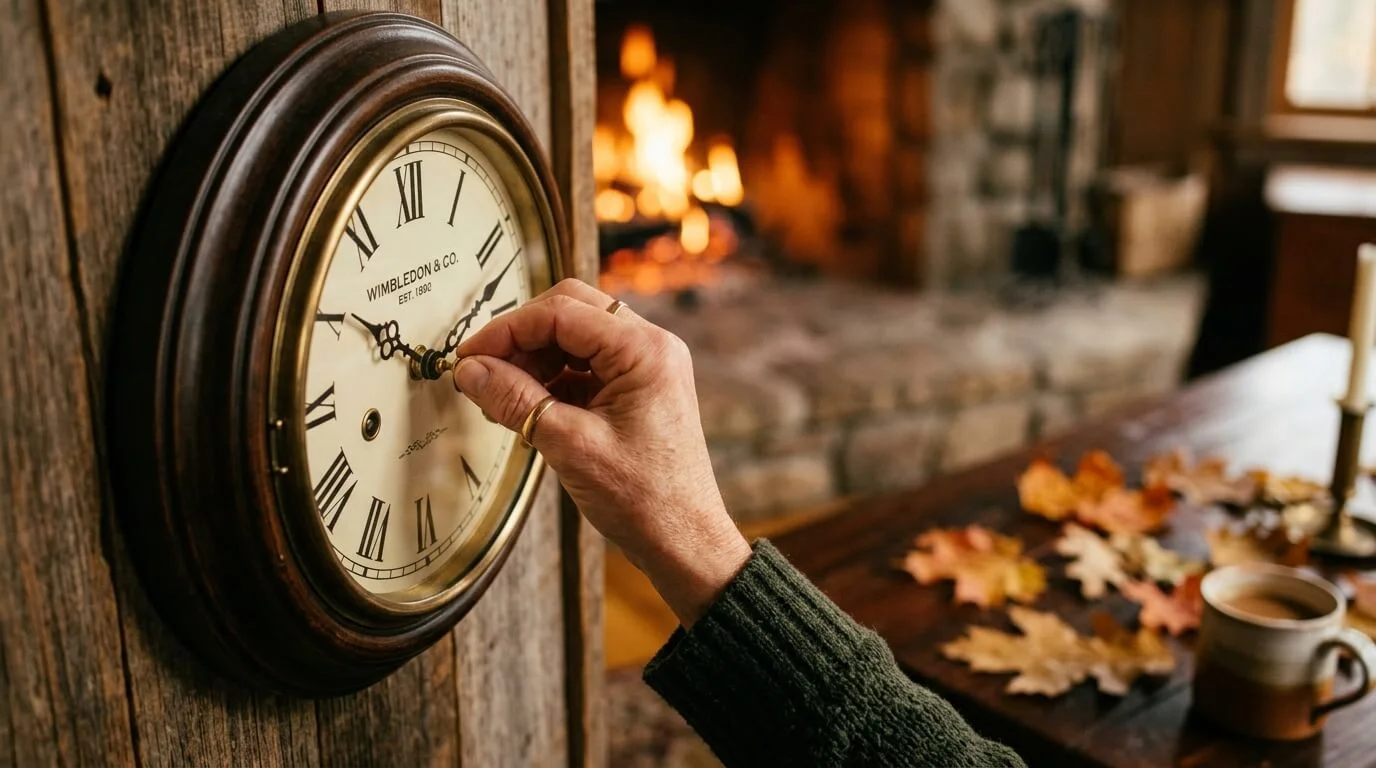

Twice each year, millions of people ask the same question: when do the clocks go back? The seasonal time change affects our sleep, work schedules, travel plans, and even our mood. While many people remember the saying “spring forward, fall back,” the exact dates and reasons behind the clock change can still be confusing.
Think of daylight saving time like adjusting the curtains in your home. You are not changing the amount of sunlight available—you are simply deciding how best to use it. By shifting the clock, societies aim to make better use of daylight during different seasons.
In this guide, we’ll explore everything you need to know about the autumn clock change, including when it happens, why it exists, its benefits and drawbacks, and how to prepare for it.
1. Introduction to Clock Changes
Every year, people in many parts of the world adjust their clocks twice. One adjustment adds an hour of daylight in the evening during warmer months, while the other returns the clock to standard time during autumn.
Although smartphones and computers usually update automatically, wall clocks, kitchen appliances, and watches often need to be adjusted manually.
Understanding why this happens makes the process much less confusing.
2. When Do the Clocks Go Back?
The exact date depends on where you live.
United Kingdom and Europe
The clocks go back at 2:00 a.m. on the last Sunday in October. At that moment, the clocks move back one hour to 1:00 a.m.
This means you gain one extra hour of sleep overnight.
United States and Canada
Most regions change back to standard time at 2:00 a.m. on the first Sunday in November.
Australia and Other Southern Hemisphere Countries
Some parts of Australia observe daylight saving time, but because seasons are opposite, their clock changes occur at different times of the year.
Not every country follows daylight saving time, and some have stopped using it altogether.

3. Understanding Daylight Saving Time
Daylight Saving Time (DST) is the practice of moving clocks forward during warmer months to extend evening daylight.
Instead of the sun rising and setting earlier, the clock itself changes to make better use of natural daylight.
The cycle works like this:
- Spring: Clocks move forward one hour.
- Autumn: Clocks move back one hour.
The goal is to align waking hours with daylight.
4. Why Do We Change the Clocks?
The idea dates back more than a century.
Making Better Use of Daylight
Longer daylight in the evening allows people to spend more time outdoors after work or school.
Energy Conservation
Historically, governments believed extra evening daylight reduced electricity usage because people relied less on artificial lighting.
Economic Benefits
Retailers, restaurants, and tourist attractions often benefit from lighter evenings, encouraging more shopping and recreational activities.
Historical Reasons
Many countries expanded daylight saving during wartime to conserve fuel and maximize productivity.
5. Which Countries Change Their Clocks?
Not every nation observes daylight saving time.
Countries That Commonly Observe It
- United Kingdom
- Most European countries
- United States (most states)
- Canada (most provinces)
- New Zealand
- Parts of Australia
Countries That Do Not
Many nations near the equator do not change their clocks because daylight hours remain fairly consistent throughout the year.
Others have abolished daylight saving after deciding that the benefits no longer outweighed the inconvenience.

6. Benefits of Moving the Clocks Back
An Extra Hour of Sleep
One of the biggest advantages is gaining an extra hour overnight.
Many people welcome this opportunity to catch up on rest.
Brighter Mornings
Earlier sunrise improves visibility for morning commuters, students, and workers.
Improved Road Safety
Better daylight during morning rush hour may reduce certain types of traffic accidents.
Support for Outdoor Activities
Even though evenings become darker, the return to standard time aligns daylight more closely with typical morning routines.
7. Drawbacks and Common Criticisms
Despite its advantages, many people question whether daylight saving time remains necessary.
Sleep Disruption
Even a one-hour change can interrupt sleeping patterns.
Some individuals need several days to adjust.
Health Effects
Research suggests that sudden changes to sleep schedules may temporarily affect mood, concentration, and overall well-being.
Confusion
International meetings, travel schedules, and online events can become confusing when different countries change clocks on different dates.
Questionable Energy Savings
Modern studies suggest energy savings are often much smaller than originally expected because people now use electricity in different ways than they did decades ago.
8. How the Time Change Affects Your Body
Our bodies follow an internal biological clock known as the circadian rhythm.
Even a small time adjustment can influence:
- Sleep quality
- Alertness
- Mood
- Appetite
- Energy levels
Although moving the clocks back is generally easier than moving them forward, some people still notice temporary changes.
Children, older adults, and shift workers may experience the greatest disruption.
9. Practical Tips for Adjusting
Fortunately, adapting to the clock change is usually simple.
Go to Bed Slightly Earlier
A few days before the change, adjust your bedtime by 15 to 20 minutes.
Get Morning Sunlight
Natural light helps reset your body’s internal clock.
Maintain a Routine
Try to wake up and eat meals at consistent times.
Limit Late-Night Screen Time
Blue light from electronic devices can interfere with sleep.
Stay Active
Regular exercise supports better sleep and helps your body adapt more quickly.
10. Impact on Travel, Business, and Technology
Travel
Always double-check flight, train, and bus schedules around the time change.
International travel can become especially confusing.
Business
Companies operating across multiple time zones must coordinate meetings carefully.
Technology
Fortunately, most modern devices update automatically.
However, remember to manually adjust:
- Wall clocks
- Oven clocks
- Microwave displays
- Analog watches
- Car clocks (depending on the model)
11. Will Clock Changes Ever End?
The debate over daylight saving time continues.
Some governments argue that keeping one consistent time throughout the year would reduce confusion and improve public health.
Others believe seasonal clock changes still provide economic and social benefits.
Several countries have already eliminated daylight saving time, while others continue to review the policy.
For now, many regions still observe the twice-yearly clock adjustment.
12. Common Myths About Clock Changes
Myth 1: Everyone Changes Their Clocks
False. Many countries never observe daylight saving time.
Myth 2: Farmers Created Daylight Saving Time
Although commonly believed, farmers were often among those who opposed the practice because livestock follow natural daylight rather than the clock.
Myth 3: It Saves Huge Amounts of Energy
Today’s evidence suggests the savings are generally modest and vary by region.
Myth 4: The Time Change Is the Same Worldwide
Different countries follow different schedules, and many do not participate at all.
Myth 5: It Has No Health Impact
Even a one-hour change can temporarily affect sleep, alertness, and daily routines for some people.
Conclusion
Knowing when the clocks go back helps you prepare for one of the year’s most familiar seasonal changes. In most of Europe, the clocks move back by one hour on the last Sunday in October, while much of North America follows on the first Sunday in November.
Although daylight saving time remains a topic of debate, understanding its purpose and planning ahead can make the transition much smoother. By adjusting your routine gradually, getting enough morning sunlight, and checking travel schedules, you can take advantage of the extra hour and minimize any disruption. Whether future governments keep or abolish the practice, being informed ensures you’re never caught off guard when the clocks change.
Frequently Asked Questions (FAQs)
1. When do the clocks go back each year?
In most European countries, clocks go back on the last Sunday in October, while most of the United States and Canada change on the first Sunday in November.
2. Do we gain or lose an hour when the clocks go back?
You gain one hour, as the clocks are set back by 60 minutes, giving you an extra hour overnight.
3. Why do some countries not change their clocks?
Many countries near the equator experience little seasonal variation in daylight, making clock changes unnecessary. Others have discontinued the practice after reviewing its costs and benefits.
4. Does the clock change affect sleep?
Yes. Even though the autumn change is generally easier to adjust to than the spring change, some people may experience temporary disruptions to their sleep and daily routine.
5. How can I prepare for the clock change?
Gradually adjust your bedtime, get plenty of morning sunlight, maintain a consistent routine, reduce screen time before bed, and remember to update any clocks that do not change automatically.
