

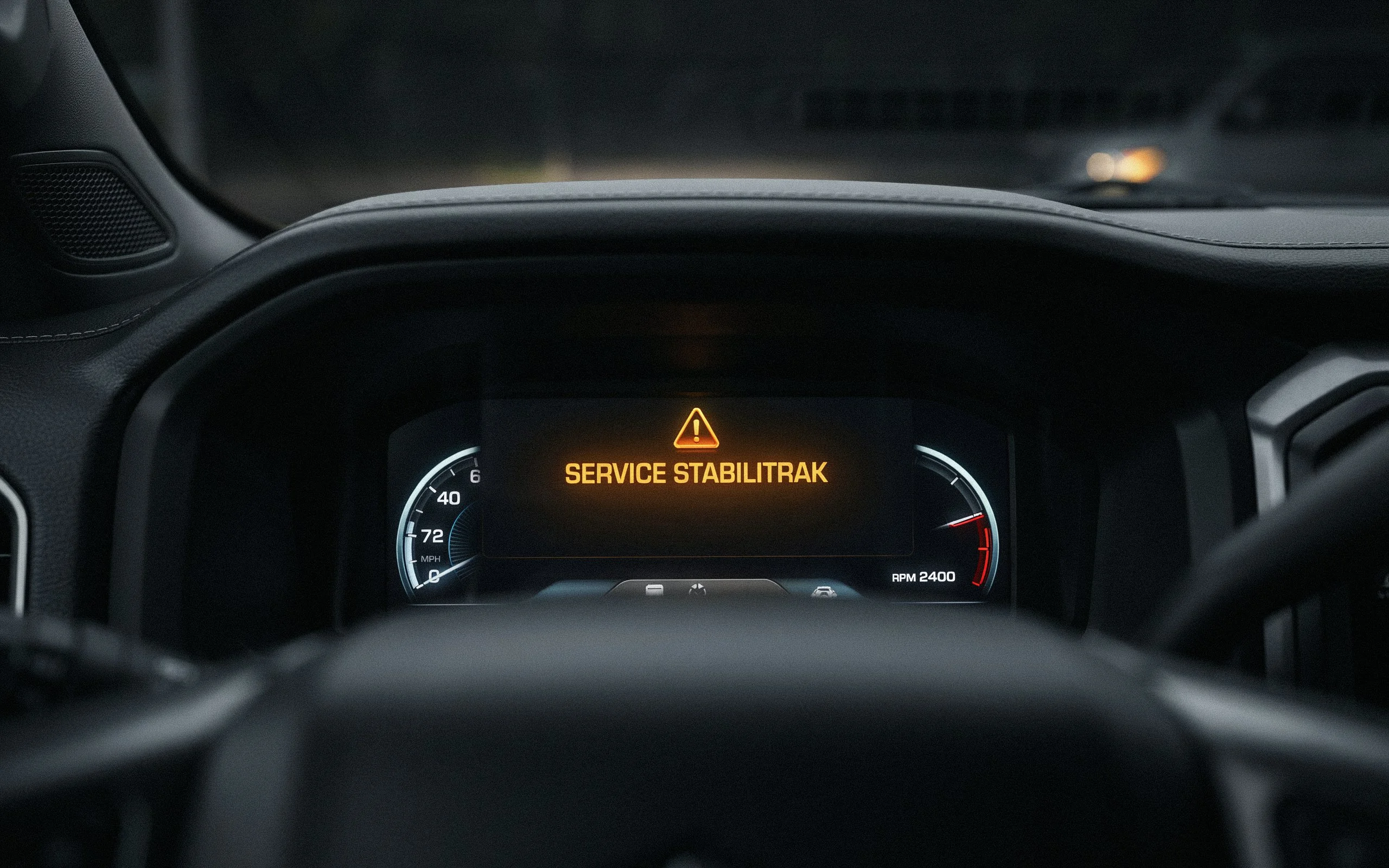

Service StabiliTrak: Complete Guide to Understanding, Diagnosing, and Fixing the Warning Message
Have you ever been driving down the road when a warning suddenly appeared on your dashboard saying “Service StabiliTrak“? If so, you’re not alone. Many drivers become concerned when this message pops up, especially because it often appears alongside other warning lights.
The good news is that this alert doesn’t always indicate a major problem. However, it shouldn’t be ignored. StabiliTrak is a critical safety system designed to help you maintain control of your vehicle during slippery conditions, sudden turns, and emergency maneuvers.
Think of StabiliTrak as an invisible co-pilot. Most of the time, it works quietly in the background. But when road conditions become challenging, it steps in to help keep your vehicle stable and safe.
In this comprehensive guide, you’ll learn what StabiliTrak does, why the warning appears, how to diagnose the issue, repair costs, and ways to prevent future problems.

1. What Is StabiliTrak?
StabiliTrak is an electronic stability control system used in many vehicles, particularly those manufactured by General Motors. Its primary purpose is to help drivers maintain control when road conditions become dangerous.
The system continuously monitors vehicle movement, steering input, wheel speed, and traction. If it detects that the vehicle is not responding as expected, it automatically intervenes to improve stability.
This technology has become one of the most important safety innovations in modern vehicles. It helps reduce the likelihood of skidding, spinning, and rollover accidents.
Why It Matters
- Improves vehicle control
- Enhances traction
- Reduces skidding risk
- Helps prevent accidents
- Increases driver confidence
2. How the System Works
StabiliTrak relies on a network of sensors and computer modules working together in real time.
Key Components
Wheel Speed Sensors
Monitor how fast each wheel is rotating.
Steering Angle Sensor
Measures the direction the driver intends to travel.
Yaw Rate Sensor
Tracks the vehicle’s rotation around its center.
Electronic Control Module
Processes sensor data and makes corrective decisions.
If the system notices the vehicle beginning to slide, it can apply brakes to individual wheels and adjust engine power to help restore control.
Imagine balancing on a bicycle. When you start leaning too far, you instinctively adjust to stay upright. StabiliTrak performs a similar function for your vehicle.
3. What Does the Service StabiliTrak Message Mean?
When your dashboard displays Service StabiliTrak, it means the system has detected a fault that requires attention.
This warning generally indicates that one or more components within the stability control system are not functioning correctly.
The system may temporarily disable itself until repairs are completed.
What Happens When the Warning Appears?
- Stability control may stop functioning
- Traction control could be disabled
- Anti-lock braking performance may be affected
- Additional warning lights may illuminate
While your vehicle may still drive normally in many situations, its safety systems may not provide the same level of assistance during emergencies.
4. Common Causes of the Warning
Several issues can trigger the Service StabiliTrak alert.
Most Frequent Causes
- Defective wheel speed sensor
- Bad steering angle sensor
- Faulty brake switch
- Weak battery
- Wiring issues
- Damaged control module
- Low brake fluid
- ABS system faults
Understanding the root cause is essential because the warning itself does not pinpoint the exact problem.
5. Faulty Wheel Speed Sensors
One of the most common causes involves malfunctioning wheel speed sensors.
These sensors monitor wheel rotation and send information to the control module. If one sensor provides inaccurate data, the system may interpret it as a loss of traction.
Signs of Sensor Failure
- ABS warning light
- Traction control light
- Inconsistent braking behavior
- Speedometer irregularities
Road debris, corrosion, dirt buildup, and normal wear can all contribute to sensor failure.
Repair Options
In many cases, cleaning the sensor resolves the issue. Otherwise, replacement may be necessary.
6. Steering Angle Sensor Problems
The steering angle sensor determines where the driver wants the vehicle to go.
If this sensor fails or becomes misaligned, the control module cannot accurately compare intended direction with actual movement.
Common Symptoms
- Stability control warning
- Difficulty with traction control
- Unexpected warning lights
- Reduced electronic assistance
Sometimes recalibration is sufficient. Other situations require complete replacement.
7. Brake System Issues
Your braking system plays a major role in stability control operation.
StabiliTrak uses selective braking to help maintain vehicle stability. If brake-related components malfunction, the system may deactivate.
Potential Brake-Related Causes
Low Brake Fluid
Insufficient fluid can affect hydraulic pressure.
Faulty Brake Switch
A malfunctioning brake pedal switch may send incorrect signals.
ABS Problems
Since StabiliTrak and ABS share components, ABS faults frequently trigger stability control warnings.
Warning Signs
- Soft brake pedal
- ABS light illumination
- Unusual braking response
- Dashboard alerts
Regular brake inspections can help prevent these issues.
8. Electrical and Battery Problems
Modern vehicles rely heavily on electronics.
A weak battery or charging system problem can create voltage fluctuations that interfere with sensitive control modules.
Common Electrical Issues
- Aging battery
- Faulty alternator
- Loose connections
- Corroded terminals
- Damaged wiring
Sometimes simply replacing an old battery resolves the warning message.
Importance of Proper Voltage
Electronic systems require stable voltage to operate correctly. Even minor fluctuations can generate false warnings.
9. Symptoms Associated with StabiliTrak Failure
The warning message often appears alongside other symptoms.
Things Drivers Commonly Notice
- Reduced engine power
- Traction control disabled
- ABS warning light
- Check engine light
- Unexpected braking behavior
- Difficulty accelerating
In some vehicles, a message stating “Engine Power Reduced” may appear simultaneously.
These symptoms should not be ignored, especially if vehicle handling changes noticeably.
10. How to Diagnose the Problem
Proper diagnosis is essential before replacing parts.
Step 1: Scan for Trouble Codes
A diagnostic scanner can retrieve error codes stored by the vehicle’s computer.
These codes often reveal the affected component.
Step 2: Inspect Sensors
Check wheel speed sensors for:
- Dirt accumulation
- Physical damage
- Corrosion
- Loose connections
Step 3: Test Battery Voltage
Verify battery health and charging system performance.
Step 4: Examine Brake Components
Inspect brake fluid levels and related systems.
Step 5: Consult a Professional
If the problem remains unclear, professional diagnostics may be necessary.
11. Repair Costs and Solutions
Repair costs vary depending on the specific issue.
Estimated Repair Expenses
| Repair Type | Approximate Cost |
|---|---|
| Sensor Cleaning | $20–$100 |
| Wheel Speed Sensor Replacement | $100–$300 |
| Brake Switch Replacement | $50–$200 |
| Battery Replacement | $100–$350 |
| Steering Angle Sensor Repair | $150–$500 |
| ABS Module Repair | $300–$1,500 |
Costs depend on vehicle model, labor rates, and component availability.
Can It Be Fixed at Home?
Some repairs, such as cleaning sensors or replacing a battery, may be manageable for experienced DIY enthusiasts.
More advanced repairs usually require specialized equipment.
12. Can You Drive with the Warning On?
This is one of the most common questions drivers ask.
Short Answer
Yes, in many cases, the vehicle remains drivable.
However, There Are Risks
Without stability control assistance:
- Skid prevention is reduced
- Traction management is limited
- Emergency handling may be affected
- Safety margins decrease
Driving cautiously may be acceptable temporarily, but repairs should not be delayed.
When to Stop Driving Immediately
Seek immediate attention if you notice:
- Severe braking issues
- Loss of steering control
- Engine power reduction
- Multiple warning lights
- Unusual noises
13. Prevention and Maintenance Tips
Preventive maintenance can reduce the chances of seeing a Service StabiliTrak warning.
Best Practices
Maintain Your Battery
Replace aging batteries before they fail.
Inspect Brakes Regularly
Keep brake components in good condition.
Monitor Tire Health
Proper tire pressure improves system performance.
Address Warning Lights Promptly
Small issues often become larger problems when ignored.
Schedule Routine Inspections
Regular maintenance helps identify problems early.
Benefits of Prevention
- Lower repair costs
- Better reliability
- Improved safety
- Greater peace of mind
14. When to Seek Professional Help
While some issues are simple, others require expert diagnosis.
Contact a Mechanic If
- Warning messages persist
- Multiple dashboard lights appear
- Vehicle handling feels abnormal
- Repairs have not solved the issue
- Diagnostic codes point to complex modules
Professional technicians have specialized tools that can identify problems quickly and accurately.
15. Final Thoughts
The Service StabiliTrak warning can be alarming, but it doesn’t always signal a catastrophic failure. In many cases, the problem stems from a sensor, battery issue, brake component, or electrical fault.
Because StabiliTrak plays a vital role in vehicle safety, it’s important not to ignore the warning. Prompt diagnosis and repair can restore full functionality and help ensure your vehicle remains safe in challenging driving conditions.
Think of the system as a safety net. You may rarely notice it working, but when you need it most, you’ll be glad it’s there. By staying proactive with maintenance and addressing warning messages early, you can keep your vehicle operating safely and reliably for years to come.
Frequently Asked Questions (FAQs)
1. What causes the Service StabiliTrak warning to appear?
The warning is commonly triggered by faulty wheel speed sensors, steering angle sensor issues, brake system faults, electrical problems, or a weak battery.
2. Is it safe to drive with the Service StabiliTrak message on?
The vehicle is often still drivable, but stability and traction control functions may be disabled, reducing safety during slippery or emergency conditions.
3. Can a bad battery cause a Service StabiliTrak warning?
Yes. Low voltage from a weak battery or charging system issue can interfere with electronic control modules and trigger the warning.
4. How much does it cost to repair a Service StabiliTrak problem?
Repair costs vary widely, ranging from around $20 for sensor cleaning to over $1,500 for major module replacements.
5. Will the Service StabiliTrak warning reset itself after repairs?
In many cases, the warning disappears automatically after the underlying issue is fixed. Some vehicles may require a diagnostic tool to clear stored fault codes.
