

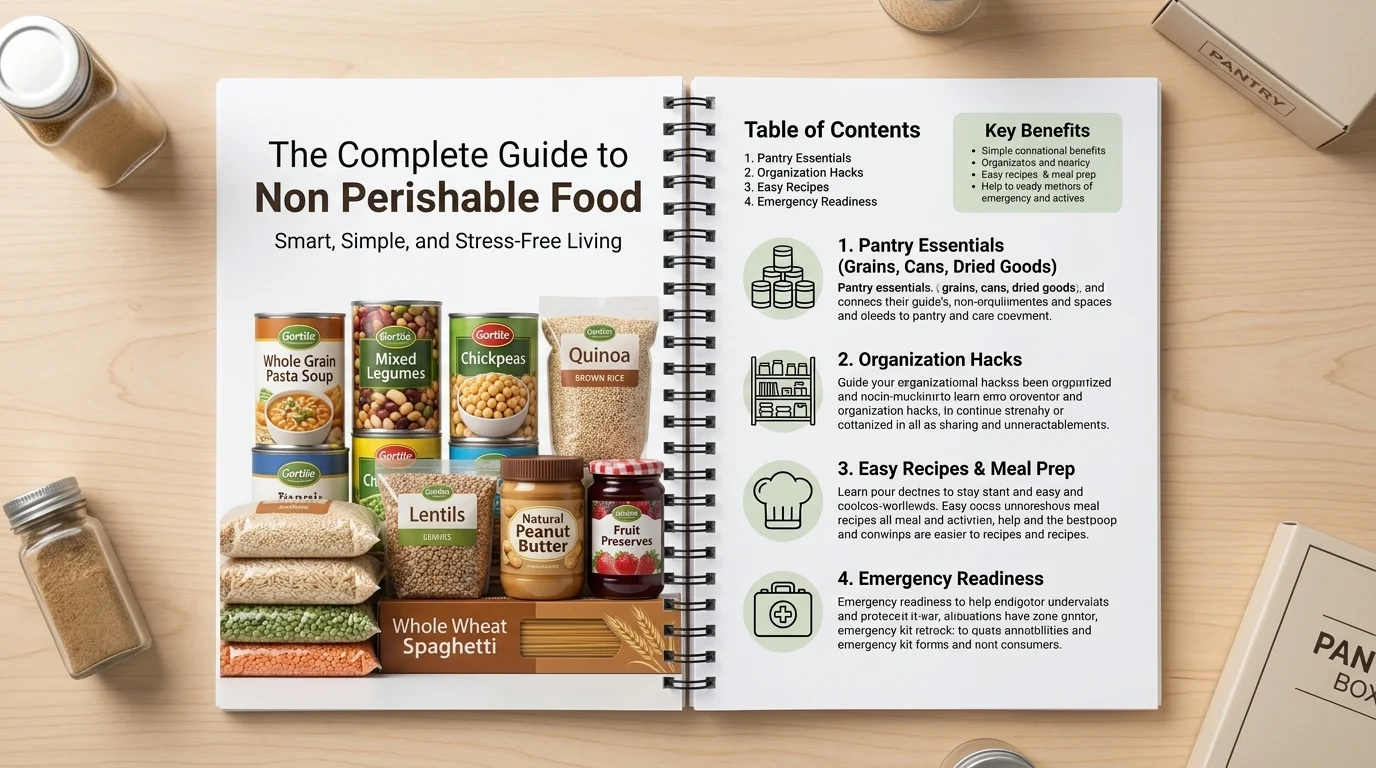

The Complete Guide to Non Perishable Food: Smart, Simple, and Stress-Free Living
Have you ever opened your kitchen cabinet and wished the food inside could last just a little longer? We’ve all been there. Life gets busy, and fresh groceries don’t always fit into our schedule. That’s where long-lasting food options quietly become everyday heroes.
This guide walks you through everything you need to know—what they are, why they matter, how to store them, and how they can make life easier whether you’re planning daily meals or preparing for emergencies.
1. Introduction to Long-Lasting Food Storage
Imagine your kitchen as a small safety net. No matter what happens—unexpected guests, busy weeks, or even power outages—you always have something to rely on. That’s the beauty of foods designed for extended storage.
These items are not just about survival; they are about convenience, planning, and peace of mind. Think of them as the “backup singers” of your kitchen—they may not always be in the spotlight, but they make everything run smoothly.

2. What Makes These Foods Last So Long?
Ever wondered why some foods stay good for months or even years? It all comes down to moisture control, preservation techniques, and packaging.
Drying, canning, freezing, and vacuum sealing are common methods used to extend shelf life. Removing moisture is especially important because bacteria and mold need water to grow.
It’s like putting food into “pause mode”—slowing down natural decay so you can use it later without worry.
3. Everyday Benefits You Might Not Notice
These long-lasting pantry items offer more than just storage advantages.
They help you save money by reducing frequent grocery trips. They also reduce food waste, which is a huge issue in many households. Plus, they give you flexibility—you can cook even when your fridge looks empty.
And let’s be honest: isn’t it comforting to know you always have something to eat at home?
4. Pantry Staples Everyone Should Have
A well-prepared pantry usually includes simple but powerful basics.
Items like salt, sugar, flour, cooking oil, and vinegar last a long time when stored properly. These are the backbone of most meals.
Think of them as building blocks—without them, cooking becomes much harder. With them, even simple ingredients can turn into delicious meals.
5. Protein-Rich Long Shelf-Life Options
Protein is essential for energy and health, and luckily, several options store well for long periods.
Canned beans, lentils, chickpeas, and tuna are popular choices. Peanut butter is another great example—it’s nutritious, filling, and surprisingly long-lasting.
These foods are like reliable friends—you may not think about them daily, but they’re always there when needed.
6. Grains and Carbohydrates That Stay Fresh
Grains are often the foundation of meals across the world. Rice, oats, pasta, and quinoa are known for their impressive shelf life when stored correctly.
Kept in airtight containers, they can last for months or even years. They provide energy, fullness, and versatility in cooking.
A simple bowl of rice or oats can be transformed into countless dishes depending on what you pair it with.
7. Canned and Packaged Essentials
Canned foods are one of the most convenient inventions in modern food storage. From vegetables and fruits to soups and meats, they offer variety and convenience.
They are sealed in a way that prevents bacteria from entering, making them safe for long-term storage.
Just like a sealed time capsule, canned goods preserve flavor and nutrition until you’re ready to use them.
8. Sweet and Comfort Foods with Long Life
Not everything in your pantry has to be purely practical. Some items bring comfort and joy too.
Honey, chocolate, powdered milk, and dried fruits are excellent examples. Honey, in particular, is known for its incredibly long shelf life when stored properly.
These foods remind us that eating is not just about survival—it’s also about enjoyment and emotional comfort.
9. Smart Storage Tips for Your Kitchen
Proper storage is the secret to making food last even longer.
Keep items in airtight containers to prevent moisture and pests. Store them in cool, dark places away from direct sunlight. Label everything with purchase dates so you don’t lose track.
Think of your pantry like a library—everything has its place, and organization makes it easier to find what you need.
10. Emergency Preparedness and Food Security
Having a stock of long-lasting food is not just convenient—it can be crucial during emergencies.
Natural disasters, power outages, or supply shortages can happen unexpectedly. A well-stocked pantry ensures you and your family are not caught off guard.
It’s like having a backup plan for your meals, giving you stability when everything else feels uncertain.
11. Common Mistakes to Avoid
Many people unknowingly shorten the life of their stored food.
One common mistake is ignoring expiration dates. Another is storing food in humid areas like near sinks or stoves. Mixing old and new stock without rotation can also lead to waste.
A little attention goes a long way in keeping your pantry efficient and safe.
12. Building a Balanced Long-Term Pantry
A good pantry is not just about quantity—it’s about balance.
Try to include carbohydrates, proteins, fats, and a few comfort items. This ensures you have complete meal options instead of random ingredients.
Start small and build gradually. Even a few well-chosen items can make a big difference in your daily life.
Conclusion
Having a collection of long-lasting food options at home is like having a quiet safety net that supports you in the background. It brings convenience, reduces stress, and prepares you for unexpected situations.
You don’t need to build it all at once. Small steps—like adding a few staples each week—can gradually turn your kitchen into a reliable, well-prepared space.
In the end, it’s not just about storage. It’s about peace of mind.
FAQs
1. What is the main purpose of long-lasting food storage?
It helps ensure you always have food available, reduces waste, and supports emergency preparedness.
2. How long can pantry staples last?
Depending on storage conditions, some staples can last from several months to multiple years.
3. Are canned foods safe to eat after a long time?
Yes, as long as the can is not damaged or expired, they remain safe and nutritious.
4. What is the best way to store dry goods?
Use airtight containers and keep them in cool, dry, and dark places.
5. Can these foods replace fresh meals completely?
They can complement meals but should ideally be balanced with fresh ingredients for better nutrition.
