


INTRODUCTION
Buying land or commercial property can feel exciting, but it can also hide unseen risks. What if the soil was contaminated years ago? What if fuel tanks leaked underground? That is where a Phase 1 Environmental Site Assessment (ESA) becomes important. It acts like a flashlight in a dark room, helping buyers spot potential environmental issues before signing the deal.
Many people ask one common question: How much does a Phase 1 Environmental Site Assessment cost? The answer depends on several factors such as property size, location, past land use, and how quickly you need the report. In this guide, we will break it all down in simple language so you know what to expect.
1. What Is a Phase 1 Environmental Site Assessment?

A Phase 1 ESA is a professional review of a property to identify possible environmental contamination risks. It does not involve digging or testing soil in most cases. Instead, experts inspect records, study past uses, review maps, and visit the site.
For example, if a property used to be a gas station or factory, there may be concerns about hazardous materials. The assessment helps buyers, lenders, and investors understand possible risks before moving forward.
2. Why Cost Matters Before Buying Property
Some buyers see this as just another expense, but skipping it can cost far more later. Imagine buying a property cheaply, only to discover cleanup costs worth thousands or even millions. Suddenly, that bargain deal turns into a financial storm.
Knowing the phase 1 environmental site assessment cost upfront helps you budget wisely and protect your investment.
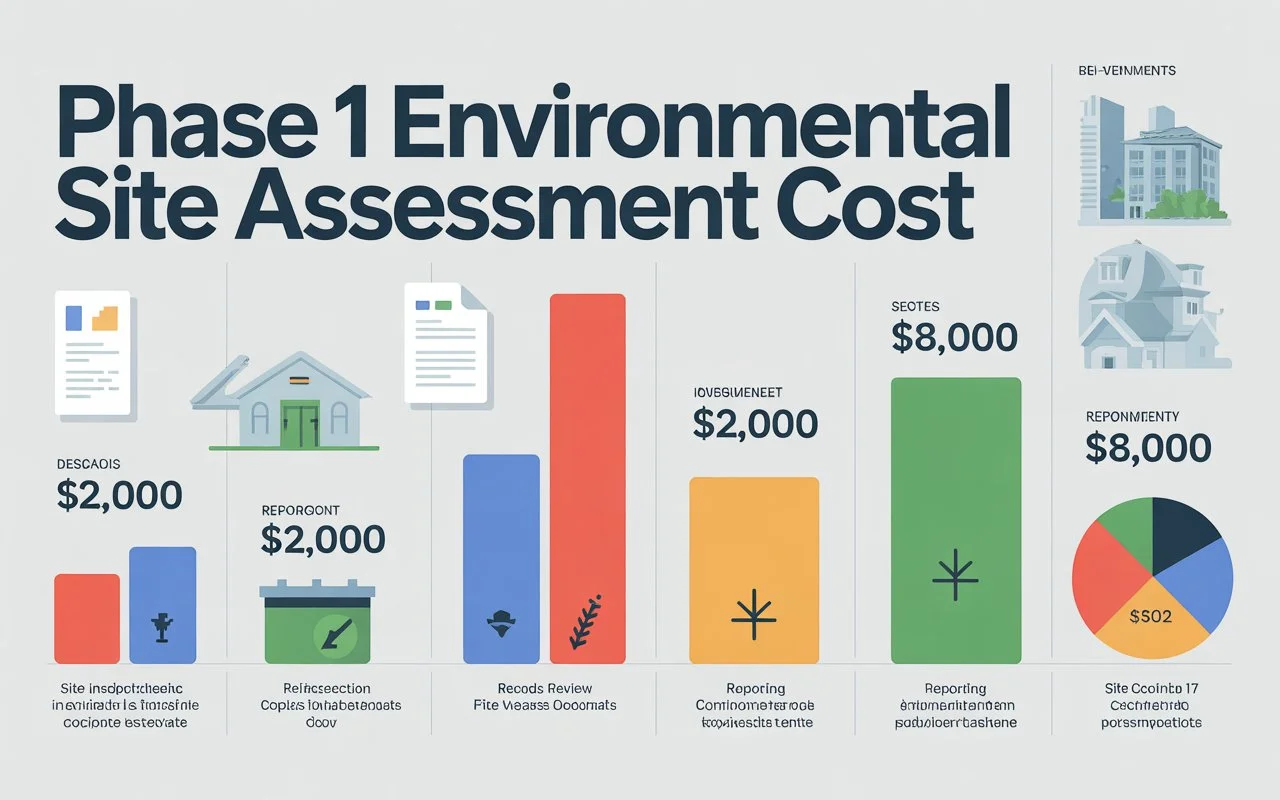
3. Average Price Range
The average cost can vary widely, but common ranges include:
- Small commercial property: $1,500 to $3,000
- Medium-sized property: $2,500 to $5,000
- Large industrial site: $5,000 to $10,000+
- Simple vacant land: $1,200 to $2,500
These numbers are estimates. Prices differ by region and consultant experience.
4. Factors That Affect Cost
Property Size
Larger properties take more time to inspect, review, and document. More land usually means a higher fee.
Location
Urban areas with higher business costs may charge more than rural areas. Remote sites may include travel expenses.
Property History
If the site had multiple owners or industrial uses, the consultant may need deeper historical research.
Turnaround Time
Need the report in a few days? Rush orders often cost extra.
Complexity
A clean office building is easier to assess than an old manufacturing plant with decades of use.
5. Residential vs Commercial Pricing

For most standard homes, a full Phase 1 ESA may not always be required. Residential buyers often rely on home inspections instead. However, large residential developments or properties with unusual history may need one.
Commercial properties usually require ESAs more often because lenders and investors want protection. That is why commercial buyers are the most common customers for these reports.
6. What Is Included in the Fee
When you pay for a Phase 1 ESA, the service usually includes:
- Site visit and visual inspection
- Review of government environmental databases
- Historical aerial photos and maps
- Interviews with owners or occupants
- Written report with findings
- Identification of recognized environmental concerns (RECs)
Think of it like hiring a detective who studies clues from the past.
7. Extra Costs You Should Know
Sometimes the initial report uncovers warning signs. If that happens, you may need additional services.
Phase 2 Testing
This includes soil, groundwater, or air sampling. Costs can range from $5,000 to $25,000+ depending on scope.
Rush Fees
Urgent deadlines may add several hundred dollars or more.
Travel Charges
Remote or hard-to-access sites may increase pricing.
File Updates
If a lender needs report revisions months later, update fees may apply.
8. How Long the Process Takes
Most Phase 1 ESAs take 2 to 4 weeks. Faster delivery is possible with rush service.
Timing depends on:
- Property complexity
- Access to records
- Weather or site access
- Consultant workload
If you are in a fast-moving real estate deal, order early.
9. Ways to Save Money
Compare Multiple Quotes
Do not hire the first consultant you find. Get at least three proposals.
Provide Accurate Information
Share property address, size, and known history early. Better details reduce delays.
Avoid Rush Orders
Planning ahead often saves money.
Bundle Services
If you need surveys, appraisals, or other due diligence, some firms offer package pricing.
10. Choosing the Right Consultant
The cheapest quote is not always the best. Look for:
- Experience with similar properties
- Knowledge of local regulations
- Clear communication
- Good turnaround times
- Professional credentials
- Strong reviews or references
Would you trust the cheapest parachute? Probably not. The same logic applies here.
11. Is It Worth the Price?
In many cases, yes. Spending a few thousand dollars now can save you from major financial trouble later. It can also strengthen negotiations. If issues are found, you may ask the seller to reduce the price or fix problems.
For lenders, it can also be a requirement before approving financing.
12. Final Thoughts
The phase 1 environmental site assessment cost may seem like one more line item during a property purchase, but it often provides priceless peace of mind. Costs usually range from around $1,500 for simple sites to much higher for complex industrial land. The final price depends on property size, history, urgency, and location.
Before buying land or commercial property, think of a Phase 1 ESA as an insurance checkup for the land beneath your feet. It helps you move forward with confidence rather than guesswork.
FAQs
1. How much does a Phase 1 Environmental Site Assessment usually cost?
Most assessments cost between $1,500 and $5,000, though large or complex sites may cost more.
2. Who pays for a Phase 1 ESA?
Usually the buyer pays, but in some negotiations the seller may cover or share the cost.
3. Is a Phase 1 ESA required by law?
Not always, but lenders often require it for commercial financing.
4. What happens if contamination is found?
The next step is usually a Phase 2 ESA, which involves testing soil or groundwater.
5. Can I skip a Phase 1 ESA to save money?
You can, but it may expose you to serious financial and legal risks later.
