


Introduction
Gold has fascinated people for thousands of years. It shines beautifully, resists rust, and has long been a symbol of wealth and power. But many people still ask a simple and practical question: is gold magnetic? It often comes up when someone wants to test jewelry, coins, or family heirlooms. If a magnet sticks to a gold item, does that mean it is fake? If it does not stick, does that prove it is real?
The answer is more interesting than a simple yes or no. Gold behaves differently from metals like iron or steel, and understanding why can help you identify jewelry, avoid scams, and learn a bit of science along the way. Think of magnets as picky party guests—they are drawn to some metals instantly while ignoring others completely.
In this guide, we will explore how gold reacts to magnets, why it behaves that way, how purity affects results, and what magnetic tests can and cannot tell you.
What Does It Mean for a Metal to Be Magnetic?

Before talking about gold specifically, it helps to understand magnetism. A magnetic material is one that responds strongly to a magnetic field. Some metals are naturally attracted to magnets, while others are not.
The most common magnetic metals include:
- Iron
- Nickel
- Cobalt
- Steel (because it contains iron)
These metals contain atomic structures that align with magnetic fields. When a magnet comes near them, they pull toward it.
Other metals may show very weak reactions or almost none at all. That includes copper, silver, aluminum, and gold.
So, when people ask if gold is magnetic, they are really asking whether gold behaves like iron or steel. It does not.
Is Gold Magnetic? The Direct Answer
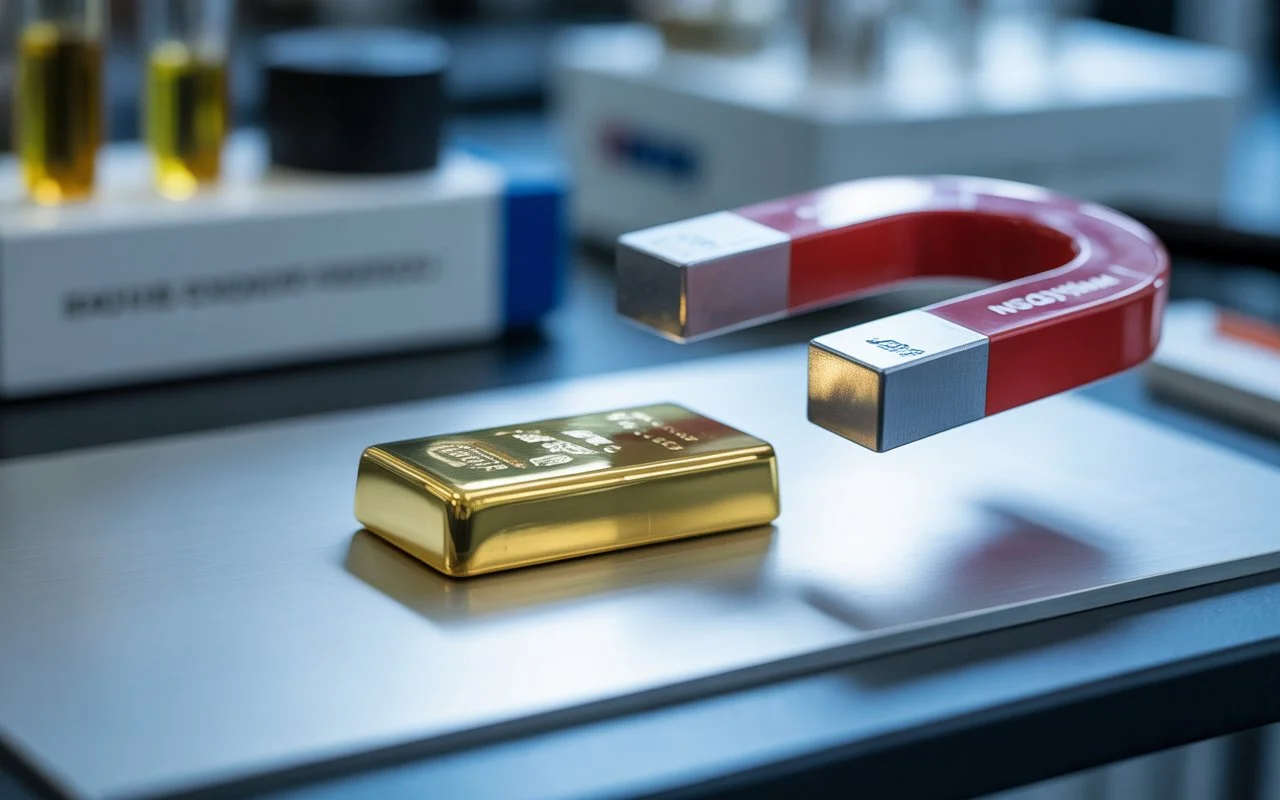
Pure gold is not magnetic in the way most people mean the word. A regular household magnet will not strongly attract genuine pure gold.
If you place a magnet next to a gold bar or a 24-karat gold ring, it should not snap toward the magnet or cling to it. Gold belongs to a category of metals that do not show strong magnetic attraction.
This is why magnet tests are commonly used as a quick screening tool. If an item sold as pure gold strongly sticks to a magnet, that is a warning sign.
However, there is more to the story. Gold jewelry is often mixed with other metals, and those metals can affect the result.
Why Gold Is Not Naturally Magnetic

Gold’s atomic structure explains its behavior. Inside every material are tiny particles and electron arrangements that determine how it reacts to a magnetic field.
In gold, these particles do not line up in a way that creates strong attraction. Instead, gold is considered diamagnetic, which means it weakly resists magnetic fields rather than being pulled in.
That reaction is extremely small, so in daily life you will not notice it. To most people, gold simply appears non-magnetic.
Imagine trying to pull a heavy curtain with a weak breeze. The force exists, but it is far too subtle to matter in normal conditions.
Can a Magnet Ever Affect Gold?
Yes, but only under special conditions.
Gold can respond slightly in advanced laboratory settings using powerful scientific equipment. Strong magnetic fields can detect the tiny diamagnetic nature of gold. But this is not something you would see with a fridge magnet at home.
For everyday purposes:
- A kitchen magnet will not attract pure gold
- A standard jewelry magnet test is basic only
- Professional equipment can detect subtle responses
So technically, gold has a magnetic relationship, but practically speaking, it is considered non-magnetic.
Why Some Gold Jewelry Reacts to Magnets
This is where many people get confused. You may test a gold necklace or ring and notice attraction. Does that mean it is fake? Not always.
Most jewelry is not made of 100% pure gold because pure gold is soft and bends easily. Jewelers mix gold with stronger metals to improve durability. These added metals are called alloys.
Common metals mixed with gold include:
- Copper
- Silver
- Zinc
- Nickel
- Palladium
If the piece contains nickel or another magnetic metal, it may react to a magnet. The stronger the magnetic pull, the more suspicious the piece may be.
That means a magnet test can suggest something, but it does not tell the full story.
Does Gold Purity Change Magnetic Behavior?
Yes, purity matters a lot.
Gold purity is measured in karats:
- 24K = nearly pure gold
- 18K = 75% gold
- 14K = 58.3% gold
- 10K = 41.7% gold
The lower the karat, the more other metals are mixed in. If those metals include magnetic materials, the jewelry may show some attraction.
For example:
- A 24K coin should not stick to a magnet
- A 14K ring may show slight reaction depending on alloy mix
- A fake plated ring with steel inside may strongly stick
So if you notice magnetism, karat level and metal blend must be considered.
Can You Use a Magnet to Test Real Gold?
Yes, but only as an initial check.
Many people use magnets because they are easy and cheap. If a piece strongly sticks, that can be a red flag. But if it does not stick, that does not automatically confirm authenticity.
A magnet test can help you spot obvious fakes, especially gold-plated items made over iron or steel. But skilled counterfeit products may use non-magnetic metals too.
Use a magnet as one clue, not the final verdict.
Simple Home Test Steps
- Use a strong magnet, such as neodymium.
- Place the item on a flat surface.
- Bring the magnet close slowly.
- Watch for snapping, pulling, or sticking.
If it strongly attracts, be cautious.
Better Ways to Verify Gold
If you truly need to know whether gold is genuine, professional testing is better than relying only on magnets.
Acid Testing
Jewelers use special solutions to test metal composition. This can reveal whether the outer layer is real gold or just plating.
Electronic Gold Testers
These devices measure conductivity and metal response.
Hallmarks and Stamps
Look for marks such as:
- 24K
- 18K
- 14K
- 10K
- 585
- 750
These marks are useful, though counterfeit items may copy them.
Professional Appraisal
A trusted jeweler can inspect weight, color, density, wear patterns, and composition.
Common Myths About Gold and Magnets
There are many misunderstandings online. Let’s clear up a few.
Myth 1: Real Gold Always Fails a Magnet Test
Mostly true for pure gold, but alloys may vary.
Myth 2: If Gold Sticks, It Is Definitely Fake
Not always. Some gold jewelry includes magnetic alloy metals or hidden clasps.
Myth 3: No Stick Means Real Gold
False. Many fake metals are also non-magnetic.
Myth 4: All Magnets Work the Same
Weak fridge magnets may show nothing. Strong rare-earth magnets work better.
The lesson? A magnet gives hints, not proof.
Why Jewelers Rarely Use Magnet Tests Alone
Professional jewelers know that metal identification requires multiple methods. A magnet cannot measure purity, karat value, or plating thickness accurately.
They often combine:
- Visual inspection
- Weight comparison
- Density testing
- Electronic analysis
- Acid testing
- XRF scanning in advanced shops
That is why experts do not rely on one quick trick.
Gold Coins, Bars, and Bullion: Are They Magnetic?
Investment gold products are usually made from high-purity gold, so they should not be strongly magnetic.
If a gold coin or bar snaps to a magnet, it deserves closer inspection. Many counterfeit bullion items use cheaper cores such as steel or iron beneath gold-colored surfaces.
Serious buyers often check:
- Exact dimensions
- Weight
- Sound test
- Density
- Certification
- Dealer reputation
Magnets can be useful here, but again, only as part of a bigger process.
Why People Search “Is Gold Magnetic?”
This question is popular because it mixes science with money. People want to know:
- Is inherited jewelry real?
- Is a thrift-store ring valuable?
- Is an online deal trustworthy?
- How can fake gold be spotted quickly?
A simple magnet feels like an easy answer. But gold is more nuanced than that. It is like judging a book by the cover—you may guess right sometimes, but not always.
Practical Tips Before Buying Gold
If you are buying jewelry or bullion, keep these tips in mind:
Buy from reputable sellers. Trusted jewelers and certified dealers matter.
Check hallmarks carefully. Look for clear stamps.
Ask for receipts or certificates. Documentation adds confidence.
Use more than one test. Combine magnet, weight, and professional checks.
Be cautious with bargains. If the price seems unreal, there is usually a reason.
Conclusion
So, is gold magnetic? In normal everyday terms, no—pure gold is not magnetic. A regular magnet should not strongly attract genuine gold. That is because gold’s internal structure does not respond like iron, nickel, or steel.
However, real-world jewelry is often mixed with other metals, and those added materials may cause some reaction. That is why magnet tests are useful but limited. They can help detect obvious fakes, but they cannot confirm authenticity on their own.
If you truly need certainty, combine several methods or visit a trusted jeweler. Gold may be timeless, but testing it still requires modern common sense.
FAQs
1. Is pure 24K gold magnetic?
No. Pure 24K gold is not strongly attracted to magnets.
2. Why does my gold ring stick to a magnet?
It may contain alloy metals, hidden steel parts, or may not be genuine gold.
3. Can fake gold be non-magnetic?
Yes. Many counterfeit items use non-magnetic metals, so a magnet test alone is not enough.
4. What magnet is best for testing gold?
A strong neodymium magnet is better than a weak household fridge magnet.
5. How can I know if gold is real for sure?
Use professional methods such as acid testing, electronic testing, or appraisal by a reputable jeweler.
