

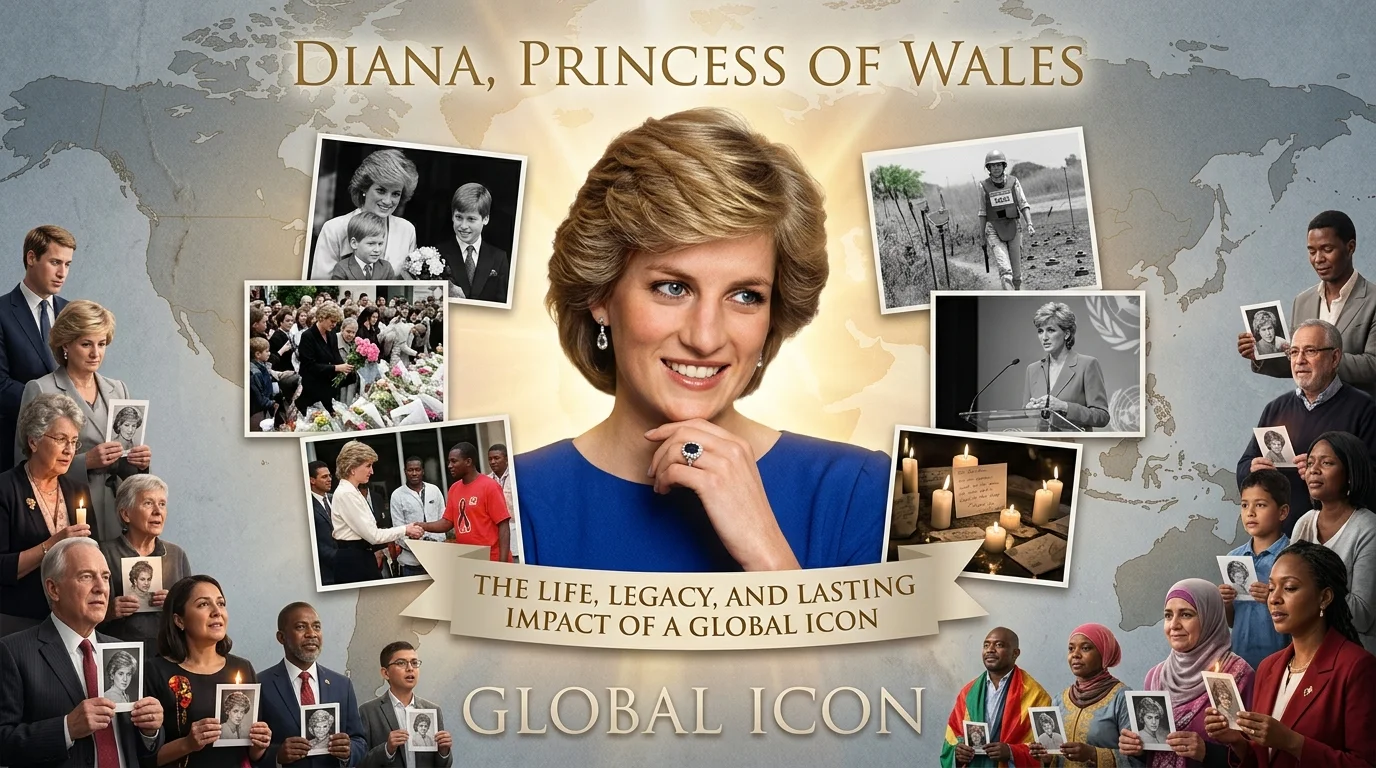

Diana, Princess of Wales: The Life, Legacy, and Lasting Impact of a Global Icon
Few public figures have touched hearts across the world quite like Diana, Princess of Wales. Decades after her passing, her story continues to inspire people of all ages and backgrounds. She was more than a royal figure—she was a symbol of compassion, kindness, and humanity.
What made her so beloved? Was it her warmth, her charitable efforts, or her ability to connect with ordinary people despite living an extraordinary life? The answer lies in a combination of all these qualities.
Like a bright star that continues to shine long after sunset, her influence remains visible in modern society, humanitarian work, and even the royal family itself. This article explores her life, achievements, challenges, and the remarkable legacy she left behind.

1. Early Life and Childhood
Diana Frances Spencer was born on July 1, 1961, in Norfolk, England. She grew up in an aristocratic family and spent much of her childhood in the English countryside.
From a young age, she displayed a caring nature and sensitivity toward others. Friends and family often described her as shy but warm-hearted. These traits would later become central to her public image.
Her early years were not without difficulties. The separation of her parents had a significant impact on her childhood. However, these experiences helped shape her empathy and understanding of people’s struggles.
2. Family Background
The Spencer family had long-standing ties to British nobility. Diana came from a respected lineage that had connections to the royal family for generations.
Growing up in such an environment introduced her to traditions, responsibilities, and public expectations. Despite these privileges, she often appeared grounded and approachable.
Many people believe her upbringing contributed to her ability to navigate royal life while maintaining a relatable personality.
3. Education and Personal Interests
Diana attended several schools during her youth. Although she was not known for academic excellence, she excelled in activities that involved creativity and social interaction.
She enjoyed music, dancing, swimming, and caring for children. In fact, before becoming a member of the royal family, she worked with young children and developed a strong appreciation for their wellbeing.
These experiences reflected her nurturing personality and foreshadowed her future role as a devoted mother and advocate for children’s causes.
Love for Dance
One of Diana’s greatest passions was ballet. She admired the grace and discipline of dancers and often attended performances.
Although she became too tall to pursue professional ballet, her love for the art remained throughout her life.
4. Meeting Prince Charles
The story of Diana and Prince Charles captured worldwide attention. The two met while Charles was courting Diana’s older sister.
Over time, their relationship developed, and public interest grew rapidly. Their engagement announcement in 1981 instantly transformed Diana into one of the most talked-about women in the world.
People were fascinated by her youthful charm and natural elegance.
A Fairy-Tale Romance
At the time, many viewed their relationship as a modern fairy tale. Millions followed every development, eagerly anticipating the wedding that would soon become a historic event.
5. The Royal Wedding
On July 29, 1981, Diana married Prince Charles in a ceremony watched by hundreds of millions around the globe.
The wedding took place at St. Paul’s Cathedral in London and became one of the most memorable royal events in history.
Her wedding dress, with its dramatic train and intricate design, remains one of the most iconic bridal gowns ever created.
Global Celebration
The ceremony was not merely a royal event; it became a shared international experience. People gathered around televisions worldwide to witness the occasion.
6. Life as Princess of Wales
Following her marriage, Diana officially became Princess of Wales. Her role involved public appearances, international tours, and representing the monarchy.
Despite the pressures associated with royal duties, she quickly became one of the most popular members of the royal family.
Her approachable demeanor set her apart. She often interacted directly with the public, breaking traditional barriers between royalty and ordinary citizens.
A New Style of Royal Engagement
Diana introduced a more personal approach to public service. She shook hands, hugged children, and spent time speaking with people from all walks of life.
This approach helped redefine expectations of royal behavior.
7. Motherhood and Family Values
One of Diana’s most cherished roles was being a mother to Prince William and Prince Harry.
She wanted her sons to experience life beyond palace walls. As a result, she introduced them to everyday activities and encouraged them to understand the realities faced by ordinary people.
Hands-On Parenting
Unlike many royal traditions of the past, Diana preferred a hands-on parenting style. She attended school events, spent quality time with her children, and prioritized their emotional wellbeing.
Her parenting methods were widely admired and influenced modern approaches within the royal family.
8. Humanitarian and Charity Work
Perhaps one of Diana’s greatest achievements was her humanitarian work.
She supported numerous charitable organizations focused on children, healthcare, homelessness, and social welfare. Her commitment went far beyond ceremonial appearances.
Advocacy for Health Awareness
Diana played an important role in reducing stigma surrounding HIV/AIDS during a time when misinformation and fear were widespread.
By publicly meeting and comforting patients, she helped promote understanding and compassion.
Campaign Against Landmines
Her efforts to raise awareness about landmine victims gained international recognition. She visited affected communities and brought global attention to the devastating consequences of these hidden weapons.
Her work demonstrated the power of compassion combined with public influence.
9. Relationship with the Media
Diana’s relationship with the media was complex.
On one hand, her popularity was fueled by extensive press coverage. On the other hand, constant attention often created immense personal pressure.
Photographers followed her movements, and newspapers closely documented her private life.
Public Fascination
The public’s fascination with Diana seemed endless. Every appearance, fashion choice, and charitable activity generated headlines.
Her image became one of the most recognizable in the world.
10. Personal Challenges and Public Scrutiny
Despite her public success, Diana faced numerous personal struggles.
Life under constant observation affected her emotional wellbeing. The intense scrutiny surrounding her marriage and personal life became increasingly difficult.
Yet many admired her willingness to speak openly about challenges that were often considered private topics.
Strength Through Vulnerability
Rather than hiding her difficulties, Diana often discussed them publicly. This honesty helped many people feel less alone in facing their own struggles.
Her openness contributed significantly to her enduring popularity.
11. Global Popularity and Influence
Diana’s appeal extended far beyond the United Kingdom.
Wherever she traveled, crowds gathered to see her. Her warmth and authenticity resonated with people across cultures and continents.
A Humanitarian Ambassador
She became a global ambassador for compassion. Her actions highlighted important social issues and inspired charitable efforts around the world.
Few public figures have achieved such widespread admiration.
12. The Tragic Accident
On August 31, 1997, Diana died following a car accident in Paris.
The news shocked the world. Millions mourned her loss, and tributes poured in from every corner of the globe.
The emotional response demonstrated just how deeply she had touched people’s lives.
Worldwide Grief
Flowers, messages, and memorials appeared in countless locations. Public mourning reached levels rarely seen for any individual.
Her passing marked a significant moment in modern history.
13. Legacy and Lasting Impact
Although her life ended prematurely, Diana’s legacy continues to thrive.
Many charitable organizations she supported remain active today. Her commitment to humanitarian causes continues to inspire activists, leaders, and volunteers.
Changing Public Attitudes
Her advocacy helped change public perceptions about health issues, social inclusion, and humanitarian concerns.
The impact of her work can still be seen in many ongoing initiatives.
14. Influence on Modern Royalty
Diana’s influence remains visible within the modern royal family.
Her sons have frequently spoken about the lessons she taught them and the values she instilled.
Continuing Her Mission
Many of the charitable projects supported by Prince William and Prince Harry reflect causes that were important to their mother.
Her emphasis on empathy, mental health awareness, and public service continues to shape contemporary royal engagements.
15. Why Diana Continues to Inspire
Why does Diana remain so influential after all these years?
The answer lies in her humanity. People saw someone who cared deeply about others, faced personal difficulties, and used her position to make a positive difference.
She combined elegance with empathy, privilege with compassion, and public prominence with genuine kindness.
In a world often focused on status and image, Diana reminded people of the importance of connection and understanding.
Conclusion
Diana, Princess of Wales, remains one of the most admired figures of the modern era. Her life was filled with remarkable achievements, personal challenges, and extraordinary public influence. Through her humanitarian work, dedication to her children, and ability to connect with people from all walks of life, she left a legacy that continues to inspire generations.
Her story is not simply about royalty; it is about compassion, courage, and the power of using influence for good. Long after her time in the spotlight, her impact continues to be felt around the world.
Frequently Asked Questions (FAQs)
1. Why was Diana, Princess of Wales, so popular?
She was admired for her kindness, compassion, humanitarian work, and ability to connect with ordinary people in a genuine and heartfelt way.
2. What charitable causes did Diana support?
She supported numerous causes, including children’s welfare, healthcare, homelessness, HIV/AIDS awareness, and landmine victim advocacy.
3. How did Diana influence the royal family?
She modernized royal engagement by emphasizing personal connections, empathy, and a more approachable public image.
4. What is Diana’s most significant legacy?
Her lasting legacy is her humanitarian work and the positive changes she inspired in public attitudes toward important social issues.
5. How is Diana remembered today?
She is remembered as a compassionate humanitarian, devoted mother, and global icon whose influence continues to inspire people worldwide.
