

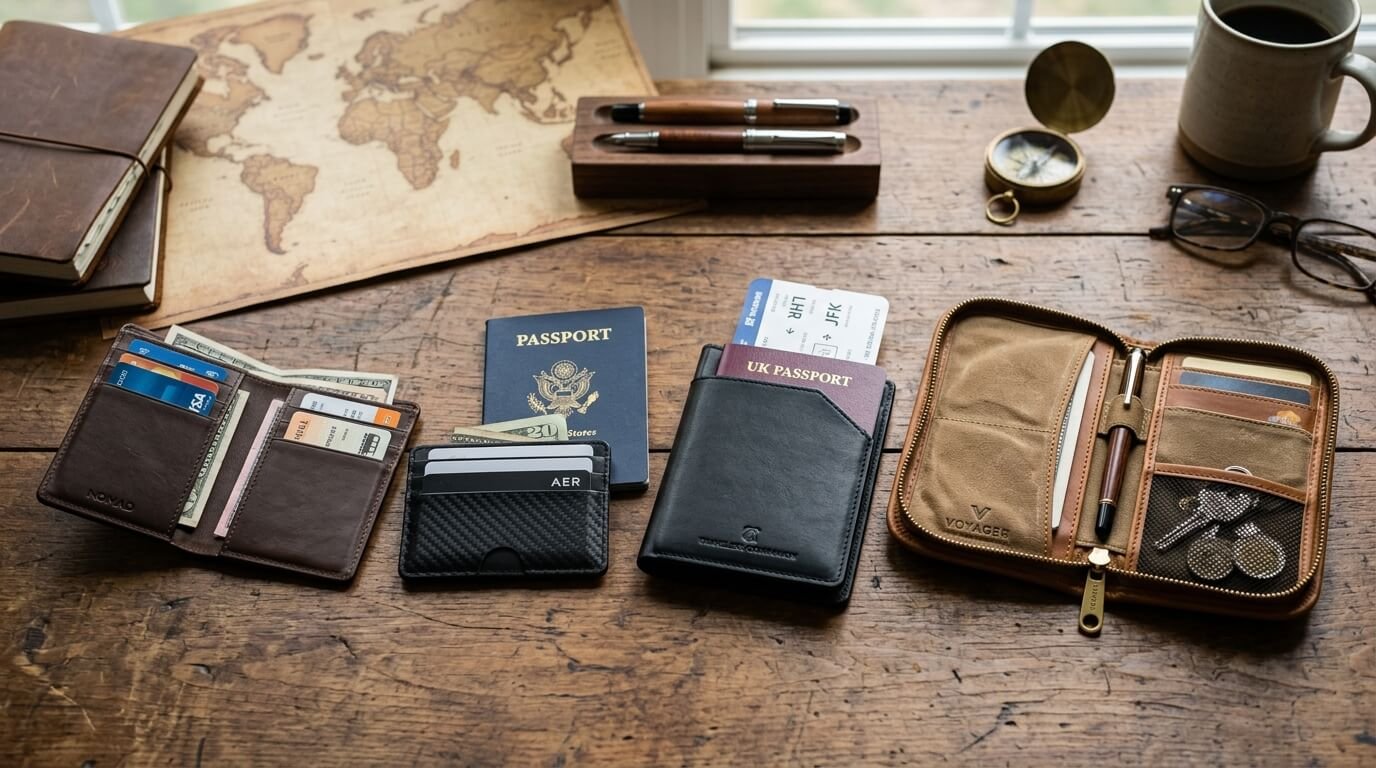

Traveling is exciting, but keeping your passport, cards, cash, and important documents organized can be surprisingly stressful. A good wallet can make that part of the journey much easier. Instead of searching through pockets or digging around inside your luggage, you can keep your essentials together in one convenient place.
But with so many styles, materials, sizes, and security features available, how do you know which one is right for you? The ideal choice depends on how you travel, what you carry, and how much protection you want.
This guide explores the best travel wallets, the features that matter most, different wallet styles, security considerations, and practical tips to help you make a smart choice.
1. What Makes a Good Travel Wallet?
A travel wallet should do more than simply hold money. Think of it as a small command center for your journey. It keeps the things you need most within easy reach while helping you avoid unnecessary clutter.
The right wallet should be secure, practical, comfortable, and durable. It should have enough space for your essentials without becoming so bulky that it feels uncomfortable in your pocket or bag.
Consider what you normally carry when traveling. Do you need space for a passport? Several bank cards? Boarding passes? Foreign currency? Hotel cards? Receipts? If your answer is yes to several of these, a standard everyday wallet may not provide enough room.
At the same time, bigger is not always better. A wallet packed with unnecessary items can become difficult to carry and may attract unwanted attention.
The key is balance. You want enough storage for your important items while keeping the overall design slim and manageable.
A quality travel wallet should also be easy to access. Imagine standing at an airport counter while people wait behind you. You don’t want to spend several minutes searching for your passport or boarding pass.
2. Why You Should Use a Travel Wallet
One of the biggest advantages of a dedicated travel wallet is organization.
When you’re traveling, you may need to handle multiple currencies, identification documents, payment cards, tickets, and receipts. Keeping everything in separate pockets can quickly become confusing.
A travel wallet gives each item a designated place.
Better organization can also save time. Instead of checking every pocket of your backpack, you can reach for one wallet and find what you need.
Another advantage is convenience. Many travel-focused designs include compartments specifically created for passports, cards, cash, and tickets.
Security is another reason people choose these wallets. Some designs include features intended to reduce unauthorized scanning of compatible contactless cards. Others use zippered compartments or hidden pockets to keep important items more secure.
There is also a psychological benefit. When your important documents are kept together, you may feel more relaxed during a busy trip.
After all, traveling already comes with enough surprises. Why make finding your passport another one?
3. Different Types of Travel Wallets
There isn’t one perfect wallet for every traveler. Different designs are suited to different travel habits.
Passport Wallets
Passport wallets are designed specifically for international travel. They normally provide a dedicated passport compartment along with additional spaces for cards and cash.
Some models also include slots for boarding passes, SIM cards, or other small travel documents.
They’re particularly useful if you regularly travel internationally and want your passport protected and easy to reach.
Neck Wallets
A neck wallet hangs around your neck and usually sits underneath clothing. This design can be useful for travelers who prioritize discreet storage.
It can hold documents, cards, and cash while keeping them close to your body.
For crowded tourist destinations, this can provide an additional layer of convenience and peace of mind.
Money Belts
Money belts are worn around the waist, usually underneath clothing. They are designed primarily for discreet storage rather than quick access.
They’re useful for carrying emergency cash, backup cards, or copies of important documents.
Bifold Travel Wallets
These look similar to traditional wallets but generally offer additional compartments. They’re a good option for travelers who prefer something familiar.
Zipper Travel Wallets
A zipper design keeps the contents enclosed. This can be useful if you carry multiple cards, coins, cash, or documents.
The downside is that zipper wallets may be slightly bulkier than minimalist alternatives.

4. Important Features to Look For
Before buying a travel wallet, consider its features carefully rather than choosing based solely on appearance.
Passport Compartment
If you’re traveling internationally, a dedicated passport compartment can be extremely useful. It prevents your passport from getting mixed with other documents.
Card Slots
Think about how many cards you genuinely need. A few carefully positioned slots are usually better than dozens of unnecessary compartments.
Cash Compartment
A separate cash section can help you organize different currencies. This becomes particularly useful when you’re moving between countries.
Zipper or Snap Closure
A secure closure helps prevent items from falling out. Zippers offer enclosed protection, while snaps can provide faster access.
Hidden Pockets
A hidden compartment can be useful for emergency cash or a backup card.
Durable Construction
Travel puts more stress on accessories than normal daily use. Your wallet may be exposed to crowded airports, changing weather, frequent handling, and long days of sightseeing.
Look for strong stitching, reliable hardware, and materials that can handle regular use.
Lightweight Design
You don’t want to carry unnecessary weight all day. A lightweight wallet can make a noticeable difference, especially when you’re walking around a city for hours.
5. Passport Wallets for International Trips
For international travelers, the passport is arguably the most important item inside the wallet.
A passport wallet should protect it from unnecessary wear while providing convenient access when needed.
Airport security can involve repeated passport checks. Immigration officers may also ask for it when entering or leaving a country. Having it in a dedicated compartment can make those moments easier.
A good passport wallet may also provide room for:
- Credit and debit cards
- Foreign currency
- Boarding passes
- Travel insurance information
- Hotel cards
- Emergency contact information
- Small receipts
However, avoid filling the wallet with things you don’t need.
Your passport should remain easy to remove. A compartment that’s too tight may become frustrating when you’re in a hurry.
For frequent international travel, a slightly larger passport organizer can be worth considering. For short trips, a slimmer passport holder may be enough.
6. RFID Protection: Is It Worth It?
RFID protection is frequently advertised as a feature of modern travel wallets.
RFID stands for Radio Frequency Identification. Some payment cards contain technology that can communicate wirelessly with compatible readers.
RFID-blocking materials are designed to reduce wireless communication between cards and unauthorized readers.
Does everyone need RFID protection? Not necessarily.
The practical value depends on the cards you carry, your destination, and your personal preferences. It shouldn’t be treated as a replacement for basic security habits.
You should still monitor your accounts, protect your PINs, avoid displaying financial information publicly, and be careful about where you keep your cards.
If RFID protection is included in a wallet you like, it can be a useful additional feature. But don’t choose a wallet solely because it has an RFID label.
Good physical security and sensible travel habits remain important.
7. Choosing the Right Material
Travel wallets come in a wide range of materials, each offering different advantages.
Leather
Leather wallets are popular because they can look elegant and develop character over time. High-quality leather can also be durable when properly maintained.
The downside is that leather may be heavier than some synthetic alternatives.
Nylon
Nylon is lightweight and often suitable for travelers who want something practical rather than formal.
It can also be a good option for outdoor trips where low weight matters.
Polyester
Polyester is commonly used in affordable travel accessories. It can provide a good combination of durability and low weight.
Vegan Leather
Vegan leather offers an alternative appearance for people who prefer not to use traditional leather. Quality can vary significantly, so construction and stitching should still be considered.
Water-Resistant Materials
If you expect to encounter rain, beaches, hiking trails, or other wet environments, water-resistant material can be valuable.
Remember that water-resistant does not necessarily mean waterproof. If your documents must remain completely dry, consider using an additional protective pouch.
8. Travel Wallet Size and Organization
Size is one of the most overlooked factors when choosing a wallet.
A wallet can look fantastic online but feel inconvenient when it’s stuffed with passports, cash, and cards.
Start by making a list of what you actually carry.
For example, you might need:
- One passport
- Two payment cards
- One identification card
- Some cash
- A boarding pass
- An emergency card
If that’s your typical load, you probably don’t need a huge organizer.
On the other hand, families or frequent international travelers may need more storage.
Don’t buy capacity you won’t use.
Extra space can encourage you to carry unnecessary items, turning a useful travel accessory into a bulky object.
Organization matters just as much as capacity. Look for compartments that are logically arranged and easy to access.
A wallet should make your travel routine simpler, not turn it into a puzzle.
9. Travel Wallets for Men and Women
Travel wallets don’t have to follow strict gender categories. The best choice is the one that fits your needs and personal style.
Some travelers prefer minimalist designs that fit inside a trouser pocket. Others prefer larger organizers that can be carried inside a handbag or backpack.
For Men
Men may prefer compact bifold designs, slim passport holders, or wallets that fit comfortably into a jacket or trouser pocket.
For business travel, leather organizers can provide a more professional appearance.
For Women
Women may prefer a larger zip-around organizer that can fit inside a handbag or tote. These designs can provide space for passports, cards, cash, and travel documents.
However, a compact wallet can also be useful for travelers who prefer carrying a small crossbody bag.
Ultimately, function should come before labels.
Choose the wallet that works with your clothing, luggage, travel style, and daily routine.
10. How Much Should You Spend?
Travel wallets are available at many different price points.
An inexpensive wallet may be perfectly suitable for occasional trips. A frequent traveler, however, may benefit from investing in better materials and construction.
Instead of asking, “What is the most expensive wallet I can buy?” ask:
“What features will I actually use?”
A more expensive wallet isn’t automatically better.
Look for value in areas such as:
- Durability
- Useful compartments
- Comfort
- Quality stitching
- Secure closure
- Practical size
- Suitable material
If you travel several times a year, spending more on a durable wallet may make sense because you’ll use it repeatedly.
If you only take one vacation every few years, a simple and reliable option may be enough.
11. Tips for Using Your Wallet Safely
Even the best travel wallet cannot completely protect you if you use it carelessly.
One of the simplest rules is to avoid carrying everything in one place.
Consider keeping a backup payment card somewhere separate from your main wallet. You can also keep a small emergency amount of cash in another secure location.
Before leaving home, make a list of the items you’re carrying.
This makes it easier to notice if something goes missing.
You should also avoid carrying unnecessary identification, old receipts, spare cards, or other documents.
When visiting crowded places, be aware of your surroundings. Busy public transport, tourist attractions, markets, and queues can require extra attention.
Don’t make your wallet an easy target.
It’s also sensible to keep digital or physical copies of important travel documents according to your destination’s requirements. Store sensitive information securely rather than leaving it openly accessible.
Finally, check your bank accounts periodically while traveling. Early detection of an unfamiliar transaction can make dealing with a problem much easier.
12. How to Choose the Right Travel Wallet
Still unsure which design is right for you? Start with your travel style.
For International Travelers
Choose a passport-friendly organizer with space for cards, cash, and travel documents.
For Minimalist Travelers
A slim passport holder or compact wallet may be all you need.
For Backpackers
Look for lightweight, durable, and potentially water-resistant materials.
For Business Travelers
A refined leather or premium organizer may provide the combination of appearance and organization you want.
For Families
A larger organizer can help keep multiple documents together, although each person’s passport and sensitive items should still be handled carefully.
For Crowded Destinations
Consider a discreet design, such as a neck wallet or money belt, especially for storing backup cash and important documents.
Before buying, ask yourself five simple questions:
1. What do I need to carry?
2. How often do I travel?
3. Where will I carry the wallet?
4. Do I need passport storage?
5. Which security features actually matter to me?
Your answers will quickly narrow down your choices.
13. Final Thoughts
Choosing among the best travel wallets doesn’t have to be complicated. The right option is the one that keeps your essentials organized without becoming uncomfortable or unnecessarily bulky.
Think about your destination, travel habits, documents, payment methods, and preferred carrying style. A frequent international traveler may need a larger passport organizer, while a minimalist vacationer may be happier with a compact wallet.
Remember that a wallet is a tool, not a fashion competition. Its job is to make your journey easier.
Choose practical organization, reliable construction, comfortable size, and sensible security features over unnecessary extras. When your important items have a safe and predictable home, you can spend less time worrying about your belongings and more time enjoying the trip.
14. Frequently Asked Questions
1. What should I keep in a travel wallet?
A travel wallet can hold your passport, essential payment cards, identification, cash, boarding passes, and other important travel documents. Avoid carrying unnecessary cards and paperwork.
2. Are RFID-blocking travel wallets necessary?
RFID protection can be a useful additional feature for compatible contactless cards, but it isn’t a substitute for sensible security practices. Consider it one part of an overall approach to protecting your financial information.
3. Is a leather travel wallet better than a nylon wallet?
Not necessarily. Leather can offer a classic appearance and durable construction, while nylon is often lighter and more practical for active travel. Your choice should depend on your priorities.
4. Should a travel wallet be large or small?
It should be large enough to hold your essential items but small enough to carry comfortably. Start by identifying exactly what you need before choosing the size.
5. What is the best travel wallet for international travel?
For international trips, a passport organizer with dedicated spaces for your passport, cards, cash, and travel documents is generally a practical choice. The ideal design depends on how much you carry and how you prefer to travel.
