


Introduction
Word puzzles have always been a favorite way to challenge the mind, relax after a busy day, and learn new vocabulary. In recent years, puzzle enthusiasts have embraced a growing collection of digital brain games, and one of the newest favorites is New York Times Strands. If you enjoy finding hidden words, spotting patterns, and solving clever challenges, this puzzle offers a fresh and exciting experience.
Unlike traditional crossword puzzles or word searches, Strands combines strategy, observation, and creativity. Every puzzle revolves around a specific theme, encouraging players to think beyond obvious answers. It feels a bit like searching for hidden treasures in a maze of letters, where every discovery brings you one step closer to solving the mystery.
Whether you’re completely new to the game or looking to improve your skills, this guide covers everything you need to know about New York Times Strands.
What Is New York Times Strands?
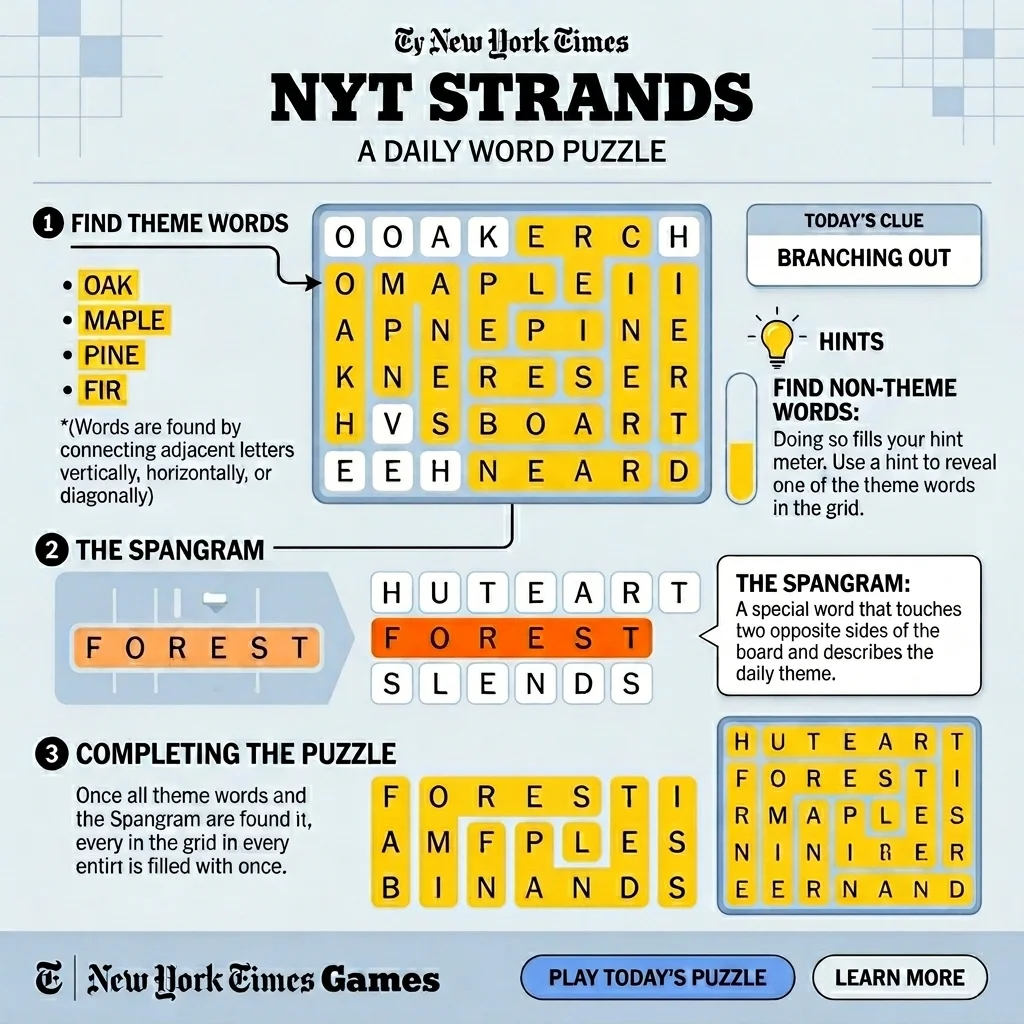
New York Times Strands is a daily word puzzle that challenges players to find theme-related words hidden within a grid of letters. Each puzzle revolves around a unique topic, and the objective is to discover all the words connected to that theme.
Players connect letters in any direction to create words. Once a valid theme word is found, it becomes highlighted. The puzzle also includes a special word known as the Spangram, which plays a central role in solving the challenge.
The game offers a balance between simplicity and complexity, making it appealing to both casual players and dedicated puzzle fans.

The Origins of the Puzzle
The New York Times has a long history of producing engaging word games. From crosswords to spelling challenges, its puzzle collection continues to attract millions of players worldwide.
Strands was introduced as a modern addition to this family of games. It combines familiar word-search elements with innovative mechanics, creating something that feels both fresh and familiar.
The success of Strands reflects a growing demand for brain-training games that are easy to access and enjoyable to play in just a few minutes each day.
How Strands Works
Finding Hidden Words
At the start of each puzzle, players see a grid filled with letters. Hidden within the grid are several words connected to a shared theme.
Players swipe or select adjacent letters to form words. These words can move horizontally, vertically, or diagonally.
Completing the Puzzle
The goal is to find every theme-related word in the grid. Once all words are discovered, the puzzle is complete.
The challenge lies in recognizing connections between words and understanding how they relate to the puzzle’s theme.
Understanding the Daily Theme
The theme serves as the foundation of every Strands puzzle. It acts as a clue that guides players toward the hidden words.
For example, a puzzle might focus on:
- Foods
- Animals
- Travel
- Sports
- Weather
- Movies
- Music
Sometimes the themes are straightforward, while other times they involve wordplay, puns, or creative interpretations.
Learning to interpret themes effectively is one of the most valuable skills a Strands player can develop.
The Importance of the Spangram
What Is a Spangram?
The Spangram is a special word or phrase that stretches across the puzzle board and summarizes the overall theme.
Unlike ordinary words, the Spangram often connects multiple sections of the grid.
Why It Matters
Finding the Spangram can significantly simplify the puzzle. It provides insight into the theme and helps identify related words.
Think of it as the key that unlocks a treasure chest. Once you discover it, many of the remaining clues suddenly become easier to understand.
Rules Every Player Should Know
Understanding the basic rules improves both enjoyment and performance.
Letter Connections
Letters must be connected to neighboring letters. Random selections are not allowed.
Theme-Based Solutions
Only words related to the puzzle’s theme count toward completion.
Hints System
Players can earn hints by finding non-theme words. These hints reveal portions of hidden theme words.
Daily Challenges
A new puzzle appears every day, ensuring fresh content and new challenges.
Beginner Strategies
Start with Obvious Words
When beginning a puzzle, search for words that immediately relate to the theme. These often reveal patterns that help uncover additional answers.
Use the Theme Wisely
Avoid searching randomly. Focus on vocabulary connected to the theme.
Look for Long Words
Longer words often stand out in the grid and may lead directly to the Spangram.
Take Breaks
If you’re stuck, step away for a few minutes. A fresh perspective often reveals hidden patterns.
Advanced Techniques
Scan the Entire Grid
Experienced players avoid focusing on one area for too long. Instead, they scan the entire board to identify letter clusters.
Think Beyond Literal Meanings
Many puzzles use creative themes. Consider synonyms, related concepts, and wordplay.
Analyze Word Endings
Common endings such as:
- ING
- ER
- TION
- ED
can help identify possible solutions.
Work Backward
If you know the theme, brainstorm related words and then search for them within the grid.
Common Mistakes to Avoid
Ignoring the Theme
Many players spend too much time finding random words. The theme should always guide your search.
Overusing Hints
Hints can be helpful, but relying on them too frequently reduces the challenge and satisfaction of solving the puzzle independently.
Missing the Spangram
Some players focus exclusively on theme words and forget about the Spangram. Since it often reveals the puzzle’s core idea, finding it early can save time.
Rushing Through the Grid
Patience is essential. Careful observation usually produces better results than hurried guessing.
Benefits of Playing Strands
Improves Vocabulary
Players regularly encounter new words and expressions.
Enhances Pattern Recognition
The game trains the brain to identify relationships and visual patterns.
Encourages Critical Thinking
Themes often require creative interpretation and logical reasoning.
Provides Stress Relief
Many people find word puzzles relaxing and enjoyable after a busy day.
Supports Cognitive Health
Regular mental exercise may contribute to improved concentration and memory.
Why Strands Is Different from Other Word Games
Many word puzzles involve simply finding words. Strands goes further by requiring players to identify thematic relationships.
This added layer transforms the experience from a basic word search into a puzzle-solving adventure.
The combination of:
- Themes
- Hidden words
- Strategic thinking
- The Spangram
creates a unique challenge that keeps players coming back every day.
The Growing Puzzle Community
Strands has developed a passionate community of players who enjoy discussing daily puzzles, sharing strategies, and comparing solving methods.
Online forums, social media groups, and puzzle communities regularly exchange tips and celebrate particularly clever themes.
This social aspect adds another layer of enjoyment to the experience.
Daily Puzzle Habits for Success
Play Consistently
Daily practice helps improve pattern recognition and vocabulary skills.
Challenge Yourself
Try solving puzzles without using hints whenever possible.
Expand Your Vocabulary
Reading books, articles, and magazines can expose you to new words that may appear in future puzzles.
Stay Curious
Approach each puzzle with an open mind. Unexpected answers are often part of the fun.
The Future of Word Puzzles
Digital puzzle games continue to evolve, blending traditional concepts with innovative mechanics.
As players seek engaging mental challenges, games like Strands demonstrate how classic wordplay can be reimagined for modern audiences.
Future puzzle designs will likely continue emphasizing creativity, accessibility, and community interaction.
Final Thoughts
New York Times Strands has quickly become one of the most engaging word puzzles available today. Its combination of themed word discovery, strategic thinking, and daily challenges creates an experience that is both entertaining and mentally stimulating.
Whether you play during your morning coffee break or unwind with it in the evening, Strands offers a rewarding way to exercise your brain while having fun. The puzzle’s clever themes, hidden connections, and signature Spangram ensure that each day brings something new to discover.
For anyone who enjoys word games, pattern recognition, and creative thinking, Strands is well worth exploring.
FAQs
1. What is the goal of New York Times Strands?
The goal is to find all theme-related words hidden within the letter grid and identify the Spangram that connects the overall theme.
2. What makes Strands different from a traditional word search?
Unlike standard word searches, Strands requires players to identify words connected to a specific theme and uncover a special Spangram.
3. What is a Spangram in Strands?
A Spangram is a special word or phrase that spans the board and represents the puzzle’s central theme.
4. Are hints available in the game?
Yes. Players can earn hints by finding valid non-theme words within the puzzle grid.
5. Can beginners enjoy New York Times Strands?
Absolutely. The game is designed for players of all skill levels, with simple rules and increasingly rewarding challenges as skills improve.
