


Introduction
Tuxedo vs suit
Have you ever stood in front of your wardrobe wondering, “Should I wear a tuxedo or a suit?” You’re not alone. While both outfits look sharp and formal, they’re not interchangeable—and choosing the wrong one can make you feel out of place.
Think of it this way: a tuxedo is like a black-tie invitation—it comes with rules and expectations—while a suit is more like a versatile friend that fits into almost any situation. Understanding the difference can instantly elevate your style and confidence.”tuxedo vs suit”
In this guide, we’ll break down everything you need to know in simple terms, so you’ll never second-guess your outfit again.
1. What Is a Tuxedo?
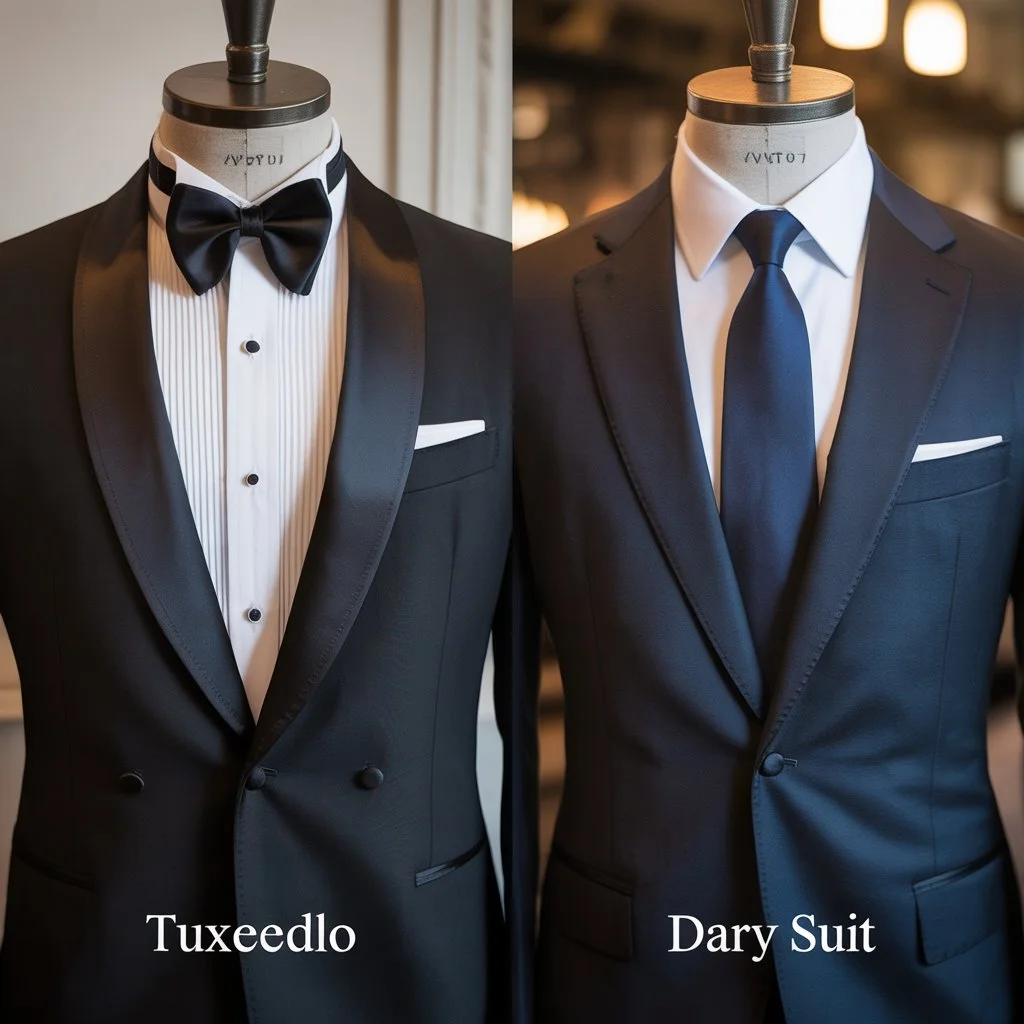
A tuxedo is a formal outfit traditionally worn for evening events. It stands out because of its satin details, usually on the lapels, buttons, and pant stripes.
Key features include:
- Satin lapels
- Satin stripe down trousers
- Bow tie (not a regular tie)
- Often paired with a cummerbund or vest
It’s the go-to choice for black-tie events, weddings, and galas.
2. What Is a Suit?
A suit is a more versatile outfit that works for both formal and semi-formal occasions. Unlike a tuxedo, it doesn’t have satin accents.
Typical suit elements:
- Matching jacket and trousers
- Variety of colors and fabrics
- Worn with a necktie or no tie at all
From office meetings to weddings, a suit adapts easily.
3. Key Differences at a Glance

Let’s simplify things:
Tuxedo vs Suit in a nutshell:
- Formality: Tuxedo = very formal, Suit = flexible
- Fabric detail: Tuxedo has satin, suit does not
- Accessories: Tuxedo uses bow tie, suit uses necktie
- Occasion: Tuxedo = evening, suit = anytime
Think of the tuxedo as “formal mode” and the suit as “everyday elegance.”
4. Fabric and Material Differences
One of the biggest visual differences lies in the fabric.
Tuxedo fabric:
- Features satin or silk accents
- Usually black or midnight blue
Suit fabric:
- Made from wool, cotton, linen, or blends
- Available in many colors and patterns
This is why tuxedos shine—literally—under evening lighting.
5. Lapel Styles Explained
Lapels are more important than you might think.
Tuxedo lapels:
- Shawl lapel (smooth and rounded)
- Peak lapel (sharp and formal)
- Always satin-covered
Suit lapels:
- Notch lapel (most common)
- Peak lapel (less common, more formal)
- No satin finish
The lapel alone can instantly signal whether you’re wearing a tuxedo or suit.
6. Shirt and Accessories Comparison
This is where the personality of each outfit shines.
Tuxedo accessories:
- White dress shirt with pleats
- Bow tie
- Cummerbund or waistcoat
- Stud buttons
Suit accessories:
- Regular dress shirt
- Necktie or no tie
- Optional pocket square
Tuxedo styling is structured, while suits allow creativity.
7. Shoes: What Completes the Look?
Even your shoes tell a story.
With a tuxedo:
- Patent leather shoes
- Highly polished
With a suit:
- Oxford shoes
- Derby shoes
- Loafers (for casual looks)
Shoes are like the period at the end of a sentence—they finish the outfit.
8. When to Wear a Tuxedo

You don’t wear a tuxedo just anywhere.
Perfect occasions:
- Black-tie weddings
- Formal galas
- Award ceremonies
- Evening receptions
If the invitation says “black tie,” there’s no debate—go tuxedo.
9. When to Wear a Suit
A suit is your all-rounder.
Ideal situations:
- Business meetings
- Job interviews
- Daytime weddings
- Casual formal events
If you’re unsure, a suit is usually the safer choice.
10. Can You Replace One with the Other?
Here’s the honest answer: sometimes, but not always.
- Wearing a suit to a tuxedo-required event can feel underdressed
- Wearing a tuxedo where a suit is expected may seem overdone
It’s like wearing sneakers to a formal dinner—it might work, but it’s not ideal.
11. Styling Tips for Tuxedos
Want to look flawless?
Keep it classic:
- Stick to black or midnight blue
- Wear a proper bow tie (avoid clip-ons if possible)
- Ensure a perfect fit
Pro tip: Less experimentation, more elegance.
12. Styling Tips for Suits
This is where you can express yourself.
Try this:
- Experiment with colors like navy, grey, or beige
- Play with ties and pocket squares
- Mix textures and patterns
A suit is like a canvas—you can make it your own.
13. Cost and Practicality
Let’s talk money and usage.
Tuxedo:
- More expensive
- Limited use
- Often rented
Suit:
- More affordable options
- Frequent use
- Worth owning multiple
If you attend formal events rarely, renting a tuxedo makes sense.
14. Final Thoughts
At the end of the day, choosing between a tuxedo and a suit comes down to occasion, formality, and personal style.
A tuxedo is your statement piece—reserved, elegant, and timeless. A suit, on the other hand, is your everyday hero—flexible, stylish, and reliable.
If you remember one thing, let it be this: dress for the moment, not just the mirror. When your outfit matches the occasion, confidence follows naturally.
FAQs
1. Can I wear a regular tie with a tuxedo?
No, a tuxedo traditionally requires a bow tie. A regular tie breaks the formal look.
2. Is a black suit the same as a tuxedo?
Not at all. Even if both are black, a tuxedo has satin details, while a suit does not.
3. Can I wear a tuxedo during the day?
It’s not recommended. Tuxedos are designed for evening events.
4. Which is better for a wedding: tuxedo or suit?
It depends on the dress code. Black-tie weddings call for tuxedos, while others are fine with suits.
5. Do I need both a tuxedo and a suit?
Ideally, yes. A suit covers most occasions, while a tuxedo is useful for formal events.
