


Introduction
How Often Should You Rotate Your Tires?
Have you ever wondered why your car doesn’t feel as smooth as it used to? Or why some tires wear out faster than others? The solution is easier than you think: tire rotation.It’s one of those small maintenance tasks that often gets overlooked, yet it plays a huge role in your vehicle’s performance, safety, and your wallet.
Think of your tires like a team of runners. If one runner is always carrying more weight, they’ll tire out faster. Rotating your tires ensures each one shares the workload evenly, keeping everything balanced and efficient.
In this guide, we’ll break down everything you need to know—from timing to benefits—using simple language and practical advice you can actually use.
1. What Does Tire Rotation Mean?

Tire rotation simply means moving your tires from one position on the vehicle to another. For example, front tires may be moved to the rear, and vice versa.
Why does this matter? Because not all tires wear evenly. The front tires usually carry more weight and handle steering, which causes faster wear compared to the rear ones.
2. Why Tire Rotation Is Important
You might think, “My tires look fine—why bother?” But here’s the thing:
- Uneven wear reduces lifespan
- It affects handling and comfort
- It can even impact fuel efficiency
Rotating your tires ensures that each one wears down evenly, which keeps your car running smoothly and safely.
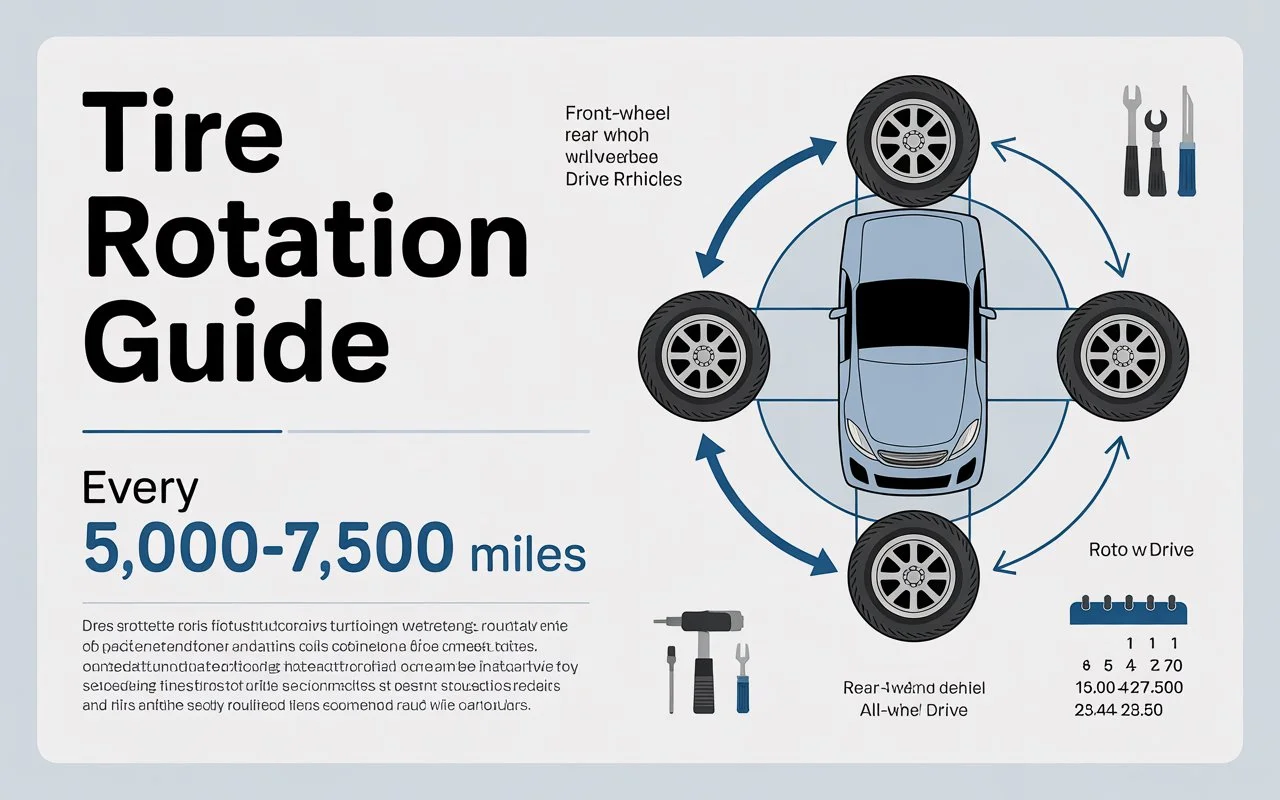
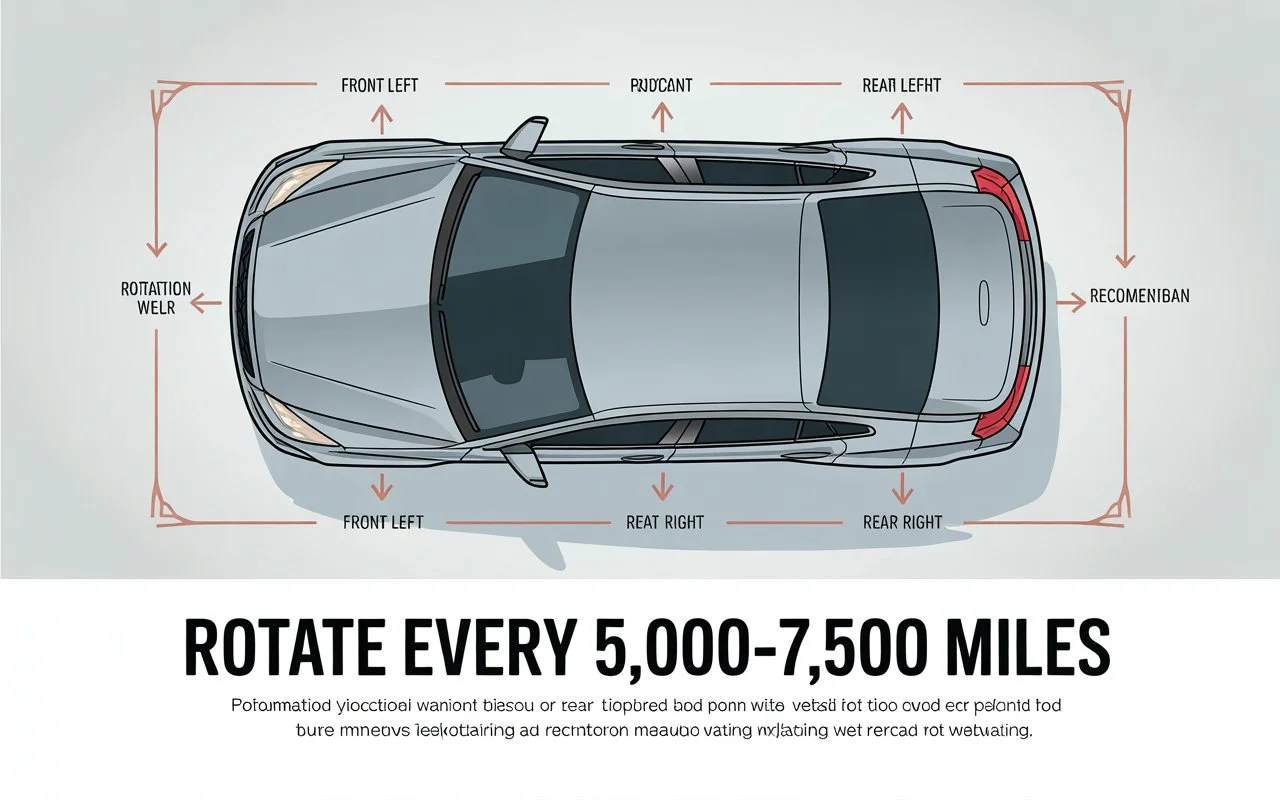
3. How Often Should You Rotate Your Tires?
The general rule:
👉 Every 5,000 to 8,000 miles (8,000 to 13,000 km)
But let’s make it even simpler:
- If you’re already going for an oil change, that’s a great time to rotate your tires.
- Many drivers follow a “every other oil change” habit.
Quick tip: Check your car’s manual—it often gives the best recommendation for your specific vehicle.
4. Factors That Affect Rotation Frequency
Not all driving situations are the same. Some conditions may require more frequent rotations.
Driving habits
Do you brake hard or take sharp turns often? Your tires may wear faster.
Road conditions
Rough, uneven roads can cause quicker wear.
Vehicle type
Heavier vehicles like SUVs may need more attention.
Tire type
Some tires (like performance tires) wear differently than standard ones.
5. Different Tire Rotation Patterns
There’s no one-size-fits-all method. The pattern depends on your vehicle type.
Forward cross pattern
Common for front-wheel drive vehicles.
Rearward cross pattern
Used in rear-wheel and all-wheel drive cars.
X-pattern
All tires switch diagonally.
Side-to-side pattern
Used for directional tires.
Choosing the right pattern matters because it ensures even wear and optimal performance.
6. Signs Your Tires Need Rotation

Not sure if it’s time yet? Look out for these signs:
- Uneven tread wear
- Vibration while driving
- Noise from tires
- Reduced grip on the road
If your car starts feeling “off,” your tires might be trying to tell you something.
7. Front-Wheel vs Rear-Wheel Drive Differences
Front-wheel drive (FWD)
Front tires wear out faster because they handle:
- Steering
- Acceleration
- Most braking
Rear-wheel drive (RWD)
Rear tires take more load, especially during acceleration.
That’s why rotation patterns differ—each setup puts stress on different tires.
8. All-Wheel Drive Considerations
If you drive an AWD vehicle, rotation becomes even more important.
Why?
Because all four tires work together constantly, and uneven wear can:
- Damage the drivetrain
- Reduce traction
- Lead to costly repairs
👉 For AWD vehicles, stick closely to the recommended schedule.
9. Benefits of Regular Tire Rotation
Still wondering if it’s worth it? Here’s what you gain:
Longer tire life
You get the most out of your investment.
Better fuel efficiency
Even wear reduces rolling resistance.
Improved safety
Balanced tires mean better grip and control.
Smoother ride
No annoying vibrations or uneven handling.
10. What Happens If You Skip It?
Skipping tire rotation might save time today—but it can cost you later.
- Tires wear unevenly and need early replacement
- Reduced traction increases accident risk
- Poor handling makes driving uncomfortable
Think of it like skipping workouts—everything might seem fine at first, but problems build up over time.
11. DIY vs Professional Rotation
DIY Rotation
If you have:
- A jack
- Jack stands
- Basic tools
You can do it yourself.
Professional Service
Most workshops offer quick and affordable rotation services.
Which is better?
If you’re confident, DIY works. Otherwise, professionals ensure everything is done safely.
12. Cost of Tire Rotation
Good news—it’s not expensive.
- Free (with some service packages)
- Around $20–$50 otherwise
Compared to buying new tires early, this is a small price to pay.
13. Tips to Maximize Tire Life
Want your tires to last even longer? Combine rotation with these habits:
- Check tire pressure regularly
- Maintain proper alignment
- Avoid aggressive driving
- Inspect tires monthly
Small steps can make a big difference.
14. Final Thoughts
Tire rotation might seem like a minor task, but it’s one of the smartest ways to protect your car and your safety. By rotating your tires regularly, you ensure even wear, better performance, and long-term savings.
So next time you’re planning maintenance, ask yourself: When did I last rotate my tires? If you can’t remember, it’s probably time.
FAQs
1. How often should you rotate your tires for normal driving?
Most drivers should rotate their tires every 5,000 to 8,000 miles or during regular oil changes.
2. Can I rotate my tires myself at home?
Yes, if you have the right tools and knowledge. Otherwise, it’s safer to get it done professionally.
3. Do new tires need rotation?
Yes, even new tires should be rotated regularly to maintain even wear from the start.
4. Is tire rotation necessary for all vehicles?
Absolutely. Whether it’s front-wheel, rear-wheel, or all-wheel drive, every vehicle benefits from rotation.
5. What happens if I never rotate my tires?
Your tires will wear unevenly, reducing their lifespan and potentially affecting your safety on the road.
