

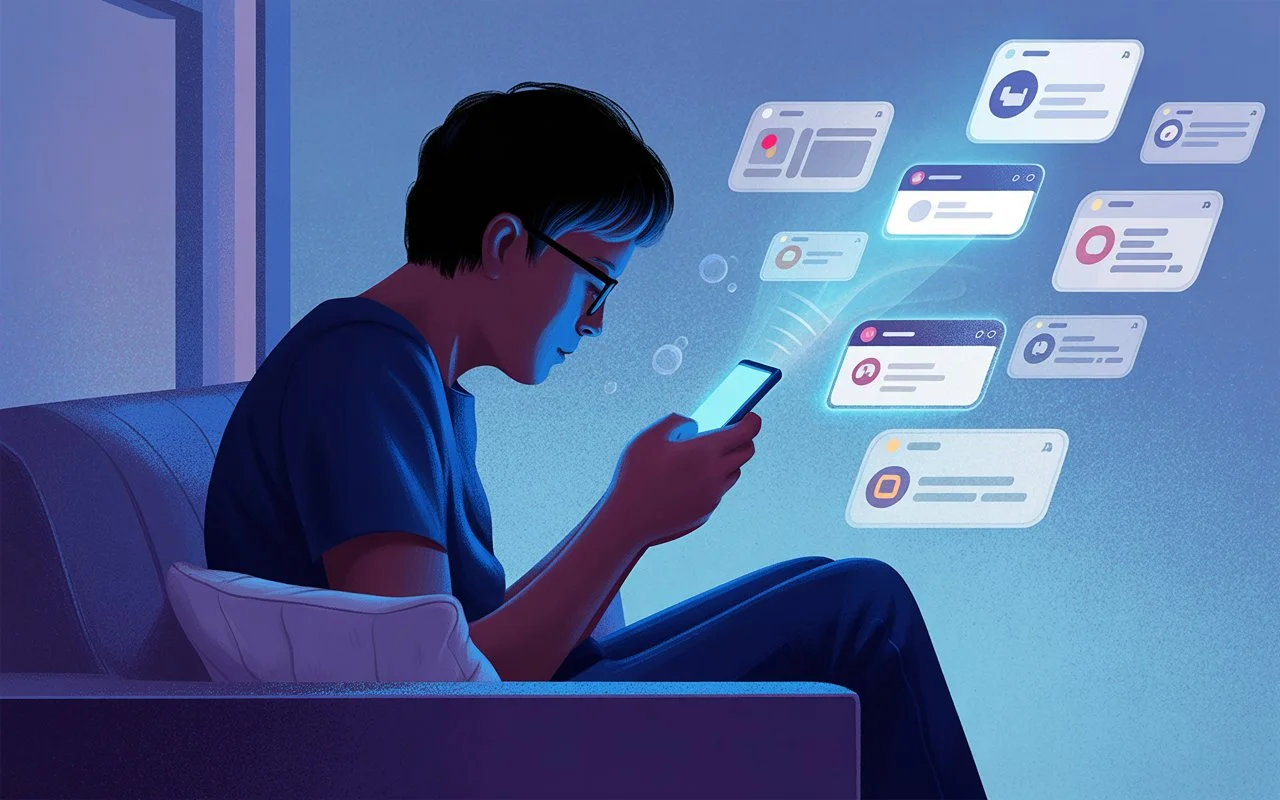

Social Media Silent Scroller Traits
Social media often feels like a crowded party where everyone is talking at once. Some people post selfies, share opinions, upload videos, and comment on every trending topic. But hidden among all that noise is another group quietly observing everything—the silent scrollers.
You probably know one. Maybe you are one.
These users spend hours browsing content, watching stories, liking occasional posts, and keeping up with trends without actively participating. They rarely comment, almost never post, and often stay invisible online. Yet they make up a huge portion of social media audiences across platforms like Instagram, TikTok, Facebook, and X.
Silent scrollers are like people sitting quietly in a coffee shop, listening to conversations around them without joining in. They absorb information, observe behavior, and stay connected while remaining in the background.
So what makes someone become a silent scroller? What traits define them? And why are they becoming more common in modern digital culture?
Let’s explore the fascinating psychology and habits behind social media silent scroller traits.

Understanding the Silent Scroller
A silent scroller is someone who regularly uses social media but rarely engages publicly. They may watch stories, read comments, and follow trends without creating visible activity.
These users usually:
- Avoid posting personal updates
- Rarely comment on content
- Prefer private viewing
- Spend more time consuming than sharing
- Observe conversations instead of joining them
Interestingly, silent scrollers are not necessarily antisocial. Many are highly aware of what is happening online. They know the memes, trends, celebrity news, and viral topics before active users do.
They simply choose not to speak loudly in digital spaces.
Why Silent Scrolling Has Become Common
Years ago, social media encouraged open sharing. People uploaded vacation albums, daily thoughts, and random life moments without hesitation.
Today, things feel different.
Online spaces have become more judgmental, crowded, and emotionally draining. Every post can attract criticism, comparisons, or misunderstandings. Because of this, many users now prefer staying quiet.
Several factors have increased silent scrolling behavior:
Information Overload
Modern platforms flood users with endless videos, opinions, advertisements, and updates. Many people feel overwhelmed and stop contributing actively.
Privacy Concerns
People are more cautious about sharing personal information online than they were a decade ago.
Social Comparison
Seeing polished lifestyles and filtered success stories can make users hesitant to post their own lives.
The Psychology Behind Quiet Online Behavior
Silent scrolling is deeply connected to human psychology.
Some users stay quiet because they enjoy observing. Others avoid interaction due to anxiety, insecurity, or emotional exhaustion.
Need for Emotional Safety
Public posting can feel risky. A single comment might invite arguments or criticism.
Silent scrollers protect their emotional comfort by remaining unseen.
Control Over Attention
Not everyone enjoys being noticed. Some people feel happier consuming content privately instead of becoming part of the conversation.
For them, social media is more like watching television than participating in a live debate.
Silent Scrollers Prefer Observation Over Attention
One major silent scroller trait is strong observational behavior.
These users notice details many active posters miss. They pay attention to:
- Social trends
- Relationship changes
- Viral discussions
- Online drama
- Community reactions
Think of them as digital detectives quietly piecing together stories from posts, comments, and reactions.
They may know what is happening in everyone’s life without posting a single thing themselves.
Fear of Judgment and Online Pressure
Many silent scrollers avoid posting because social media can feel intimidating.
Pressure to Be Perfect
Modern social platforms often reward polished content. Beautiful photos, perfect captions, and carefully edited videos dominate feeds.
This creates pressure to appear attractive, successful, or entertaining.
Some users think:
- “What if nobody likes my post?”
- “What if people judge me?”
- “What if I say the wrong thing?”
Rather than dealing with those worries, they stay silent.
Avoiding Conflict
Online arguments spread quickly. Silent scrollers often avoid engagement to stay away from negativity and drama.
Digital Exhaustion and Mental Fatigue
Social media can mentally drain people without them realizing it.
Constant notifications, endless updates, and nonstop content can create emotional fatigue.
Silent scrollers sometimes reduce interaction because they simply feel tired.
The Burnout Effect
Many users previously posted actively but became quieter over time. After years online, they may no longer feel excited about sharing every detail of life.
Instead, they scroll casually for entertainment or information.
This behavior is especially common among adults who grew up during the early rise of social media.
Curiosity Without Participation
Another defining silent scroller trait is curiosity.
These users genuinely enjoy seeing what others are doing.
They may quietly follow:
- Friends
- Celebrities
- Influencers
- Brands
- News pages
- Lifestyle creators
However, curiosity does not always lead to participation.
It is similar to window shopping. You can walk through a mall, look at everything, enjoy the experience, and still leave without buying anything.
Silent scrollers treat social media in much the same way.
How Silent Scrollers Consume Content
Silent scrollers are often highly active consumers even if they appear inactive publicly.
They Watch More Than They Post
Most passive users spend significant time:
- Watching short videos
- Reading comments
- Viewing stories
- Browsing profiles
- Following trends
They Engage Privately
Many silent users still interact behind the scenes through:
- Direct messages
- Sharing posts privately
- Saving content
- Sending memes to friends
Their social activity simply happens away from public attention.
The Emotional Side of Silent Scrolling
Silent scrolling can affect emotions in both positive and negative ways.
Feeling Connected
Even quiet users often feel socially connected through updates and content.
They stay informed about friends, family, entertainment, and global events.
Feeling Isolated
At the same time, passive browsing can sometimes increase loneliness.
Watching others constantly celebrate achievements, relationships, or vacations may trigger feelings of exclusion.
It becomes easy to compare real life to carefully edited online highlights.
Benefits of Being a Silent Scroller
Silent scrolling is not always unhealthy. In fact, it offers several advantages.
Less Online Drama
People who avoid public interaction often experience less conflict and negativity.
More Privacy
Silent users maintain stronger boundaries between their online and offline lives.
Reduced Pressure
Without needing to create content constantly, silent scrollers may feel less stress.
Better Observation Skills
Passive users often become skilled at reading online behavior and trends.
Downsides of Remaining Silent Online
While quiet browsing has benefits, it also has disadvantages.
Missed Opportunities
Social media can help people build friendships, careers, businesses, and communities.
Remaining invisible may limit those opportunities.
Emotional Disconnection
Some silent scrollers eventually feel disconnected because they rarely express themselves publicly.
Passive Consumption Habits
Endless scrolling without meaningful interaction can become addictive and unproductive.
Silent Scrollers in Relationships and Friendships
Silent scrolling also affects personal relationships.
Keeping Tabs Quietly
Many users check profiles of friends, former partners, or acquaintances without interacting.
This behavior is surprisingly common.
Watching Without Responding
Some people regularly view stories or posts but never reply. Others interpret this silence differently.
For example:
- One person sees it as harmless browsing
- Another may view it as emotional distance
Social media behavior now shapes modern communication in subtle ways.
Social Media Algorithms and Passive Users
Platforms actually benefit from silent scrollers more than many people realize.
Social media companies track:
- Watch time
- Viewing habits
- Search behavior
- Saved posts
- Scrolling speed
Even without likes or comments, passive users provide valuable engagement data.
That means silent scrollers still strongly influence algorithms and trending content.
In many cases, they represent the largest audience segment online.
Are Silent Scrollers Introverts?
Not always.
While introverts may prefer quiet online behavior, many extroverts also become silent scrollers over time.
Different Personality Types
People scroll silently for different reasons:
- Introverts may avoid attention
- Busy adults may lack energy to post
- Anxious users may fear criticism
- Private individuals may dislike oversharing
Being a silent scroller does not automatically reveal someone’s personality.
It simply reflects how they choose to engage digitally.
The Future of Quiet Social Media Users
Silent scrolling is likely to grow in the coming years.
Many users are becoming more selective about what they share publicly. Private communities, close-friend stories, and direct messaging continue replacing public posting.
People increasingly value:
- Privacy
- Emotional peace
- Smaller online circles
- Meaningful interaction
The internet may slowly shift from loud public sharing toward quieter, more personal experiences.
In other words, silent scrollers may soon become the new normal.
Conclusion
Social media silent scroller traits reveal an important truth about modern online culture: not everyone wants to perform for the internet.
Some people prefer watching over posting. Others value privacy, emotional comfort, or quiet observation. Silent scrollers may seem invisible, but they remain deeply connected to digital life.
Their behavior reflects changing attitudes toward online pressure, comparison, and public attention. In many ways, silent scrollers act like careful travelers moving through a noisy city—present, aware, and observant without needing to stand in the spotlight.
As social media continues evolving, quiet participation will likely become even more common. And honestly, there is nothing wrong with choosing silence in a world that constantly asks people to speak.
FAQs
What does a silent scroller mean on social media?
A silent scroller is someone who regularly uses social media but rarely posts, comments, or publicly interacts with content.
Why do people become silent scrollers?
People become silent scrollers for many reasons, including privacy concerns, fear of judgment, emotional exhaustion, or simply preferring observation over participation.
Are silent scrollers unhealthy social media users?
Not necessarily. Silent scrolling can reduce stress and protect privacy, although excessive passive browsing may sometimes increase loneliness or screen addiction.
Do silent scrollers still engage online?
Yes. Many silent scrollers interact privately through direct messages, saved posts, or shared content instead of public comments or posts.
Can extroverts be silent scrollers too?
Absolutely. Silent scrolling is not limited to introverts. Many outgoing people also reduce public posting due to online fatigue or changing social habits.
