


Introduction
Have you ever been driving along, minding your own business, when a small dashboard symbol lights up and instantly raises your stress level? Yep—that traction control light. It’s one of those signals that feels important but confusing at the same time. Is the car unsafe? Can you keep driving? Or is it just being dramatic?
Let’s slow things down and unpack it together. Think of traction control like a steady hand on your shoulder when the road gets slippery. When everything’s fine, you barely notice it. When it lights up, it’s telling you something about grip, balance, and safety. By the end of this guide, you’ll know exactly what that message is—and how seriously to take it.
What Is the Traction Control System
At its core, traction control is all about keeping your tires gripping the road. Your car constantly checks how fast each wheel is spinning. If one starts spinning faster than the others—like on ice, rain, or loose gravel—the system steps in.
It does this by slightly reducing engine power or gently applying the brakes. Sounds fancy, right? But really, it’s just your car trying to keep you pointed straight instead of sliding around like a shopping cart with a wobbly wheel.
What the Traction Control Light Looks Like
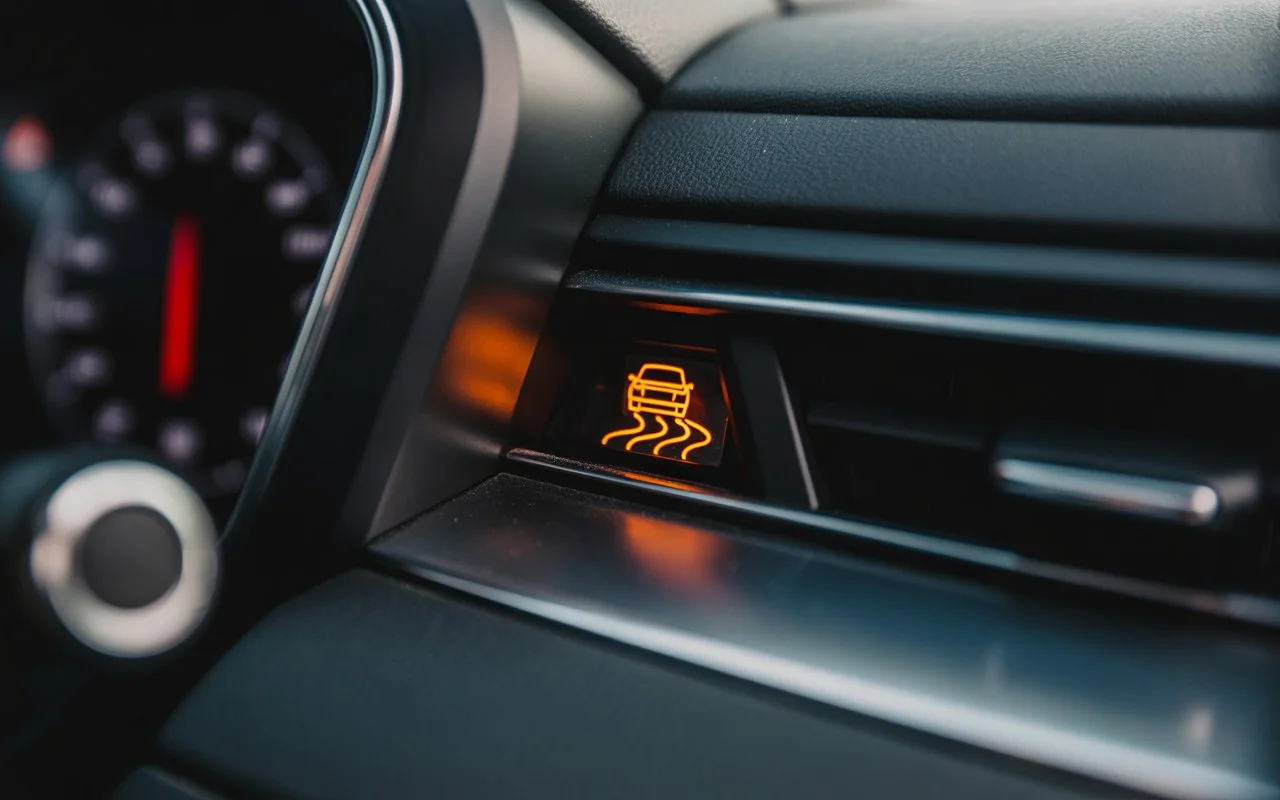
Most cars use a symbol of a car with wavy skid lines behind it. Sometimes it’s labeled “TC” or “TCS.” When it flashes, the system is actively working. When it stays solid, something might be off.
If dashboard lights had personalities, this one would be the cautious friend saying, “Hey… just a heads-up.”
Why Cars Even Need Traction Control
 Imagine walking on a wet floor in socks. You might slip unless you slow down and shift your weight carefully. Cars face the
same problem—just at much higher speeds.
Traction control helps:
-
Maintain stability on slippery roads
-
Reduce wheel spin when accelerating
-
Improve confidence during turns
It’s especially helpful during rain, snow, or sudden acceleration. Without it, small slips can turn into big problems fast.
When the Traction Control Light Turns On Normally
Here’s something many drivers don’t realize: the traction control light turning on isn’t always bad.
If it flashes briefly, it means:
-
Tires lost traction
-
System stepped in to help
-
Everything is working as designed
That’s actually a good sign. It’s like anti-lock brakes buzzing during a hard stop—annoying, but helpful.
When the Light Stays On: Should You Worry
Now here’s where concern is fair. If the traction control light stays on continuously, it usually means the system has been disabled or isn’t working properly.
That doesn’t mean your car will suddenly stop—but it does mean you’ve lost an important safety feature. On dry roads, you might not notice. On wet or icy roads, you definitely will.
Common Reasons the Traction Control Light Appears
There isn’t one single cause. Several things can trigger the light, including:
Faulty Wheel Speed Sensors
These sensors monitor how fast each wheel spins. If one fails or gets dirty, the system gets confused.
Problems With the ABS System
Traction control and ABS are closely linked. When ABS has trouble, traction control often shuts down too.
Low Tire Pressure
Uneven tire pressure can trick the system into thinking a wheel is slipping.
Electrical or Wiring Issues
Modern cars rely heavily on electronics. A small wiring fault can cause big warning lights.
Manual Deactivation
Some cars allow drivers to turn traction control off. It’s possible someone pressed the button without realizing it.
Traction Control Light vs Check Engine Light

This is where people panic. Sometimes the traction control light and check engine light appear together. When that happens, it often means the engine computer detected a problem that affects stability control.
It could be as simple as a sensor error—or something more complex. Either way, it’s a sign not to ignore the warning.
How Traction Control Affects Driving Safety
Without traction control:
-
Wheels may spin during acceleration
-
Stability during turns is reduced
-
Skidding becomes more likely
Think of traction control like a seatbelt for your tires. You can drive without it—but once conditions get rough, you’ll wish it was there.
Can You Keep Driving With the Light On
In most cases, yes—you can still drive, especially if conditions are dry and calm. But that doesn’t mean you should forget about it.
You’ll want to:
-
Drive cautiously
-
Avoid aggressive acceleration
-
Be extra careful in rain or snow
If handling feels strange or multiple lights appear, that’s your cue to stop and get it checked.
How to Turn the Traction Control System Back On
Before assuming the worst, try a few simple steps:
-
Restart the car
-
Check if there’s a traction control button pressed
-
Inspect tire pressure
-
Look for obvious dashboard warnings
Sometimes the system just needs a reset. Other times, it’s letting you know professional help is needed.
Preventing Traction Control Issues
You don’t need to be a car expert to reduce the chances of seeing this light again.
Helpful habits include:
-
Keeping tires properly inflated
-
Replacing worn tires on time
-
Fixing ABS issues early
-
Avoiding rough driving on slick roads
A little care goes a long way—kind of like stretching before exercise.
When to See a Mechanic
If the traction control light:
-
Stays on for days
-
Appears with other warning lights
-
Coincides with poor handling
…it’s time for a professional diagnosis. A quick scan can reveal whether it’s a sensor issue or something more serious.
Ignoring it won’t make it disappear—trust me on that one.
Conclusion
The traction control light isn’t there to scare you—it’s there to communicate. Sometimes it’s just letting you know the system is doing its job. Other times, it’s waving a small red flag saying, “Hey, check this out.”
Understanding what that light means puts control back in your hands. And honestly, fewer dashboard mysteries mean calmer, safer drives—and who doesn’t want that?
Frequently Asked Questions
What does the traction control light mean when it stays on?
It usually means the traction control system is disabled or not working properly and needs inspection.
Is it dangerous to drive with the traction control light on?
It can be, especially in slippery conditions, because the vehicle may lose stability more easily.
Can low tire pressure cause the traction control light to come on?
Yes, uneven or low tire pressure can confuse wheel sensors and trigger the warning.
Will the traction control light turn off on its own?
Sometimes it will after restarting the car, but persistent lights usually indicate a real issue.
How much does it cost to fix a traction control problem?
Costs vary widely depending on the cause, ranging from minor sensor fixes to more complex repairs.
