


Introduction
Does Chai Have Caffeine
Chai is more than just a drink. For many people, it’s a daily ritual, a comforting habit, or a warm cup of calm during a busy day. But if you’ve ever sipped chai late in the evening and wondered why you couldn’t sleep afterward, you’ve probably asked yourself the big question: does chai have caffeine?
The short answer is yes—but the full story is more interesting than that. The caffeine in chai depends on what kind of chai you’re drinking, how it’s made, and even how long it’s brewed. Think of chai like a dimmer switch rather than an on-off button when it comes to caffeine. Let’s turn that switch slowly and explore everything you need to know.
1. What Exactly Is Chai?

Before we talk about caffeine, let’s clear up what chai actually is.
The word chai simply means tea. In many cultures, especially in South Asia, chai refers to black tea brewed with milk, spices, water, and sweetener. Common spices include ginger, cardamom, cinnamon, cloves, and black pepper.
In Western countries, chai usually means masala chai, a spiced milk tea with bold flavor and a comforting aroma.
2. Does Traditional Chai Have Caffeine?
Yes, traditional chai contains caffeine.
That’s because it’s made using black tea leaves, which naturally contain caffeine. However, the caffeine level in chai is generally lower than coffee and often feels gentler on the body.
If coffee is a loud alarm clock, chai is more like a soft nudge saying, “Hey, time to wake up.”
3. Where Does the Caffeine in Chai Come From?
The caffeine in chai comes from one primary source:
-
Black tea leaves
The spices—ginger, cardamom, cinnamon, cloves, and pepper—do not contain caffeine. Milk and sweeteners also add zero caffeine.
So, if there’s caffeine in your cup, it’s because of the tea leaves, not the spices.
4. How Much Caffeine Is in a Cup of Chai?
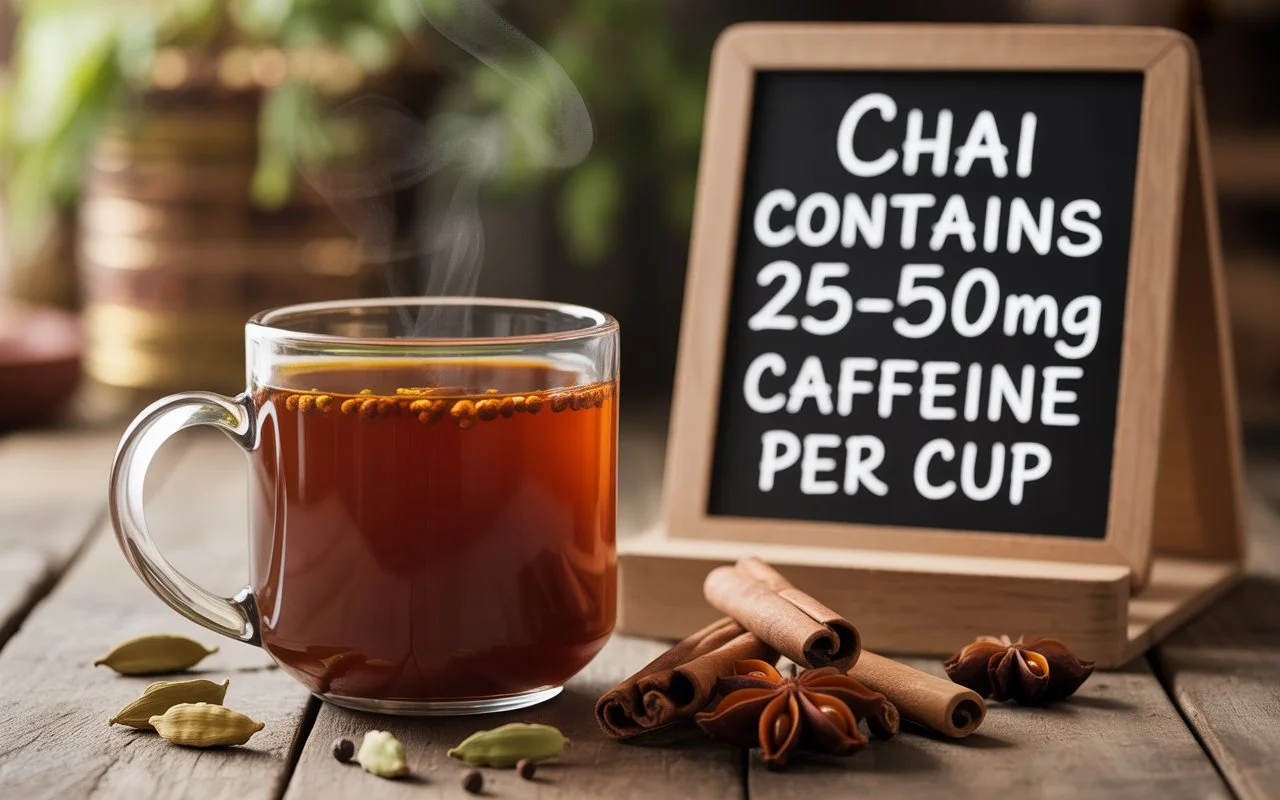
On average, an 8-ounce cup of chai contains about:
-
25–50 mg of caffeine
This number can change based on:
-
The amount of black tea used
-
Brewing time
-
The ratio of milk to water
For comparison:
-
Coffee: 80–100 mg
-
Black tea: 40–70 mg
-
Chai: 25–50 mg
So yes, chai has caffeine—but less than most coffee drinks.
5. Chai vs Coffee: Which Has More Caffeine?
Let’s settle this common debate.
Coffee has significantly more caffeine than chai.
Even a strong cup of chai usually won’t match the caffeine punch of a regular brewed coffee.
Many people switch from coffee to chai when they want:
-
Fewer jitters
-
Less energy crash
-
A smoother, longer-lasting boost
Chai delivers alertness without making your heart race like it’s late for a meeting.
6. Chai vs Green Tea and Black Tea

Here’s how chai compares to other teas:
-
Black tea: Higher caffeine
-
Green tea: Lower caffeine
-
Chai: Usually sits in the middle
Because chai includes milk and spices, the caffeine is absorbed more slowly, making it feel milder even if the number is similar.
7. Does Masala Chai Increase Caffeine Levels?
No, the spices in masala chai do not increase caffeine.
However, spices like ginger and black pepper can:
-
Improve circulation
-
Increase alertness
-
Enhance digestion
This can feel like extra caffeine, but it’s really your body responding to warming spices.
Think of it as teamwork—the tea gives the energy, and the spices help you use it better.
8. How Brewing Time Affects Chai Caffeine
The longer tea leaves sit in hot water, the more caffeine is released.
-
Short brew: less caffeine
-
Long simmer: more caffeine
Traditional chai is often simmered, but because milk is added early, caffeine extraction is somewhat reduced compared to plain black tea.
9. Can Chai Be Caffeine-Free?
Absolutely.
You can enjoy chai flavors without caffeine by:
-
Using rooibos instead of black tea
-
Choosing herbal chai blends
-
Making spice-only chai (no tea leaves)
These options give you the cozy taste without the buzz.
10. Herbal Chai vs Traditional Chai
Traditional chai
-
Made with black tea
-
Contains caffeine
Herbal chai
-
Made with herbs and spices only
-
Naturally caffeine-free
If you’re sensitive to caffeine or enjoy chai at night, herbal chai is a great choice.
11. Is Chai Safe for Sensitive Caffeine Drinkers?
 For most people, chai is gentler than coffee.
However, if you are:
-
Pregnant
-
Caffeine-sensitive
-
Managing anxiety or sleep issues
It’s best to:
-
Limit intake
-
Drink earlier in the day
-
Try low-caffeine versions
Listening to your body matters more than the label on the cup.
12. Best Time of Day to Drink Chai
The ideal times are:
-
Morning
-
Early afternoon
Avoid chai too late in the evening if caffeine affects your sleep. Even small amounts can linger like background noise when you’re trying to rest.
13. How to Reduce Caffeine in Chai at Home
Here are simple ways to lower caffeine:
-
Use fewer tea leaves
-
Steep for a shorter time
-
Add more milk
-
Blend black tea with herbal tea
You’re in control of the balance.
14. Health Effects of Caffeine in Chai
When consumed in moderation, caffeine in chai can:
-
Improve focus
-
Support mental alertness
-
Boost mood
Combined with spices, chai may also help:
-
Digestion
-
Blood circulation
-
Immune support
Too much, though, can cause restlessness—so balance is key.
15. Final Thoughts on Chai and Caffeine
So, does chai have caffeine? Yes, it does—but usually less than coffee and often less than plain black tea.
Chai offers a gentle wake-up, wrapped in warmth, spice, and comfort. Whether you want energy or just flavor, there’s a type of chai that fits your lifestyle. Like a friendly conversation rather than a loud announcement, chai keeps you alert without shouting.
Frequently Asked Questions (FAQs)
1. Does chai latte have caffeine?
Yes, a chai latte usually contains caffeine because it’s made with black tea concentrate.
2. Is chai stronger than coffee in caffeine?
No, coffee typically has nearly double the caffeine of chai.
3. Can I drink chai before bed?
If you’re sensitive to caffeine, it’s better to choose herbal chai at night.
4. Does decaf chai exist?
Yes, decaffeinated chai and herbal chai blends are widely available.
5. Is the caffeine in chai bad for health?
In moderation, caffeine in chai is generally safe and can even offer mild benefits.
