


Introduction
Have you ever looked at a glass of clear water and wondered, “Is this really safe to drink?” That’s where a TDS meter comes into play, working in the background to give you clear insight. It’s a small, handy device, but its job is big—it helps you understand what’s dissolved in your water. Think of it like a thermometer for water purity. You may not see what’s inside the water, but a TDS meter gives you a number that tells a story.
In this guide, we’ll walk through everything you need to know about TDS meters in plain, friendly language. No confusing science talk—just clear explanations that make sense for everyday life.
1. What Is a TDS Meter?

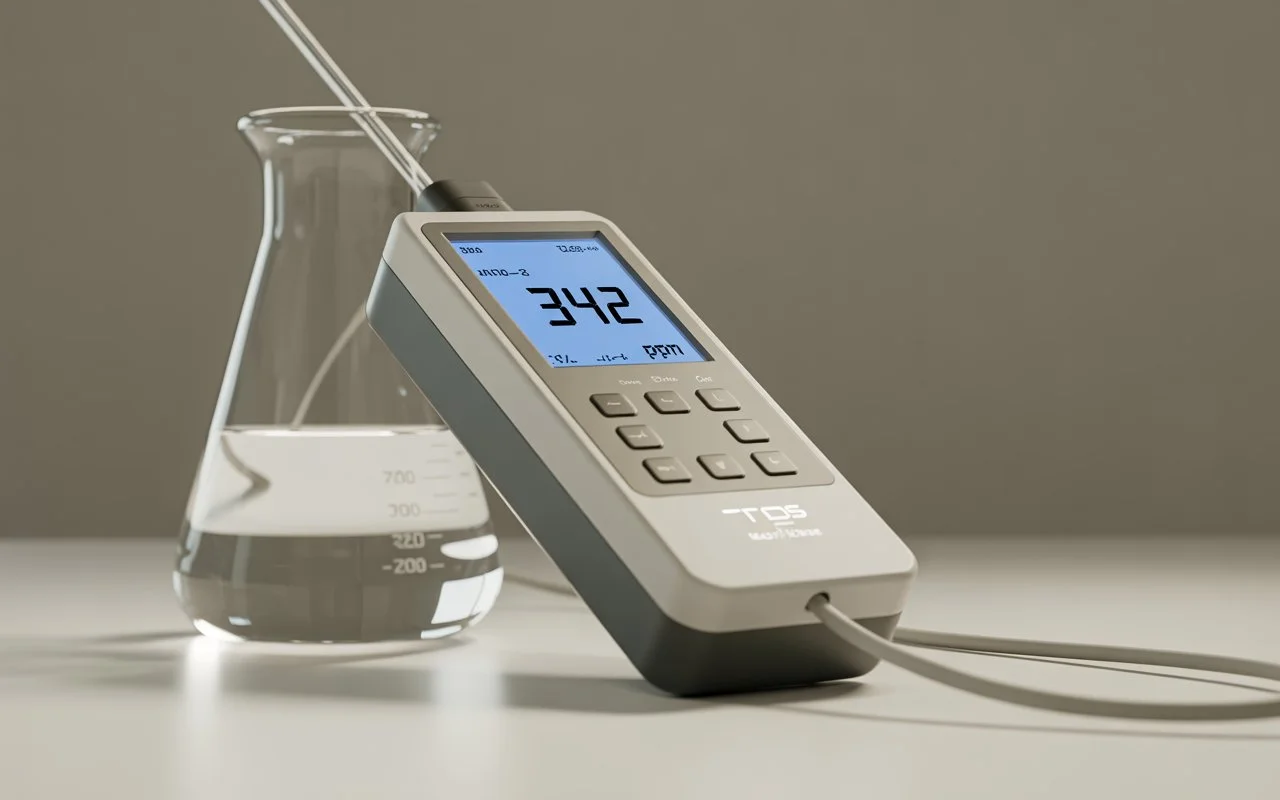
A TDS meter is a digital tool that measures the amount of dissolved substances in water.These materials often consist of various minerals, dissolved salts, and trace metals. The reading is shown as a number, usually in parts per million.
In simple terms, it tells you how “crowded” your water is with dissolved stuff .A higher reading means a greater amount of these substances is dissolved in the water.
2. What Does TDS Mean in Water?
TDS stands for Total Dissolved Solids. These are tiny particles that dissolve completely in water. You can’t see them, but they’re there.
They may come from:
-
Natural mineral deposits
-
Plumbing systems
-
Water treatment chemicals
Some dissolved solids are helpful, while others may not be so friendly.
3. How a TDS Meter Works
A TDS meter doesn’t actually “see” solids. Instead, it measures electrical conductivity. Water with more dissolved particles conducts electricity better.
So, the meter checks conductivity and converts it into a TDS value. It’s like judging traffic by listening to noise—the louder it is, the more cars there are.
4. Why TDS Levels Matter
TDS levels affect:
-
Taste of water
-
Efficiency of appliances
-
Overall water quality
Low readings may taste flat, while very high readings can taste salty or bitter. Balanced water usually tastes the best.
5. Ideal TDS Levels for Drinking Water

Here’s a simple guideline many people follow:
-
Below 50 ppm: Very pure, but may lack minerals
-
50–150 ppm: Excellent
-
150–300 ppm: Good
-
300–500 ppm: Acceptable
-
Above 500 ppm: Not ideal for drinking
These ranges help you quickly judge water quality at home.
6. TDS Meter for Home Use
Many households use a TDS meter to:
-
Check tap water
-
Test filtered water
-
Compare bottled water brands
It’s quick, portable, and doesn’t require technical skills. Just dip, wait, and read.
7. Using a TDS Meter Step by Step
Using a TDS meter is refreshingly simple:
-
Turn the meter on
-
Dip it into water
-
Wait a few seconds
-
Read the number
That’s it. No wires, no setup, no mess.
8. TDS Meter and RO Water Purifiers
Reverse osmosis systems are known for reducing TDS. A TDS meter helps you:
-
Check filter performance
-
Know when to change membranes
-
Compare input and output water
It’s like a health check for your purifier.
9. TDS vs Water Hardness
These two often get confused.
-
TDS measures all dissolved solids
-
Hardness mainly focuses on calcium and magnesium
Hard water can have moderate TDS, while soft water can still show high readings due to other minerals.
10. TDS Meter for Aquariums and Plants
Aquarium owners and plant lovers often rely on TDS readings. Fish and plants can be sensitive to mineral levels.
Stable TDS means:
-
Healthier fish
-
Better plant growth
-
Fewer surprises
11. Common Myths About TDS Meters
Let’s clear a few misunderstandings:
-
High TDS always means unsafe water: Not true
-
Low TDS means perfect water: Also not true
-
TDS meters detect bacteria: They don’t
A TDS meter is helpful, but it’s not a complete water test.
12. How to Choose the Right TDS Meter
When buying one, look for:
-
Easy-to-read display
-
Auto shut-off
-
Decent accuracy
-
Pocket-friendly size
You don’t need the most expensive option for basic home testing.
13. Limitations of a TDS Meter
A TDS meter cannot:
-
Identify specific contaminants
-
Detect germs or viruses
-
Replace lab testing
It’s a screening tool, not a full diagnosis.
14. Caring for and Calibrating a TDS Meter
To keep it accurate:
-
Rinse after each use
-
Store it dry
-
Calibrate occasionally if required
A little care keeps readings reliable for years.
15. Conclusion
A TDS meter is a small device with a big purpose. It helps you understand your water in seconds, without guesswork. While it doesn’t tell you everything, it gives you a clear starting point.
If water is part of daily life—and it is—having a simple tool to check its quality just makes sense. Once you start using a TDS meter, you’ll wonder how you ever lived without it.
Frequently Asked Questions (FAQs)
1. What does a TDS meter measure exactly?
It measures the total amount of dissolved substances in water and displays it as a numeric value.
2. Is low TDS water always better?
Not necessarily. Extremely low TDS water may lack essential minerals.
3. Can a TDS meter detect harmful bacteria?
No, it only measures dissolved solids, not microorganisms.
4. How often should I check water with a TDS meter?
Once every few weeks is usually enough for home use.
5. Can I use a TDS meter for well water?
Yes, it’s a useful first step to understand mineral levels in well water.
