


When the temperature drops, a warm home quickly becomes one of life’s greatest comforts. Yet many people don’t think much about their heating system until a radiator stays cold or starts making strange noises. That’s when one small, inexpensive tool becomes surprisingly important—the radiator key.
Although it looks simple, this handy tool plays an essential role in keeping many central heating systems working efficiently. Whether you’re a homeowner, renter, or simply curious about home maintenance, learning how it works can save time, improve comfort, and even reduce heating costs.
This guide explains everything you need to know, from what the tool does to how to use it safely, common mistakes to avoid, maintenance tips, and answers to frequently asked questions.
What Is a Radiator Key?
A radiator key is a small metal tool designed to open and close the bleed valve found on many traditional radiators. Its main purpose is to release trapped air from inside the radiator.
Over time, air naturally enters heating systems. Since air rises, it often collects at the top of radiators. This trapped air prevents hot water from filling the radiator completely, reducing its ability to heat a room effectively.
Think of your heating system like a water bottle with an air bubble trapped inside. Until that bubble is released, the water cannot completely fill the bottle. A radiator works in much the same way.
Despite its simple appearance, this tool helps restore proper heat circulation with just a few turns.

Why Bleeding a Radiator Is Important
Improves Heating Performance
When air becomes trapped inside, only part of the radiator fills with hot water. The result is uneven heating, where the bottom may feel hot while the top remains cool.
Removing the trapped air allows hot water to circulate freely again.
Helps Save Energy
An inefficient heating system often works harder to warm your home. By restoring proper circulation, the boiler doesn’t need to operate as long to reach the desired temperature.
This improved efficiency may contribute to lower energy consumption.
Extends Heating System Life
Heating systems perform best when water flows smoothly. Excess air can place unnecessary strain on pumps and other components.
Regular maintenance helps reduce wear and supports long-term reliability.
How Does a Radiator Key Work?
The tool fits into the square-shaped bleed valve located near the top corner of most radiators.
Once inserted, a gentle turn opens the valve slightly. You’ll usually hear a soft hissing sound as trapped air escapes.
As soon as water begins to flow steadily from the valve, the air has been removed. Turning the key back closes the valve securely.
The process generally takes less than a minute for each radiator.
Because the valve only opens slightly, the amount of water released is minimal when performed correctly
Signs Your Radiator Needs Bleeding
Your heating system often gives clear signals that trapped air is causing problems.
Cold Spots Near the Top
One of the most obvious signs is a radiator that feels warm at the bottom but cool toward the top.
Gurgling or Bubbling Noises
Air moving through pipes creates unusual sounds. If your radiator makes bubbling or gurgling noises, trapped air is often responsible.
Rooms Take Longer to Heat
When radiators cannot distribute heat evenly, your rooms remain cooler for longer periods.
Higher Heating Bills
Poor circulation can make your heating system work harder than necessary.
Uneven Temperatures Around the House
Some rooms may become comfortably warm while others stay chilly even though the thermostat setting hasn’t changed.
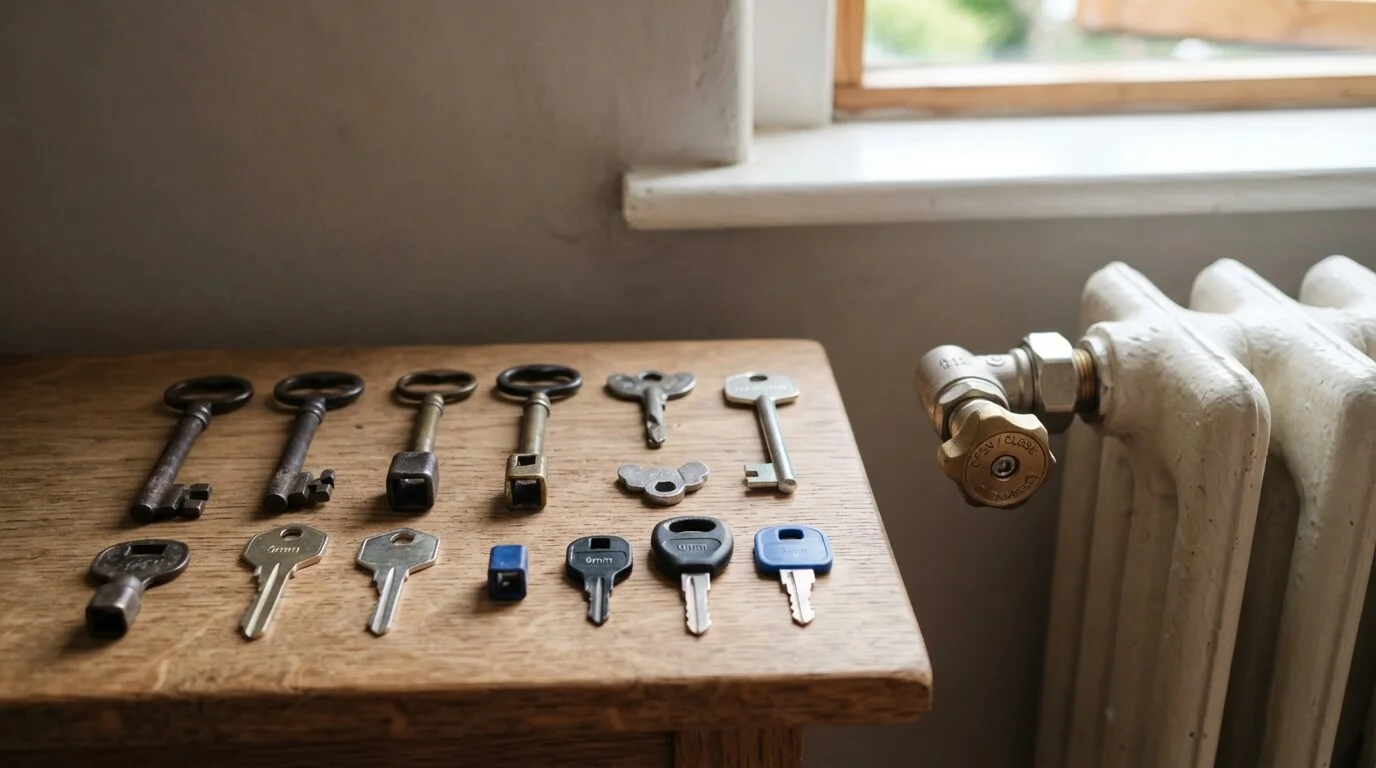
Different Types of Radiator Keys
Although they all perform the same basic function, several varieties are available.
Standard Metal Key
This is the most common version. It’s durable, affordable, and compatible with many household radiators.
Plastic Handle Version
Some models include a plastic grip for greater comfort and easier turning.
Multi-Purpose Heating Key
Certain tools combine several functions, making them useful for different valve styles and maintenance tasks.
Decorative or Branded Designs
Some manufacturers produce customized versions with improved grip or unique finishes, though functionality remains similar.
Choosing the correct type depends mainly on the design of your radiator valve.
Step-by-Step Guide to Bleeding a Radiator
Bleeding a radiator is one of the easiest home maintenance tasks.
Step 1: Turn Off the Heating
Allow the system to cool before beginning. This prevents hot water from escaping under pressure.
Step 2: Gather Your Supplies
You’ll need:
- A radiator key
- A dry cloth
- A small container or towel
- Protective gloves if desired
Step 3: Locate the Bleed Valve
Look near the top side of the radiator for a small square valve.
Step 4: Insert the Key
Fit the key securely onto the valve.
Step 5: Turn Slowly
Rotate it gently about a quarter turn.
Listen carefully for escaping air.
Step 6: Wait for Water
Once the hissing stops and water flows steadily, close the valve immediately.
Step 7: Check Boiler Pressure
After bleeding several radiators, inspect your boiler’s pressure gauge.
If necessary, restore the recommended pressure according to the manufacturer’s instructions.
Safety Tips Everyone Should Follow
Although the process is straightforward, safety should always come first.
Never Bleed a Hot Radiator
Wait until the heating has cooled completely.
Open the Valve Slowly
Turning too quickly may release water unexpectedly.
Keep a Cloth Ready
A towel catches small amounts of water and keeps your floor dry.
Avoid Over-Tightening
Close the valve firmly but gently. Excessive force may damage it.
Monitor Boiler Pressure
After removing trapped air, system pressure sometimes drops slightly.
Keeping pressure within the recommended range ensures efficient operation.
Common Mistakes to Avoid
Even simple maintenance can go wrong if you’re not careful.
Using the Wrong Tool
Improvised tools like pliers or screwdrivers may damage the bleed valve.
Turning the Valve Too Far
The valve only needs a slight turn. Opening it completely can cause unnecessary water loss.
Ignoring Small Leaks
If water continues dripping after closing the valve, the valve may require inspection.
Bleeding Too Frequently
If air repeatedly returns, the heating system may have an underlying issue that needs professional attention.
Skipping Pressure Checks
Many people forget this final step, which helps keep the heating system running correctly.
Caring for Your Radiator and Heating System
Routine maintenance keeps everything working efficiently throughout the colder months.
Inspect Before Winter
Test each radiator before the heating season begins.
Dust the Surface
Dust acts like a blanket, reducing heat transfer into the room.
Check for Corrosion
Look for rust, discoloration, or damp patches around valves and pipe connections.
Watch for Leaks
Even small drips can become larger problems if ignored.
Schedule Professional Servicing
An annual heating inspection helps identify issues before they become expensive repairs.
Preventive maintenance often costs less than emergency repairs.
When You Should Call a Professional
Some situations require more than simply removing trapped air.
Contact a qualified heating technician if you notice:
- Water leaking continuously.
- Very low boiler pressure that won’t recover.
- Multiple radiators staying cold after bleeding.
- Loud banging noises from the system.
- Visible corrosion or damaged valves.
- Heating failure throughout the home.
These symptoms may indicate pump problems, sludge buildup, faulty valves, or other mechanical issues.
Choosing the Right Radiator Key
Buying one isn’t difficult, but selecting the correct version makes the job easier.
Consider these factors:
- Compatibility with your radiator valve.
- Durable metal construction.
- Comfortable grip.
- Rust-resistant finish.
- Easy storage.
Since the tool is inexpensive, many homeowners keep an extra one in a kitchen drawer or utility toolbox.
It’s one of those household items you rarely think about—until you suddenly need it.
Benefits of Keeping a Radiator Key at Home
Owning this simple tool offers several practical advantages.
You can quickly solve minor heating problems without waiting for outside assistance.
Your home stays warmer during cold weather because heat circulates more efficiently.
Routine maintenance becomes easier and more convenient.
You gain confidence in performing basic home care.
Most importantly, regular radiator maintenance helps your heating system perform at its best, providing consistent comfort throughout the winter months.
Conclusion
A radiator key may be small enough to fit in your pocket, but its importance is much greater than its size suggests. By allowing trapped air to escape from radiators, it helps restore efficient heating, improves comfort, supports lower energy use, and contributes to the overall health of your central heating system.
The good news is that using one requires no advanced skills. With a little care, the right technique, and a few minutes of your time, you can keep your radiators working effectively throughout the heating season. Combined with regular inspections and sensible maintenance, this simple tool becomes an essential part of every home’s heating toolkit. Sometimes the smallest tools make the biggest difference.
Frequently Asked Questions (FAQs)
1. What is a radiator key used for?
A radiator key is used to open the bleed valve on a radiator, allowing trapped air to escape so hot water can circulate properly and heat the radiator evenly.
2. How often should I bleed my radiators?
Most homes benefit from bleeding radiators once or twice a year, typically before winter begins or whenever you notice cold spots, unusual noises, or uneven heating.
3. Can I bleed a radiator while the heating is on?
No. Always turn off the heating system and allow the radiators to cool before bleeding them. This reduces the risk of hot water escaping and makes the process safer.
4. What should I do if water keeps leaking after bleeding a radiator?
If the valve continues to leak after it has been closed properly, it could indicate a worn valve or another mechanical issue. In that case, the radiator should be inspected and repaired by a qualified heating professional.
5. Is every radiator compatible with the same radiator key?
Not always. While many traditional radiators use a standard square bleed valve, some modern models have different valve designs or built-in bleed screws. Check your radiator’s valve type before purchasing a replacement tool.
