


7 Amazing Upholstery Cleaner Tips for Spotless Furniture
Your furniture is one of the biggest investments in your home. Whether it’s your cozy living room sofa, dining chairs, or favorite recliner, upholstery collects dust, stains, pet hair, and everyday dirt over time. The good news is that keeping your furniture looking fresh doesn’t have to be difficult.
Choosing the right upholstery cleaner can make a huge difference in maintaining the beauty and lifespan of your furniture. Think of your upholstery as your skin—it needs regular care to stay healthy and attractive. With the proper cleaning techniques and products, you can enjoy spotless furniture for years.
In this complete guide, you’ll learn everything about selecting, using, and maintaining an upholstery cleaner, along with expert tips, common mistakes to avoid, and DIY solutions.
What Is an Upholstery Cleaner?
An upholstery cleaner is a cleaning product or machine designed specifically to clean fabric-covered furniture without damaging delicate materials.
Unlike ordinary household cleaners, upholstery cleaning solutions are formulated to remove dirt, stains, odors, allergens, and bacteria while protecting fabric fibers.
They come in several forms, including:
- Spray cleaners
- Foam cleaners
- Liquid concentrates
- Upholstery cleaning machines
- Steam cleaners
- Fabric-safe stain removers
Each option works best for different furniture materials.
 Why Upholstery Cleaning Matters
Cleaning your furniture isn’t just about appearances.
Regular upholstery maintenance offers several benefits:
- Removes dust mites
- Eliminates allergens
- Prevents unpleasant odors
- Improves indoor air quality
- Extends furniture lifespan
- Restores fabric appearance
- Protects expensive investments
When dirt stays trapped inside fabric fibers, it slowly wears them down. Regular cleaning prevents premature aging.
Different Types of Upholstery Cleaner
Foam Upholstery Cleaner
Foam cleaners remain on the surface longer, making them excellent for lifting stains.
They’re especially useful for:
- Sofas
- Dining chairs
- Fabric cushions
Spray Upholstery Cleaner
Spray cleaners are perfect for quick spot cleaning.
Advantages include:
- Easy application
- Fast drying
- Convenient storage
- Great for fresh stains
Steam Upholstery Cleaner
Steam cleaning uses hot water vapor to loosen dirt.
Benefits include:
- Deep cleaning
- Chemical-free sanitizing
- Odor removal
- Killing bacteria
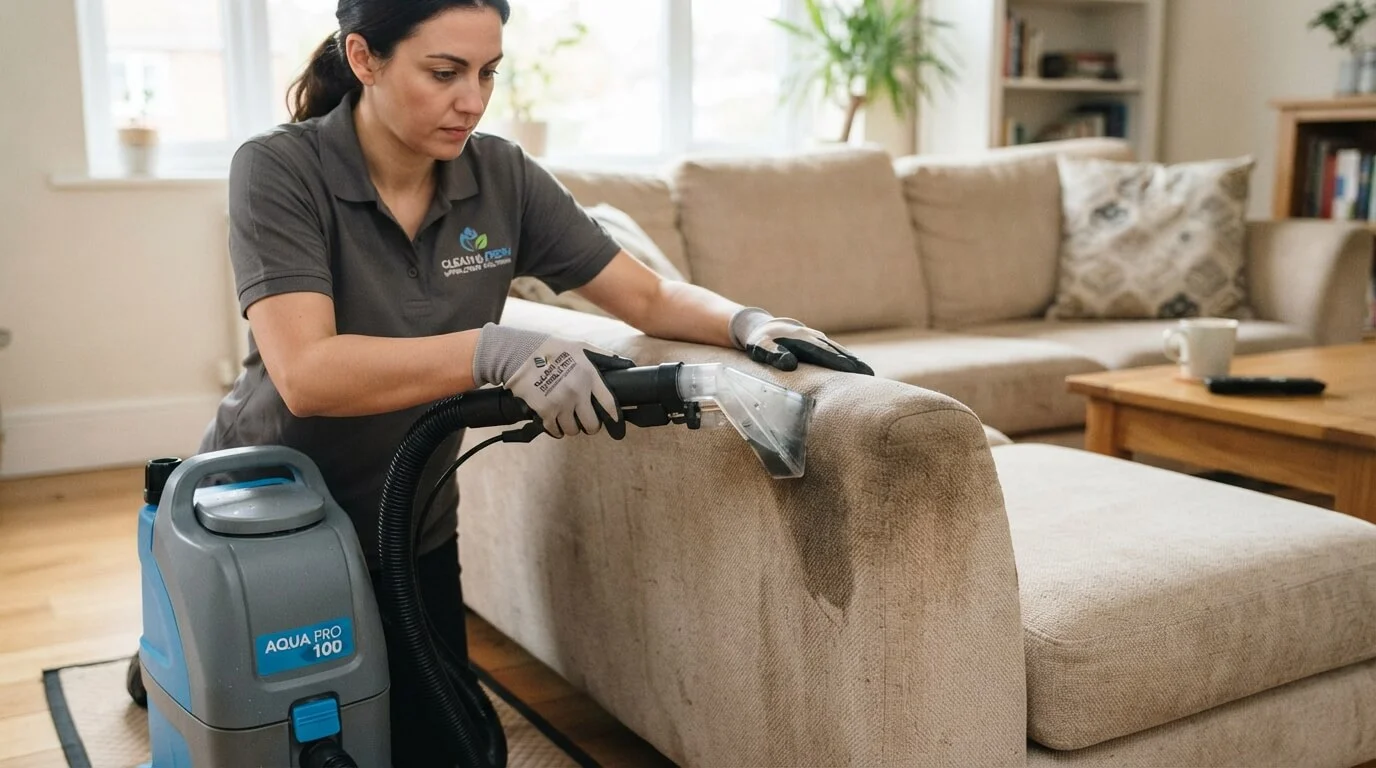
Portable Upholstery Cleaning Machines
These machines combine water, cleaning solution, and suction.
They’re ideal for:
- Pet owners
- Families with children
- Large furniture collections
How to Choose the Best Upholstery Cleaner
Not every cleaner works for every fabric.
Before buying, consider:
Fabric Type
Check your furniture cleaning code:
- W = Water-based cleaner
- S = Solvent cleaner
- WS = Either option
- X = Vacuum only
Ignoring these codes may permanently damage your furniture.
Stain Type
Different stains require different solutions.
Common stains include:
- Coffee
- Wine
- Ink
- Pet accidents
- Grease
- Food spills
Choose cleaners designed for the specific stain whenever possible.
Safety
Look for:
- Non-toxic ingredients
- Child-safe formulas
- Pet-friendly products
- Low odor
- Eco-friendly certifications
Step-by-Step Upholstery Cleaning Guide
Using an upholstery cleaner correctly improves results and prevents damage.
Step 1: Vacuum Thoroughly
Remove:
- Dust
- Hair
- Crumbs
- Loose debris
Vacuuming prevents dirt from turning into muddy residue.
Step 2: Test a Hidden Area
Always test the cleaner behind cushions or underneath furniture before applying it to visible areas.
Wait at least 15 minutes.
Step 3: Apply the Cleaner
Spray or apply foam evenly.
Avoid soaking the fabric.
Excess moisture can cause mold or mildew.
Step 4: Gently Agitate
Use:
- Soft brush
- Microfiber cloth
- Upholstery sponge
Rub gently in circular motions.
Step 5: Remove Residue
Wipe away cleaner using a clean damp cloth.
Allow furniture to air dry completely.
DIY Upholstery Cleaner Recipes
Sometimes homemade solutions work surprisingly well.
Vinegar and Water Solution
Mix:
- 1 cup warm water
- ½ cup white vinegar
- Few drops dish soap
Excellent for everyday cleaning.
Baking Soda Freshener
Sprinkle baking soda.
Leave for 30 minutes.
Vacuum thoroughly.
Perfect for removing odors.
Hydrogen Peroxide Solution
Effective for light-colored fabrics.
Always perform a spot test first.
Common Upholstery Stains and Solutions
Coffee Stains
Blot immediately.
Apply mild upholstery solution.
Avoid rubbing.
Wine Stains
Use cold water.
Apply stain remover.
Repeat if necessary.
Pet Stains
Use enzyme-based cleaners.
They remove:
- Odors
- Bacteria
- Organic stains
Grease Stains
Sprinkle baking soda.
Wait 20 minutes.
Vacuum.
Clean with degreasing upholstery cleaner.
Mistakes to Avoid During Cleaning
Many homeowners accidentally damage furniture.
Avoid these common errors:
Using Too Much Water
Excess moisture encourages mold growth.
Skipping Spot Testing
Even quality products may discolor delicate fabrics.
Scrubbing Too Hard
Aggressive scrubbing weakens fabric fibers.
Ignoring Manufacturer Instructions
Always read furniture care labels first.
Using Household Cleaners
General-purpose cleaners often contain harsh chemicals unsuitable for upholstery.
Professional vs DIY Cleaning
DIY Cleaning
Pros:
- Affordable
- Convenient
- Immediate stain treatment
Cons:
- Limited deep cleaning
- Risk of improper use
Professional Cleaning
Professionals offer:
- Industrial equipment
- Specialized stain removal
- Fabric expertise
- Deep extraction
While more expensive, professional cleaning is recommended every 12–24 months.
Upholstery Maintenance Tips
Keeping furniture clean is easier than restoring neglected upholstery.
Helpful habits include:
- Vacuum weekly
- Rotate cushions
- Clean spills immediately
- Keep pets groomed
- Avoid eating on fabric furniture
- Use washable covers
- Keep furniture away from direct sunlight
These simple practices dramatically extend furniture life.
Signs Your Furniture Needs Deep Cleaning
Watch for these warning signs:
- Persistent odors
- Visible stains
- Dull appearance
- Allergy symptoms indoors
- Sticky fabric
- Pet smells
- Dust buildup
If several of these appear, it’s time for a thorough cleaning.
Final Thoughts
Finding the right upholstery cleaner is one of the easiest ways to protect your home’s furniture and maintain a fresh living space. Whether you prefer a commercial cleaning solution, a steam cleaner, or a simple homemade mixture, regular maintenance keeps stains from becoming permanent and extends the life of your upholstery.
Remember that successful cleaning begins with understanding your fabric type, following manufacturer recommendations, and treating spills quickly. A little routine care today can save you from costly repairs or replacements tomorrow. By following the tips in this guide, you’ll enjoy cleaner, healthier, and more attractive furniture throughout the year.
Frequently Asked Questions (FAQs)
1. What is the best upholstery cleaner for fabric sofas?
Foam cleaners and portable upholstery cleaning machines are among the best options because they clean deeply while protecting most fabric materials.
2. Can I make a homemade upholstery cleaner?
Yes. A mixture of warm water, white vinegar, and a small amount of dish soap works well for many everyday cleaning tasks. Always test it on a hidden area first.
3. How often should I clean upholstered furniture?
Vacuum weekly, spot clean as needed, and perform a deep cleaning every 6–12 months depending on usage, pets, and household conditions.
4. Is steam cleaning safe for all upholstery?
No. Some delicate fabrics cannot tolerate steam. Always check the manufacturer’s cleaning code before using a steam cleaner.
5. How can I remove bad odors from upholstery?
Sprinkle baking soda over the fabric, let it sit for about 30 minutes, then vacuum thoroughly. For stubborn odors, use an enzyme-based upholstery cleaner or consider professional cleaning.
