

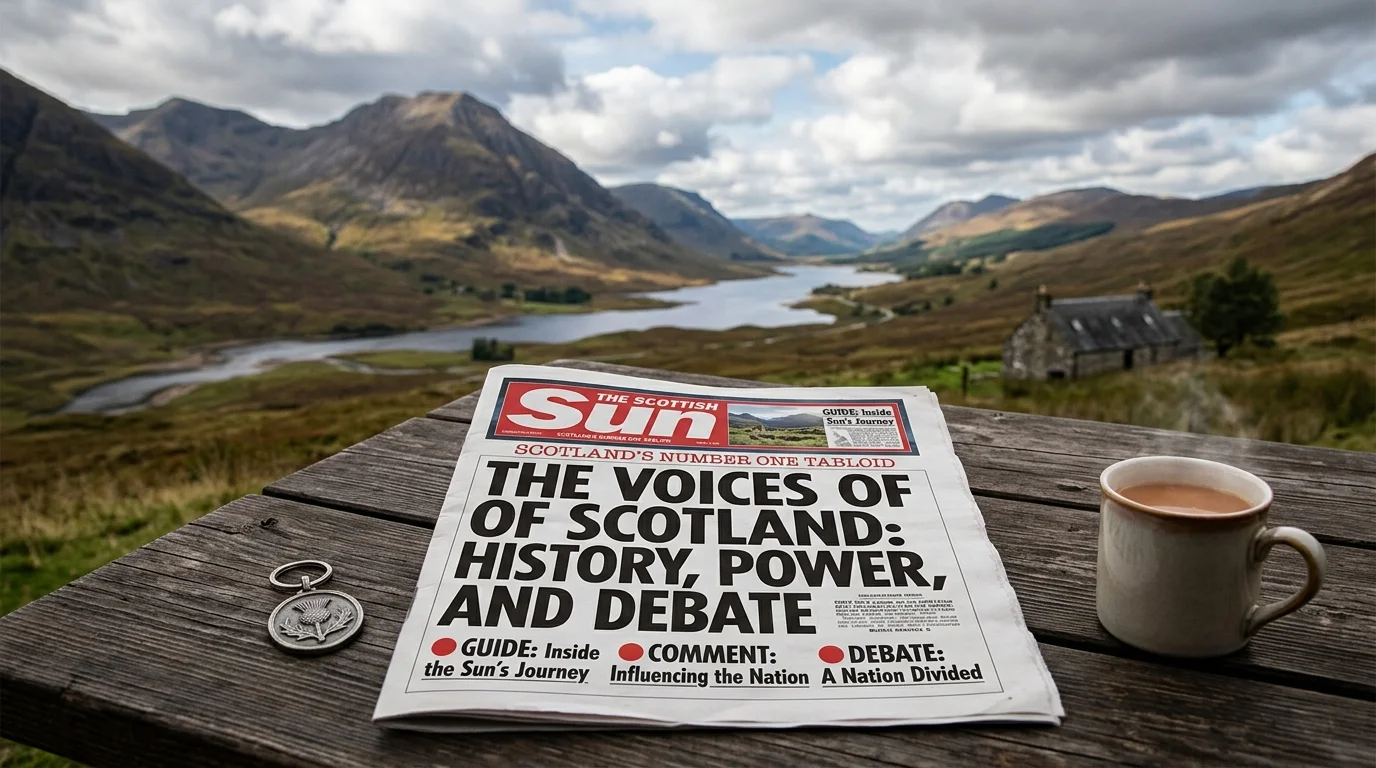

The Scottish Sun is one of those newspapers that many people in Scotland have seen on shop shelves, heard mentioned in conversations, or clicked on while checking the day’s headlines online. It is loud, fast-moving, and built to grab attention. But beyond the bold headlines and celebrity gossip, there is a bigger story worth exploring. What exactly is the Scottish Sun? How did it become such a familiar part of Scotland’s media scene? And why does it spark both loyalty and criticism at the same time?
This article takes a close look at the Scottish Sun as a newspaper, a digital news brand, and a cultural force. We’ll cover its history, ownership, style, audience, political role, sports focus, online presence, controversies, and the reasons it remains a talking point in Scottish media. If newspapers are like mirrors reflecting the mood of a nation, then the Scottish Sun is a mirror with bright lights, big headlines, and a habit of making people react.
What Is the Scottish Sun?
The Scottish Sun is a Scottish edition of The Sun, the well-known British tabloid newspaper. It was launched in 1987 and was created to give Scottish readers a version of the Sun that felt more relevant to life north of the border. While it shares the tabloid DNA of the UK-wide Sun, it also focuses heavily on Scottish news, Scottish football, local politics, and stories that matter to readers in Scotland. It is owned by News UK, the media company behind The Sun and other major newspaper brands.
At its core, the paper is designed to be easy to read, fast to scan, and emotionally engaging. Instead of dense blocks of text or formal reporting styles, it leans on punchy headlines, dramatic wording, strong opinions, and a mix of serious stories with lighter content. In one edition you might find political headlines, football transfer rumours, crime reporting, TV coverage, and celebrity updates all packed together.
That blend is part of its identity. It tries to be a newspaper that feels lively rather than distant. For some readers, that makes it accessible. For critics, it can make the line between information and entertainment feel a little too thin.
A Brief History of the Scottish Sun
To understand the Scottish Sun, it helps to place it in the wider story of tabloid journalism in the UK. The original Sun built its reputation on bold front pages, popular campaigns, sport, celebrity news, and a style that aimed to speak directly to ordinary readers. When the Scottish edition launched in 1987, the idea was simple: keep the energy of the parent paper but tailor it to Scottish interests and identities.
Why a Scottish Edition Was Needed
Scotland has its own politics, legal system, sports culture, and public debates. A one-size-fits-all UK newspaper could only go so far. By launching a dedicated Scottish edition, the paper could cover Scottish football in greater detail, focus on Holyrood politics, spotlight Scottish communities, and speak more directly to readers in Glasgow, Edinburgh, Aberdeen, Dundee, and beyond.
This mattered because newspapers are not just about delivering information; they are also about recognition. People want to see their own towns, clubs, problems, and victories reflected in the news. A Scottish edition gave the paper a way to feel more local while still being tied to a powerful UK media brand.
How It Evolved Over Time
In its early years, the Scottish Sun still leaned heavily on stories shared with the wider Sun brand. Over time, however, it built a stronger Scottish identity. That included more homegrown reporting, a sharper focus on Scottish football, and a stronger role in Scottish political coverage. Like many newspapers, it also had to adapt to the digital era, moving from a print-first model to a hybrid world where online traffic, social sharing, and mobile reading matter just as much as what appears on paper.
Ownership and the Media Group Behind It
The Scottish Sun is owned by News UK, which is part of the wider News Corp media empire. News UK is one of the biggest newspaper publishers in Britain, with a portfolio that includes The Sun and The Times.
Why Ownership Matters
You might wonder: why should readers care who owns a newspaper? The answer is simple. Ownership shapes resources, editorial culture, business strategy, and sometimes the political tone of a publication. A large media group can invest in technology, marketing, and digital growth, which helps a title stay visible in a crowded news market. At the same time, ownership can raise questions about editorial independence, corporate priorities, and how much power a few media groups hold over public debate.
The Scottish Sun benefits from being part of a major media company. It can draw on shared infrastructure, brand recognition, and a broader network. But like many newspapers owned by large groups, it also exists in a wider conversation about media concentration and influence.
What Kind of Newspaper Is It?
The Scottish Sun is a tabloid newspaper, and that label matters. In Britain, “tabloid” refers not just to size but also to style. Tabloid journalism is usually faster, more visual, more emotional, and more headline-driven than traditional broadsheet reporting.
Key Features of Its Style
The Scottish Sun is known for:
- Shorter, punchier articles
- Large, eye-catching headlines
- Strong use of photographs and visual layout
- Heavy emphasis on sport and entertainment
- A conversational, sometimes provocative tone
- Stories chosen for emotional impact as well as public importance
This style is one reason tabloids remain popular. Reading one can feel a bit like walking through a busy market rather than a silent library. There is movement, colour, urgency, and plenty competing for your attention.
The Upside and Downside of Tabloid Journalism
The upside is accessibility. People who don’t want formal, academic-style reporting may find the Scottish Sun easier to read and quicker to digest. It often speaks in a language that feels direct and familiar.
The downside is that tabloid journalism can be accused of oversimplifying complex issues, chasing shock value, or prioritising attention-grabbing stories over nuance. That tension sits at the heart of how the Scottish Sun is judged by the public.
What Does the Scottish Sun Cover?
One reason the Scottish Sun has remained visible is the sheer range of topics it covers. It is not a niche publication. It tries to be many things at once: a news outlet, a sports paper, an entertainment guide, a gossip source, and a place for opinion and campaigning.
Scottish News and Current Affairs
A major part of the paper’s identity is its coverage of Scottish current affairs. This includes crime, courts, health, education, transport, local government issues, weather disruption, and stories that affect day-to-day life across Scotland. Whether it is a developing story in Glasgow or a wider debate about public services, the paper aims to package the information in a way that feels immediate and emotionally resonant.
Its reporting style often focuses on the human angle. Rather than staying at a distance, it tends to highlight victims, families, public reactions, and everyday consequences. That can make stories feel more relatable, though critics sometimes argue it can also intensify drama.
Politics and Public Debate
The Scottish Sun also covers politics, especially issues linked to Scotland’s relationship with Westminster, the Scottish Parliament, taxation, public spending, elections, and party leadership. Political coverage in tabloids often blends reporting with strong editorial tone, and the Scottish Sun is no exception.
Its Role in Political Conversation
Like many popular newspapers, the Scottish Sun does more than report politics; it also tries to shape how politics is discussed. Front-page campaigns, endorsements, opinion pieces, and sharp commentary can all influence how readers interpret events.
This does not mean every reader follows its political line. Far from it. But it does mean the paper has often been part of wider arguments about media influence, public opinion, and how newspapers frame national issues.
Football: One of the Paper’s Biggest Selling Points
If there is one subject that has long helped define the Scottish Sun, it is football. Scottish football is not just another section in the paper; it is a huge part of the product. Coverage of clubs, transfers, managers, rivalries, match previews, and fan reactions has been central to its appeal for decades.
Why Sport Matters So Much
Sport, especially football, is where tabloid journalism often feels most at home. There is drama, tribal loyalty, excitement, and a constant stream of stories. For many readers, football coverage is the main reason to pick up the paper or visit the website.
The Scottish Sun focuses heavily on:
- Premiership news
- Rangers and Celtic coverage
- Transfer rumours
- Match analysis
- Player interviews
- Fan reactions
- Big moments in Scottish and UK football
This football-first energy gives the paper a rhythm that suits tabloid storytelling. A transfer saga or title race naturally lends itself to suspense, opinion, and bold headlines.
Entertainment, Celebrity, and Lifestyle Coverage
The Scottish Sun is not only about hard news and football. It also gives plenty of space to television, celebrity updates, reality shows, fashion, lifestyle pieces, and stories about popular culture. In other words, it understands that many readers want a mix of seriousness and escape.
Why This Mix Works
Think about how most people actually consume news. Few readers want a diet made entirely of politics, crime, and economic updates. Sometimes people also want to know what happened on a reality show, which celebrity is in the headlines, or what viewers are saying about a new drama series. The Scottish Sun leans into that reality.
This blend of public affairs and entertainment is part of the tabloid formula. It turns the newspaper into something more like a daily conversation starter rather than a purely civic product.
The Move from Print to Digital
Like nearly every newspaper in the modern era, the Scottish Sun has had to adapt to a world where people increasingly get news through phones, social media, and search engines rather than printed pages. Its website, thescottishsun.co.uk, has become a major part of its presence, allowing it to publish breaking stories, live blogs, sports updates, and entertainment news around the clock. Media listings identify it as the Scottish edition’s official site, and third-party traffic estimates suggest it draws a significant digital audience.
Why the Website Matters
The website changes the pace of journalism. A print newspaper works to daily deadlines. A digital newsroom works almost all the time. That means:
- stories can be updated quickly,
- live blogs can track fast-moving events,
- football rumours can be posted instantly,
- TV and celebrity content can be pushed while social chatter is still hot.
This speed is both a strength and a challenge. It helps the brand stay relevant, but it also increases pressure to publish fast in a crowded online news race.
Digital Journalism and Click Culture
The online era has changed what success looks like. Instead of focusing only on print sales, publishers now care about page views, search traffic, social engagement, and mobile loyalty. This can encourage quick, clickable stories and emotional headlines. That pressure is not unique to the Scottish Sun, but tabloids are especially well suited to it because they already thrive on urgency and strong reactions.
Readership and Popular Appeal
Why do people read the Scottish Sun? The answer depends on the reader, but several reasons stand out.
1. It Feels Accessible
The language is usually straightforward and fast-moving. Readers do not need to decode specialist terms or long analytical passages.
2. It Covers a Broad Mix of Interests
Someone can read about football, politics, crime, TV, and celebrity stories in one place.
3. It Has a Strong Scottish Focus
For readers who want a tabloid style with a distinctly Scottish angle, it fills a specific space in the market.
4. It Is Built Around Attention
The headlines, layout, and story choices are designed to make people stop and look.
In a way, the Scottish Sun operates like a busy high street rather than a quiet museum. It wants movement, reaction, and footfall. It wants readers to feel something, whether that feeling is curiosity, outrage, amusement, or excitement.
Criticism and Controversy
No honest article about the Scottish Sun would be complete without addressing criticism. Like its parent brand, it has been a controversial newspaper. Criticism often falls into a few broad categories: accuracy, sensationalism, ethics, political framing, and public trust.
Sensationalism and Tone
One common complaint about tabloids is that they turn the volume up too high. Stories may be framed in a dramatic or emotional way that can feel exaggerated. Critics argue that this can distort public understanding, especially when serious issues are presented as shock-driven headlines.
Trust and Reputation
The wider Sun brand carries baggage in parts of the UK, and that affects how some people see the Scottish Sun too. In Scotland, attitudes can be sharply divided. Some readers see it as a lively popular paper with strong sports coverage. Others dismiss it entirely because of the reputation of the wider brand or because they distrust tabloid journalism more broadly.
Online discussion in Scottish communities also reflects this split. In some spaces, Sun links are openly rejected, showing how emotionally charged views about the brand can be.
The Debate About Influence
Another criticism concerns influence. Because tabloids reach large audiences and simplify complex issues into memorable headlines, they can have a powerful effect on public mood. Supporters may call that effective communication. Critics may call it agenda-setting. Either way, the Scottish Sun sits within a wider debate about whether newspapers should merely report events or actively shape how people think about them.
How the Scottish Sun Fits into Scotland’s Newspaper Landscape
Scotland has a varied media landscape, with titles ranging from broadsheets and mid-market papers to tabloids and digital-first outlets. The Scottish Sun competes in a space that includes papers such as the Daily Record, The Herald, The Scotsman, and The National, each with different tones, audiences, and political identities.
Its Place in the Market
The Scottish Sun’s niche is clear:
- it is more tabloid than broadsheet,
- more populist than formal,
- more entertainment-friendly than policy-heavy,
- and deeply invested in sport and bold headline culture.
That gives it a recognisable place in the market. It is not trying to be the same as The Herald or The Scotsman. Its voice is louder, its pacing quicker, and its priorities different.
The Challenge Facing All Newspapers
At the same time, the Scottish Sun faces the same basic challenge as almost every newspaper in Britain: how do you stay profitable and relevant when print declines, trust in media is shaky, and readers have endless free alternatives online?
That challenge shapes everything from editorial strategy to subscription models to how much resource can be put into original reporting.
The Scottish Sun in the Age of Social Media
It is impossible to talk about any modern newspaper without talking about social media. Platforms like Facebook, X, TikTok, Instagram, and YouTube have changed how stories spread. Readers may not even visit a newspaper’s homepage first; they may discover a headline through a social post, screenshot, or search result.
What This Means for the Brand
For the Scottish Sun, social media acts like a megaphone. Big headlines, football exclusives, celebrity snippets, and dramatic stories travel well in social feeds. The paper’s style is naturally suited to a world where attention is won in seconds.
But social media also creates risks:
- headlines can be judged without context,
- mistakes can spread faster,
- criticism can go viral,
- and trust can be damaged quickly.
In this environment, every newspaper lives under constant public review. Readers do not just consume content; they react to it instantly, argue about it, and share their opinions in public.
Is the Scottish Sun Still Relevant Today?
Yes, it remains relevant, though relevance does not always mean universal respect. The Scottish Sun is still a recognisable player in Scottish media because it understands something important: many readers do not want news presented as a lecture. They want it delivered quickly, vividly, and in a way that feels connected to everyday conversation.
That does not make it perfect. It also does not protect it from criticism. But relevance in media is often about visibility, habit, and emotional impact as much as prestige. The Scottish Sun still has those things.
Its future will depend on how well it balances speed with credibility, entertainment with substance, and digital growth with the public’s demand for trustworthy journalism. In a media world that changes by the minute, that is no small task.
Final Thoughts
The Scottish Sun is more than just a Scottish version of a famous tabloid. It is a long-running part of Scotland’s media landscape, shaped by football culture, tabloid storytelling, digital publishing, political debate, and the changing habits of readers. It has built an identity around accessibility, pace, and attention-grabbing coverage, and that has helped it remain visible for decades.
At the same time, it is a paper that provokes strong feelings. Some readers value its energy, local focus, and sports reporting. Others see it as an example of the worst instincts of tabloid journalism. Both views tell us something important. Newspapers are not just containers for facts; they are institutions that influence mood, debate, identity, and trust.
So if you want to understand the Scottish Sun, the best way is not to ask whether it is simply good or bad. A better question is this: what does its popularity, style, and controversy reveal about what readers want from news in modern Scotland? That question is where the real story begins.
FAQs
1. What is the Scottish Sun?
The Scottish Sun is a Scottish edition of The Sun newspaper. It focuses on Scottish news, football, politics, entertainment, and celebrity stories while using a tabloid style designed for a broad audience.
2. Who owns the Scottish Sun?
The Scottish Sun is owned by News UK, the publishing company behind The Sun and several other major media brands in the UK.
3. When was the Scottish Sun launched?
The Scottish Sun launched in 1987 as a Scottish-focused edition of The Sun.
4. What kind of stories does the Scottish Sun publish?
It publishes a mix of Scottish news, crime reporting, football coverage, politics, celebrity stories, TV features, lifestyle content, and opinion-led pieces.
5. Why is the Scottish Sun controversial?
The paper attracts criticism for reasons often linked to tabloid journalism, including sensational headlines, questions about accuracy, editorial tone, and the reputation of the wider Sun brand. It also sparks debate because of its political influence and its style of presenting public issues.
