

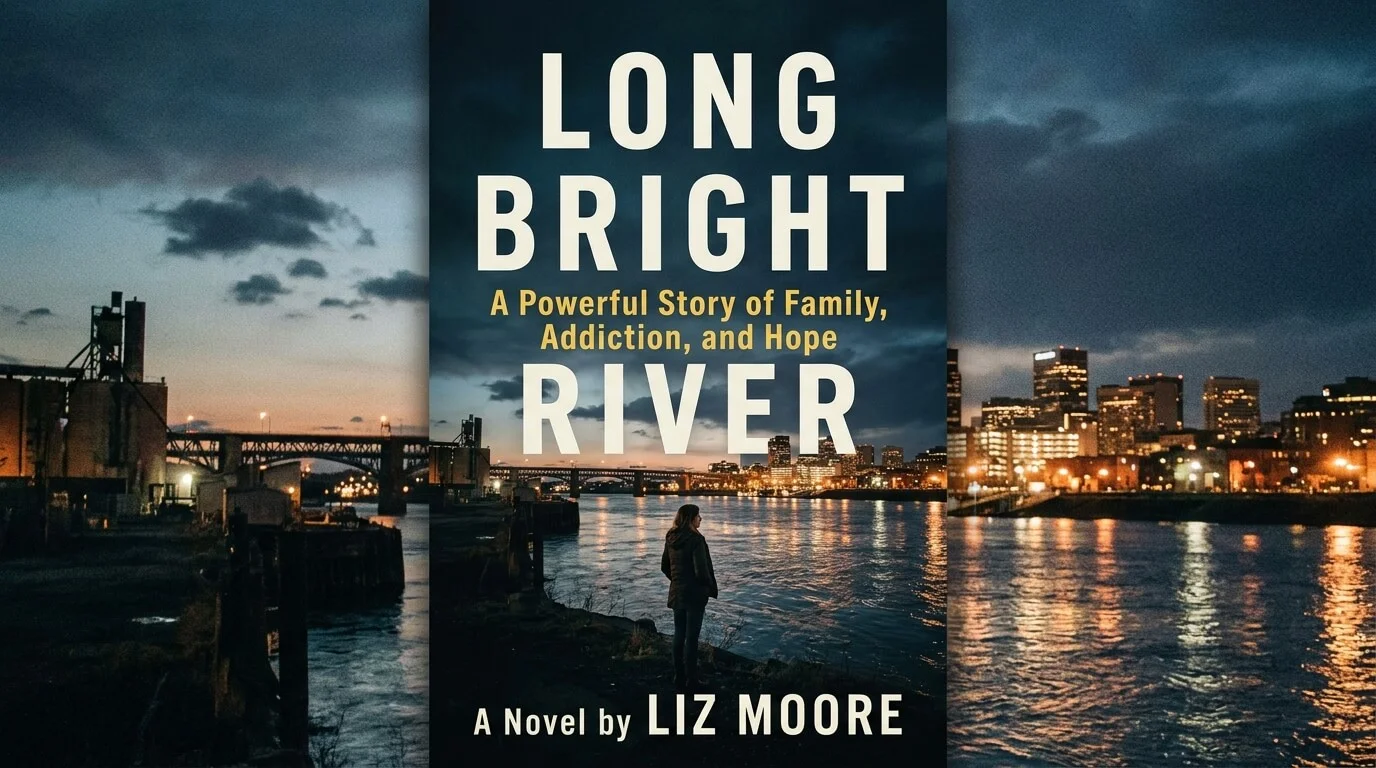

When a novel manages to feel like a crime thriller, a family drama, and a social portrait all at once, it tends to stay with readers for a long time. Long Bright River is one of those books. It is not simply a mystery about a murder or a missing woman. It is also a deeply emotional story about two sisters, the complicated pull of family, and the harsh reality of addiction in a struggling neighborhood.
At first glance, you might think this is just another police story. But the deeper you go, the more you realize it is about far more than solving a case. It is about love mixed with pain, loyalty mixed with fear, and the way people can be shaped by the streets they grow up on. In many ways, the novel feels like standing beside a river at night: the surface may look calm from afar, but underneath, powerful currents are moving in every direction.
If you have heard about Long Bright River and want to know why so many readers connect with it, this guide breaks it all down in a clear, friendly way. We will look at the story, the major characters, the emotional core of the book, and the themes that make it so memorable.

1. What Is Long Bright River About?
Long Bright River is a novel that blends crime fiction, literary fiction, and family drama. At its center is Mickey, a police officer in Philadelphia, who patrols a neighborhood badly affected by poverty and opioid addiction. Her job is already emotionally draining, but things become even more personal when a series of murders begins and her sister Kacey goes missing.
That is where the story really grabs you. Mickey is not just investigating a dangerous situation in her district; she is also searching for her sister, someone she loves but has struggled to help for years. The result is a novel that moves on two tracks at once: a murder investigation and a painful family story.
What makes the book so compelling is that it never feels like it is chasing shock value. Instead, it slowly reveals how personal history, trauma, and social hardship can shape people’s lives. The mystery keeps the pages turning, but the emotional weight is what makes the story linger.
2. Who Wrote Long Bright River?
Long Bright River was written by Liz Moore, an American author known for writing emotionally rich stories with strong character development. Her work often explores relationships, hardship, and the inner lives of people who are trying to survive difficult circumstances.
In this novel, Moore does something especially impressive: she takes the framework of a thriller and fills it with the emotional depth of a literary novel. That means readers get both suspense and substance. You are not only asking, What happened? You are also asking, Why did these people end up here? What do they owe each other? Can love survive this much damage?
That balance is a big reason why the novel stands out. It appeals to readers who enjoy mysteries, but it also resonates with people who want character-driven storytelling with real emotional force.
3. The Setting: Philadelphia as More Than a Backdrop
One of the strongest parts of Long Bright River is its setting. The story unfolds in Philadelphia, especially in a neighborhood deeply affected by addiction, poverty, and neglect. But the city is not just there to create atmosphere. It feels alive in the novel. It shapes the story, the people, and the choices they make.
The streets in the book are not painted in a glamorous way. They are shown as complicated spaces filled with struggle, danger, survival, and human pain. At the same time, the setting is not treated like a stereotype. It is presented with care and detail, which makes the story feel grounded and believable.
This matters because the neighborhood is closely tied to the sisters’ history. Mickey and Kacey did not simply appear in this world by chance. They grew up inside it. Their memories, wounds, and hopes are linked to the same streets. In that sense, Philadelphia becomes almost like another character in the story—always present, always influencing what happens.
4. The Main Plot Without Spoiling Too Much
At the heart of the novel is Mickey Fitzpatrick, a police officer and single mother who is trying to hold her life together. She works in a part of the city where women, many of whom are vulnerable because of addiction, are dying under suspicious circumstances. As the killings begin to raise alarm, Mickey becomes increasingly worried because her sister Kacey, who has been living with addiction, has disappeared.
This is where the emotional tension rises. Mickey and Kacey have a long, difficult history. Their relationship is full of love, resentment, guilt, and unfinished pain. So Mickey’s search for Kacey is not just about finding a missing person. It is also about facing the past and confronting the limits of what one person can do for another.
The novel moves between the present investigation and memories from earlier years. That structure helps readers understand how the sisters ended up in such different places, even though they came from the same family. The mystery builds steadily, but the backstory gives it heart.
5. Mickey and Kacey: Two Sisters, Two Paths
The relationship between Mickey and Kacey is the emotional center of the novel. They are sisters, but their lives have moved in very different directions. Mickey has become a police officer and mother, someone trying to build order out of chaos. Kacey, meanwhile, has struggled with addiction and instability.
What makes their story so powerful is that the novel refuses to reduce either woman to a label. Mickey is not simply “the responsible one,” and Kacey is not simply “the troubled one.” Both are complicated. Both carry pain. Both make choices that are shaped by fear, love, and survival.
Their relationship feels painfully real because it reflects something many families understand: loving someone does not mean you know how to save them. Sometimes family ties are like a rope pulled from both ends—strong enough to hold, but also tight enough to hurt. Mickey wants to protect Kacey, but she also carries anger and exhaustion. Kacey wants freedom and dignity, but she is caught in a cycle that keeps pulling her back down.
This emotional push and pull gives the book much of its power.
6. Addiction as a Central Theme
It would be impossible to talk about Long Bright River without talking about addiction, because it sits at the center of the story. But the novel handles the subject with more care and humanity than many books or shows do. It does not treat addiction as a simple moral failure or a dramatic plot device. Instead, it shows how addiction can affect not only the person struggling with it, but also siblings, children, parents, and entire communities.
Kacey’s life reflects this reality. Her addiction does not define her whole identity, but it shapes her daily survival, her relationships, and the danger surrounding her. Through Mickey’s perspective, readers also see the emotional toll on family members who feel torn between helping, hoping, and protecting themselves.
The novel also makes an important point: addiction does not happen in isolation. It exists alongside trauma, economic hardship, lack of support, and social neglect. That broader picture gives the story depth. Rather than offering easy answers, the book asks readers to sit with difficult truths.
7. Crime, Mystery, and Emotional Suspense
If you enjoy suspense, Long Bright River absolutely delivers. There is a real mystery running through the book, and the tension grows as Mickey tries to connect the deaths of vulnerable women with her sister’s disappearance. The investigation creates urgency, and the danger feels immediate.
But what makes the suspense work so well is that it is never empty. The novel does not rely only on shocking twists or fast action. Instead, it builds emotional suspense. Readers worry not just about the case, but about the people involved. Will Mickey find Kacey in time? Can she trust the people around her? What truths about her family will come to light?
That emotional suspense is one reason the book stands out from more formulaic thrillers. The mystery is gripping, yes, but it is the human cost of the mystery that gives it real weight.
8. Family Bonds at the Heart of the Story
At its core, Long Bright River is a story about family—especially the kind of family bond that survives even when it is bruised, stretched, and tested. Mickey and Kacey’s relationship is central, but the book also explores motherhood, childhood wounds, and the ways family history can shape adult life.
Mickey’s role as a mother adds another layer to the novel. She is not just a cop and a sister; she is also trying to create safety for her son. That matters because it shows what is at stake for her. She is trying to break patterns, protect the next generation, and build a life that does not repeat the same damage.
The book understands that family can be both shelter and storm. It can give you strength, but it can also leave scars. That complexity is what makes the relationships in the novel feel so believable.
9. Social Issues the Novel Brings to Light
Beyond the personal story, Long Bright River shines a light on several major social issues:
Poverty and neglect
The novel shows how poverty can trap people in cycles that are hard to escape. Lack of opportunity, unsafe housing, and weak support systems all play a role in the lives of the characters.
The opioid crisis
The story is deeply tied to opioid addiction and the way it affects communities. It highlights how vulnerable people can become invisible until tragedy forces others to pay attention.
Violence against vulnerable women
The murders in the novel are not just there for suspense. They also point to a disturbing reality: women living on the margins are often ignored, dismissed, or treated as less worthy of protection.
Institutional failure
The book also raises questions about policing, healthcare, and social services. Who gets help? Who gets ignored? And what happens when the systems that are supposed to protect people fall short?
These issues are woven into the story naturally, which makes them hit harder. The novel does not preach. It simply shows the consequences of a world where too many people are left behind.
10. Writing Style and Tone of the Book
One reason Long Bright River is so readable is its writing style. The prose is clear, emotionally sharp, and often quietly powerful. It does not overwhelm readers with overly complex language, but it still manages to say a lot with carefully chosen details.
The tone shifts between tense, reflective, and heartbreaking. In one moment, you may feel the pressure of the investigation. In the next, you are inside a memory that explains why Mickey cannot let go of her sister. That balance keeps the novel moving while also giving it emotional depth.
The storytelling structure also deserves attention. By moving between present-day events and past memories, the novel slowly builds a fuller picture of Mickey and Kacey’s lives. This creates a layered reading experience where every new detail changes how you understand what came before.
11. Why Long Bright River Connects With So Many Readers
So why does this novel resonate so strongly? One big reason is that it feels human. Even if you have never lived in Mickey’s world, the emotions in the book are easy to recognize. Fear for a loved one, guilt over the past, frustration, hope, and grief—these feelings are universal.
Another reason is that the novel treats difficult topics with empathy. It does not flatten people into heroes or villains. It lets them be messy, wounded, loving, selfish, brave, and scared all at once. That kind of honesty can be hard to find.
The book also appeals to readers because it works on more than one level. If you want a gripping mystery, it offers that. If you want a moving family story, it offers that too. And if you want a novel that makes you think about larger social issues, it gives you plenty to consider.
12. Long Bright River as More Than a Thriller
Calling Long Bright River just a thriller does not quite do it justice. Yes, it contains a murder investigation, missing-person tension, and moments of real danger. But the book reaches beyond the limits of a standard crime novel.
It is also a study of grief, sisterhood, motherhood, trauma, and resilience. It asks what happens when love is mixed with helplessness. It asks how people survive in places where life can feel stacked against them. And it asks whether understanding someone’s pain can change the way we judge their choices.
That is what gives the novel staying power. It is not a book you finish and forget a week later. It lingers because it is about human lives, not just plot mechanics.
13. Who Should Read Long Bright River?
This book is a strong choice for readers who enjoy stories with both suspense and emotional depth. You may especially like it if you enjoy:
- Character-driven crime novels
- Family dramas with complicated relationships
- Stories about social issues handled with empathy
- Literary fiction that still has a gripping plot
- Books that mix mystery with emotional realism
However, it is worth noting that the novel deals with heavy themes, including addiction, violence, trauma, and loss. So if you prefer lighter reads, this may feel emotionally intense. But if you are open to a thoughtful, powerful story, it is well worth your time.
14. Key Takeaways From the Novel
There are several major takeaways readers often carry from Long Bright River:
People are more than their worst moments
The novel reminds us not to reduce people to a single struggle, mistake, or label.
Family love can be both healing and painful
Love does not erase damage, but it can still be one of the strongest forces in a person’s life.
Communities need support, not silence
The story shows what happens when addiction, poverty, and violence are ignored instead of addressed.
The past never disappears completely
Mickey’s journey makes it clear that unresolved family history can shape the present in powerful ways.
Empathy matters
Perhaps most importantly, the novel pushes readers to look beyond surface judgments and ask what pain, pressure, or history may lie underneath.
15. Final Thoughts on Long Bright River
Long Bright River is a moving, intelligent, and deeply human novel that offers far more than a simple mystery. It combines suspense with emotional depth, giving readers a story that is both gripping and meaningful. Through Mickey and Kacey, it explores the complicated bonds of sisterhood, the devastating reach of addiction, and the difficult question of how far love can go when someone is slipping away.
What makes the novel special is its balance. It is tense without being shallow, emotional without being sentimental, and socially aware without turning into a lecture. It trusts readers to feel the weight of the story and to think about the world behind it.
If you are looking for a book that keeps you turning pages while also giving you something real to reflect on, Long Bright River is a powerful choice. It is the kind of story that reminds us that every neighborhood has hidden pain, every family has its own quiet battles, and every person has a story that runs deeper than what we see on the surface.
FAQs About Long Bright River
1. What genre is Long Bright River?
Long Bright River blends several genres, including crime fiction, literary fiction, family drama, and mystery. It has the tension of a thriller but the emotional depth of a character-driven novel.
2. Is Long Bright River mainly about crime or family?
It is both, but the family story is the emotional heart of the book. The crime investigation creates suspense, while the relationship between the two sisters gives the novel its emotional power.
3. Does Long Bright River deal with serious social issues?
Yes. The novel explores addiction, poverty, violence against vulnerable women, and institutional failure. These issues are woven naturally into the story rather than treated as background details.
4. Is Long Bright River a difficult book to read emotionally?
It can be emotionally heavy because it deals with painful subjects such as addiction, trauma, and family conflict. However, it is also compassionate, thoughtful, and deeply rewarding.
5. Who would enjoy reading Long Bright River?
Readers who enjoy thoughtful thrillers, literary mysteries, and emotional family stories will likely connect with the novel. It is especially suited to people who want both suspense and substance in the same book.
