


Kill Tooth Pain Nerve in 3 Seconds Permanently: Is It Really Possible?
A severe toothache can feel overwhelming. When the pain strikes, many people search online for phrases like “kill tooth pain nerve in 3 seconds permanently.“ It sounds like the perfect solution—but is it actually possible?
The short answer is no. There is no medically proven way to permanently kill a tooth nerve in just three seconds at home. While certain remedies may temporarily reduce pain, they do not eliminate the damaged nerve or fix the underlying problem.
Think of tooth pain like a fire alarm. Silencing the alarm doesn’t stop the fire—it only hides the warning. In the same way, numbing tooth pain without treating the cause allows the damage to continue.
This guide explains what really causes tooth nerve pain, which remedies offer temporary relief, when professional treatment is necessary, and how you can prevent future toothaches.
1. Understanding Tooth Nerve Pain
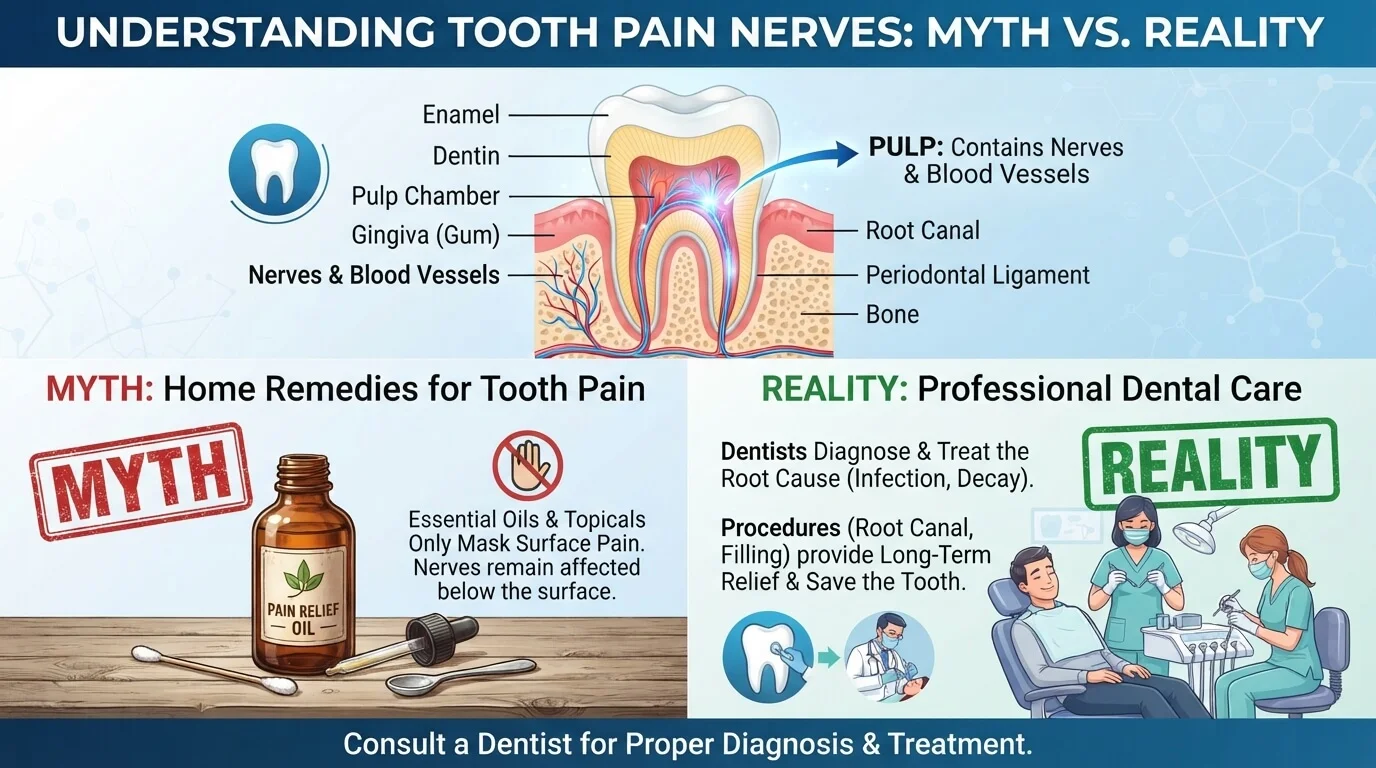
Every tooth contains a soft center known as the pulp. Inside this pulp are:
- Nerves
- Blood vessels
- Connective tissue
When decay, injury, or infection reaches the pulp, the nerves become inflamed. This inflammation creates intense pain that can spread into the jaw, ear, or even the head.
Common symptoms include:
- Sharp pain
- Throbbing discomfort
- Sensitivity to hot or cold
- Pain while chewing
- Swelling around the tooth

2. Can You Kill a Tooth Nerve in 3 Seconds?
No.
Despite countless online claims, there is no safe home method that permanently destroys a tooth nerve in seconds.
Some products temporarily numb pain, including:
- Benzocaine gels
- Cold compresses
- Pain medications
However, these methods only reduce discomfort for a short time.
Permanent removal of the nerve requires professional dental treatment, usually through:
- Root canal therapy
- Tooth extraction (when necessary)
3. Why Tooth Nerves Become Painful
Several dental conditions can irritate or damage the nerve.
Tooth Decay
Cavities gradually eat through enamel and dentin until bacteria reach the pulp.
Cracked Teeth
Tiny fractures expose sensitive inner tissues.
Dental Abscess
An infection creates pressure inside the tooth and surrounding gum.
Trauma
Sports injuries, falls, or accidents may damage the nerve.
Worn Fillings
Old fillings sometimes leak bacteria into the tooth.
Gum Disease
Advanced gum disease exposes roots and increases sensitivity.
4. Signs That Your Tooth Nerve Is Damaged
Certain symptoms suggest the nerve may already be infected or dying.
Persistent Pain
Pain continues even after eating or drinking.
Lingering Sensitivity
Hot or cold sensitivity lasts for several minutes.
Swollen Gums
Swelling around one tooth often indicates infection.
Dark Tooth Color
A gray or black tooth may have lost its blood supply.
Bad Taste
Pus draining from an abscess can produce an unpleasant taste.
Pain at Night
Severe nerve inflammation often worsens when lying down.

5. Fast Ways to Relieve Tooth Pain at Home
Although these methods won’t permanently remove the nerve, they may provide temporary relief until you can see a dentist.
Saltwater Rinse
Warm salt water helps reduce bacteria and soothe inflamed gums.
Mix:
- One cup warm water
- Half teaspoon salt
Swish gently for 30 seconds.
Cold Compress
Apply an ice pack to the outside of your cheek for:
- 15–20 minutes
- Repeat every few hours
Cold reduces swelling and numbs pain.
Over-the-Counter Pain Relievers
Common options include:
- Ibuprofen
- Acetaminophen
Always follow package instructions.
Keep Your Head Elevated
Sleeping with extra pillows reduces blood pressure inside the painful tooth.
Avoid Trigger Foods
Stay away from:
- Ice cream
- Hot coffee
- Sugary snacks
- Sticky candy
These often worsen nerve pain.
6. Treatments Dentists Use to Stop Tooth Pain
Professional treatment addresses the root cause instead of masking symptoms.
Dental Filling
Small cavities are cleaned and sealed.
Root Canal Treatment
The dentist removes:
- Infected pulp
- Damaged nerve
- Bacteria
The canals are disinfected and sealed.
This procedure permanently removes the painful nerve while saving the tooth.
Dental Crown
Weak or cracked teeth often receive crowns for protection.
Antibiotics
If infection spreads beyond the tooth, antibiotics may be prescribed in addition to dental treatment.
Extraction
When a tooth cannot be repaired, removal may be the best option.
7. Natural Remedies: What Works and What Doesn’t
Many natural remedies circulate online. Some offer mild relief, while others have little scientific support.
Clove Oil
Contains eugenol, a natural numbing compound.
Use sparingly and avoid swallowing.
Peppermint Tea Bag
A cooled peppermint tea bag may temporarily soothe irritated tissues.
Garlic
Garlic has antibacterial properties but does not eliminate tooth infections.
Hydrogen Peroxide Rinse
Diluted hydrogen peroxide may reduce bacteria.
Never swallow it.
Turmeric
Some people use turmeric for its anti-inflammatory properties, but evidence remains limited.
8. Dangerous Home Remedies to Avoid
Certain internet hacks can make dental problems worse.
Avoid:
- Placing aspirin directly on gums
- Applying bleach
- Using alcohol inside cavities
- Using undiluted essential oils
- Attempting DIY tooth removal
- Burning tissue with heated objects
These methods may cause burns, poisoning, or severe infection.
9. Preventing Future Tooth Nerve Problems
Good daily habits greatly reduce the risk of painful tooth infections.
Brush Twice Daily
Use fluoride toothpaste for at least two minutes.
Floss Every Day
Floss removes bacteria between teeth where brushes cannot reach.
Limit Sugar
Frequent sugary snacks feed cavity-causing bacteria.
Visit Your Dentist Regularly
Routine examinations catch problems before they become painful.
Wear a Mouthguard
Protect your teeth during sports and if you grind your teeth while sleeping.
Drink Plenty of Water
Water washes away food particles and supports healthy saliva production.
10. When to See a Dentist Immediately
Do not delay treatment if you experience:
- Severe swelling
- Fever
- Difficulty swallowing
- Difficulty breathing
- Pus around the tooth
- Tooth pain lasting longer than two days
- Facial swelling
These symptoms may indicate a spreading infection that requires urgent care.
11. Common Myths About Tooth Pain
Myth: Tooth pain always goes away on its own.
Reality: Pain often signals an underlying dental problem that worsens without treatment.
Myth: If the pain stops, the tooth is healed.
Reality: Sometimes the nerve dies, but the infection continues silently.
Myth: Home remedies cure tooth infections.
Reality: They may reduce symptoms temporarily but cannot remove infected tissue.
Myth: Root canals are extremely painful.
Reality: Modern anesthesia makes root canal treatment much more comfortable than many people expect.
Myth: Pulling the tooth is always better.
Reality: Saving your natural tooth is usually the preferred option whenever possible.
12. Final Thoughts
Searching for “kill tooth pain nerve in 3 seconds permanently” is understandable when you’re in severe pain. Unfortunately, no instant home remedy can safely or permanently eliminate a tooth nerve.
Temporary pain relief methods—such as cold compresses, saltwater rinses, and over-the-counter medications—can help you stay comfortable for a short time. However, they do not cure tooth decay, infection, or nerve damage.
The most effective long-term solution is prompt dental care. Treatments like fillings, root canals, or extractions remove the source of the pain, protect your oral health, and prevent serious complications. The sooner you address a painful tooth, the greater the chance of saving it.
Frequently Asked Questions (FAQs)
1. Can I permanently kill a tooth nerve at home?
No. There is no safe or proven home method to permanently destroy a tooth nerve. Professional dental treatment is required.
2. What provides the fastest temporary relief for tooth pain?
Over-the-counter pain relievers, a cold compress, and a warm saltwater rinse can provide temporary relief while you arrange dental care.
3. Will a root canal stop tooth nerve pain permanently?
Yes. A root canal removes the infected pulp and nerve, eliminating pain caused by nerve inflammation while preserving the tooth.
4. Is tooth pain always caused by cavities?
No. Tooth pain can also result from cracked teeth, gum disease, abscesses, worn fillings, trauma, or exposed tooth roots.
5. When is tooth pain considered a dental emergency?
Seek immediate dental or medical care if you have severe swelling, fever, difficulty swallowing or breathing, pus, or intense pain that does not improve, as these can be signs of a serious infection.
