


How to Become a Therapist: A Complete Step-by-Step Guide
Have you ever been the person friends turn to when life feels overwhelming? Do you enjoy listening, guiding, and helping people make sense of their emotions? If so, becoming a therapist might be more than just a career choice—it could be a meaningful calling.
Therapists help people navigate stress, trauma, relationships, anxiety, depression, and many other life challenges. In many ways, a therapist acts like a lighthouse during a storm, helping others find direction when everything feels uncertain. It’s a profession built on empathy, patience, and human connection.
But how do you actually become a therapist? What education do you need? How long does it take? Is it financially rewarding? And most importantly, is it the right career for you?
This guide answers all those questions in simple, easy-to-understand language. Whether you are a student exploring future careers or someone considering a career change, this article will walk you through every step.

1. What Does a Therapist Do?
A therapist helps people improve their mental, emotional, and behavioral well-being. They work with individuals, couples, families, and groups to address challenges that affect daily life.
Some common responsibilities include:
- Listening to clients without judgment
- Helping people manage stress and anxiety
- Guiding clients through emotional struggles
- Creating treatment plans
- Teaching coping strategies
- Supporting healthier communication habits
Therapists do not simply “give advice.” Instead, they help people better understand themselves and make healthier decisions.
For example, someone struggling with panic attacks may work with a therapist to identify triggers and develop calming techniques. Another person dealing with grief may need support processing painful emotions.
Every day is different, which keeps the work meaningful and engaging.
2. Why People Choose Therapy Careers
A Career With Purpose
Many people enter this field because they genuinely want to help others. Seeing someone heal emotionally can be deeply rewarding.
Growing Demand
Mental health awareness has increased significantly in recent years. More people now seek therapy than ever before, creating strong job opportunities.
Flexible Work Options
Therapists can work in:
- Private practice
- Hospitals
- Schools
- Rehabilitation centers
- Online therapy platforms
- Community organizations
Some professionals even create their own schedules and work remotely.
Personal Growth
Helping others often teaches therapists valuable life skills too. Many develop stronger communication, empathy, and emotional intelligence over time.
3. Types of Therapists
Not all therapists do the same work. There are several career paths within the field.
Mental Health Counselor
These professionals help people deal with anxiety, depression, trauma, and everyday life stress.
Marriage and Family Therapist
They focus on relationships, family conflicts, and communication issues between couples or relatives.
Child Therapist
Child therapists work with young people facing emotional, social, or behavioral difficulties.
Substance Abuse Counselor
These therapists support people recovering from addiction and unhealthy habits.
Behavioral Therapist
Behavioral therapists help clients change negative thought patterns and behaviors.
School Counselor
School counselors support students with academic, emotional, and social concerns.
Each specialization offers different experiences and challenges.
4. Skills You Need to Become a Therapist
Being a therapist requires more than education. Personal qualities matter just as much.
Strong Listening Skills
Clients want to feel heard and understood. Active listening builds trust.
Empathy
Therapists need the ability to understand another person’s feelings without becoming judgmental.
Communication Skills
Clear and thoughtful communication helps clients feel safe and supported.
Patience
Progress in therapy can take time. Therapists must stay calm and encouraging.
Problem-Solving Ability
Therapists help clients identify patterns and develop healthier coping methods.
Emotional Stability
Because therapists hear difficult stories, emotional resilience is essential.
These qualities can be developed over time through practice and experience.

5. Educational Requirements
Education is one of the biggest steps toward becoming a therapist.
Earn a Bachelor’s Degree
Most aspiring therapists begin with a bachelor’s degree in subjects like:
- Psychology
- Sociology
- Social work
- Human development
This stage builds foundational knowledge about human behavior and mental health.
Complete a Master’s Degree
In most places, a master’s degree is required to become licensed.
Common graduate programs include:
- Counseling
- Clinical psychology
- Marriage and family therapy
- Social work
Master’s programs often include internships and supervised clinical training.
Doctoral Degrees
Some therapists choose doctoral programs for advanced careers in research, teaching, or clinical psychology.
Although not always required, a doctorate can open additional opportunities.
6. Choosing the Right Degree
Picking the right academic path depends on your career goals.
Psychology Degree
Ideal for understanding human thoughts, emotions, and behavior.
Social Work Degree
Focuses on helping communities and individuals through social services and counseling.
Counseling Degree
Provides direct training in therapeutic methods and communication strategies.
Marriage and Family Therapy Degree
Specializes in relationship dynamics and family systems.
Before enrolling, research licensing requirements in your region because rules can vary.
7. Licensing and Certification
Licensing is a critical step. Without it, most therapists cannot legally practice.
Supervised Clinical Hours
After graduation, aspiring therapists usually complete supervised experience under a licensed professional.
This training helps build real-world confidence.
Licensing Exams
Many regions require therapists to pass professional exams covering ethics, counseling methods, and mental health practices.
Continuing Education
Therapists often complete ongoing training to maintain their licenses and stay updated on new research.
Licensing ensures therapists meet professional standards and provide safe care.
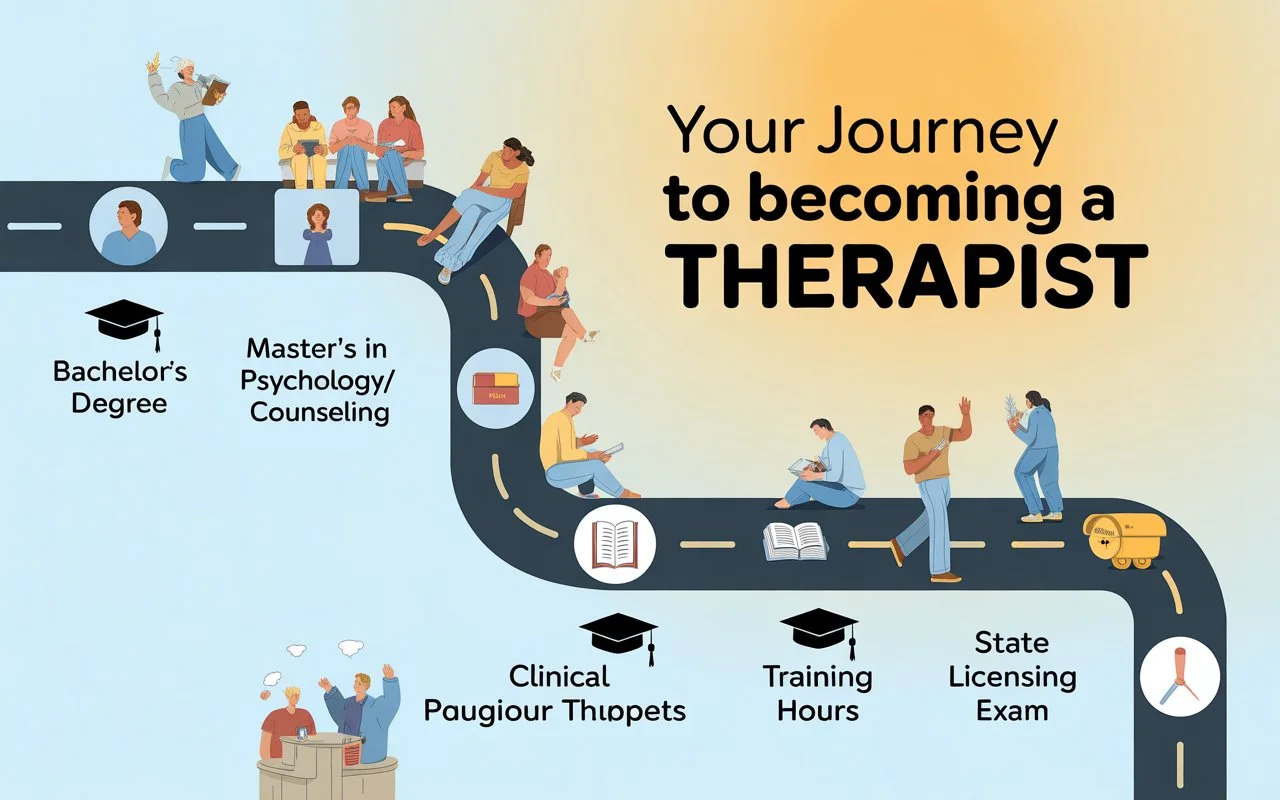
8. How Long It Takes to Become a Therapist
One of the most common questions is: how long does it take?
The timeline varies depending on your educational path.
Typical timeline:
- Bachelor’s degree: 4 years
- Master’s degree: 2–3 years
- Supervised experience: 1–2 years
Overall, becoming a licensed therapist often takes around 6–8 years.
While that may sound lengthy, many professionals find the journey worthwhile because the career offers long-term stability and purpose.
9. Specializations in Therapy
Therapy is a broad field with many areas of focus.
Trauma Therapy
Helps people recover from abuse, accidents, or painful life events.
Cognitive Behavioral Therapy (CBT)
Focuses on changing negative thinking patterns and behaviors.
Art Therapy
Uses creative expression to support emotional healing.
Group Therapy
Therapists guide multiple clients through shared experiences and discussions.
Career Counseling
Supports people making education and career decisions.
Specializations allow therapists to align their work with personal interests and strengths.
10. Gaining Practical Experience
Classroom learning alone is not enough. Practical experience is where real growth happens.
Internships
Most graduate programs include internships where students work directly with clients under supervision.
Volunteer Opportunities
Volunteering at crisis centers or community organizations can build valuable experience.
Networking
Connecting with professionals in the field can lead to mentorship and job opportunities.
Learning From Feedback
Constructive feedback helps new therapists improve their communication and counseling skills.
Practical experience also helps students discover which populations they enjoy working with most.
11. Salary and Career Opportunities
Therapy can provide financial stability alongside emotional fulfillment.
Average Earnings
Salaries vary depending on:
- Location
- Education
- Specialization
- Experience
- Workplace setting
Private practice therapists often earn more than entry-level counselors in organizations.
Career Growth
The demand for mental health professionals continues to rise worldwide. Schools, healthcare systems, and online therapy services all need qualified therapists.
Remote Therapy Opportunities
Online counseling has expanded rapidly, allowing therapists to work with clients virtually.
This flexibility has created even more career options.
12. Challenges Therapists Face
Like any profession, therapy comes with challenges.
Emotional Exhaustion
Listening to difficult stories daily can become emotionally draining.
Work-Life Balance
Therapists must learn how to separate work stress from personal life.
Complex Client Situations
Not every client improves quickly. Some cases require patience and long-term support.
Administrative Tasks
Documentation, scheduling, and insurance paperwork can take time.
Despite these challenges, many therapists find the rewards outweigh the difficulties.
13. Tips for Success in the Profession
Keep Learning
Mental health research constantly evolves. Successful therapists stay curious and informed.
Build Trust
Clients need a safe environment where they feel respected and understood.
Practice Self-Care
Therapists cannot help others effectively if they ignore their own well-being.
Develop Communication Skills
Strong communication strengthens therapeutic relationships.
Find a Mentor
Experienced professionals can offer guidance, support, and career advice.
Small improvements over time often lead to long-term success.
14. Is Becoming a Therapist Worth It?
For many people, absolutely.
Therapy is not just a job—it is meaningful work that can genuinely improve lives. Helping someone overcome anxiety, rebuild confidence, or heal from trauma can be incredibly fulfilling.
The profession also offers:
- Strong career demand
- Flexible work environments
- Opportunities for specialization
- Personal growth
- Emotional rewards
However, it also requires dedication, patience, and years of education.
If you care deeply about helping others and are willing to commit to the process, becoming a therapist can be a life-changing career path.
15. Final Thoughts
Becoming a therapist is a journey built on education, compassion, and continuous growth. It takes time, effort, and emotional resilience, but the rewards can be extraordinary.
In a world where stress, anxiety, and emotional struggles are increasingly common, skilled therapists play a vital role in helping people heal and move forward.
Whether you dream of working with children, couples, trauma survivors, or entire communities, the field offers many opportunities to make a real difference.
Every meaningful conversation, every breakthrough moment, and every life improved reminds therapists why their work matters.
If you feel drawn to understanding people and supporting emotional well-being, this career path may be exactly what you are looking for.
FAQs
1. What qualifications do you need to become a therapist?
Most therapists need a bachelor’s degree, a master’s degree in a related field, supervised clinical experience, and a professional license.
2. How many years does it take to become a therapist?
It typically takes around 6–8 years, depending on education and licensing requirements.
3. Can you become a therapist online?
Many universities offer online counseling and psychology programs, but supervised clinical training is usually still required in person or through approved placements.
4. Is becoming a therapist difficult?
The process can be challenging because it involves years of study and emotional work, but many people find it rewarding and worthwhile.
5. What is the difference between a psychologist and a therapist?
A therapist is a broad term for mental health professionals who provide counseling, while psychologists often hold doctoral degrees and may specialize in psychological testing and research.
