


Introduction
If you’ve ever looked at your tires and wondered, “Am I actually taking care of these the right way?”—you’re not alone. Tires don’t exactly shout for attention, yet they quietly carry the weight of your entire vehicle, mile after mile. Knowing how often to rotate tires is one of the simplest habits that can save you money, improve safety, and give you a smoother ride.
Think of tire rotation like rotating a mattress. If you always sleep on one side, it wears out faster. Tires behave the same way. Rotate them regularly, and they last longer, perform better, and keep you safer on the road. Let’s break this down in a clear, practical way—no confusing jargon, no guesswork.
What Tire Rotation Really Means
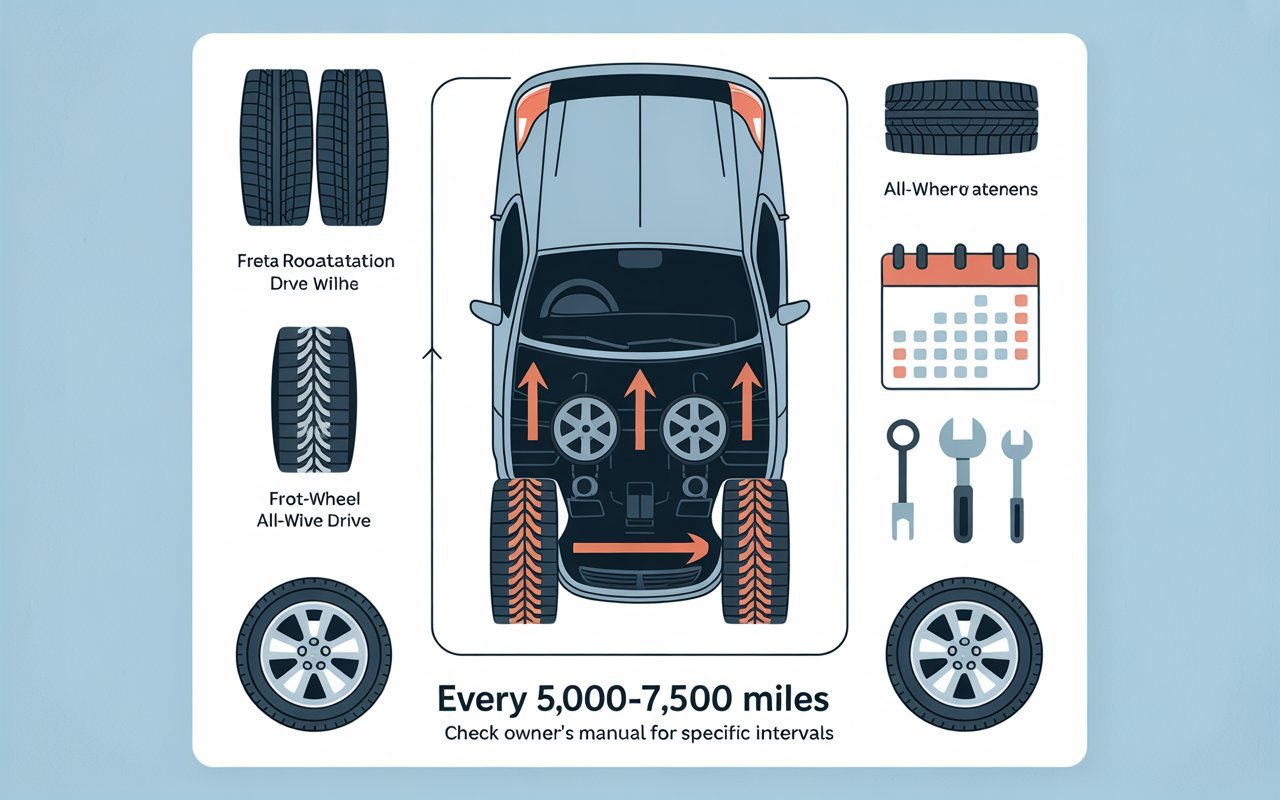
Tire rotation simply means moving your tires from one position to another—front to back, side to side, or diagonally. Why do this? Because tires don’t wear evenly.
Front tires often wear faster due to steering and braking. Rear tires usually wear slower but differently. Rotation balances this wear so all tires age together. It’s not about perfection—it’s about fairness for your tires.
Why Tire Rotation Is So Important
Tire rotation is more than routine maintenance—it’s a safety move.
Key benefits include:
-
Longer tire lifespan
-
Better traction and grip
-
Smoother and quieter driving
-
Improved fuel efficiency
-
Reduced risk of blowouts
Skipping rotation is like ignoring a small crack in your phone screen. It starts minor, then suddenly becomes a big, expensive problem.
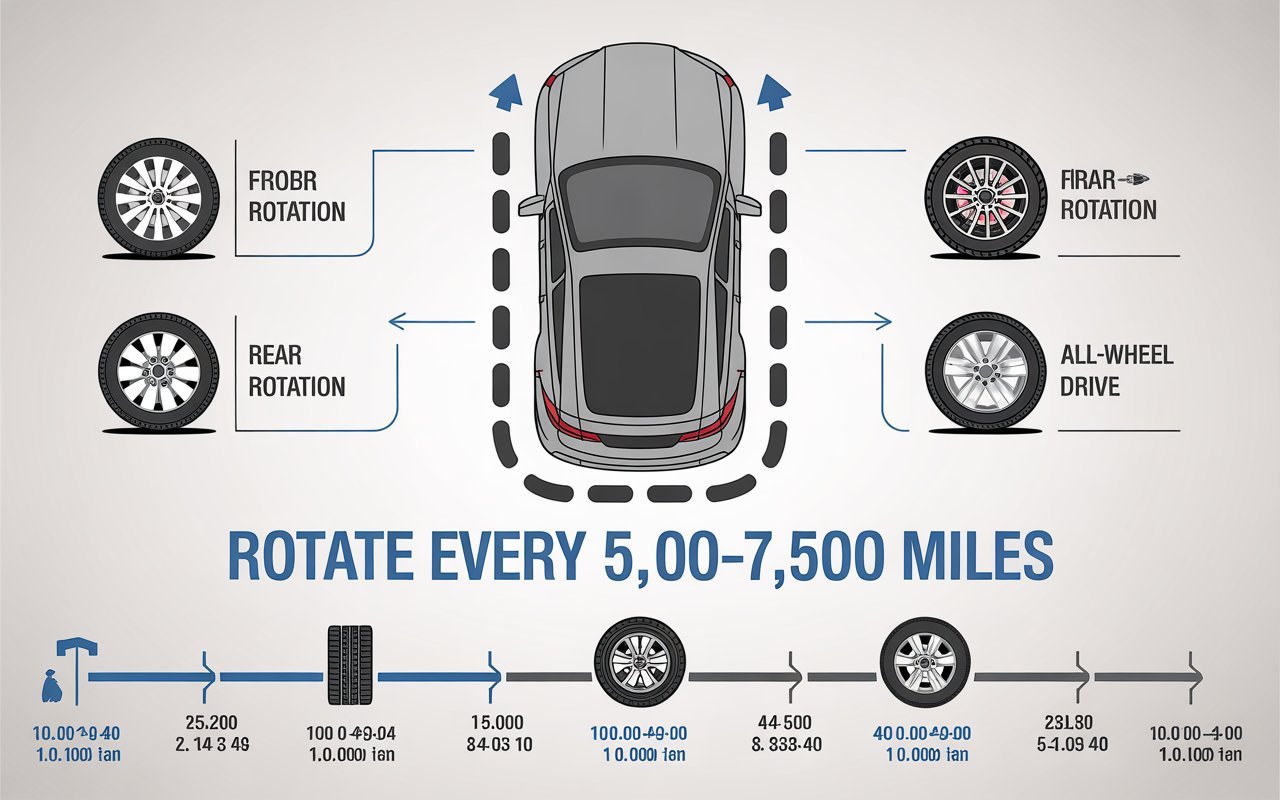
How Often to Rotate Tires on Average
So, the big question: how often to rotate tires?
For most vehicles, the sweet spot is:
-
Every 5,000 to 7,500 miles
-
Or every 6 months, whichever comes first
If you get regular oil changes, that’s usually the perfect reminder. Many drivers rotate tires at every oil change—simple, consistent, and effective.
Does Your Car’s Drive Type Matter?
Absolutely. Your drivetrain affects how your tires wear.
Front-Wheel Drive (FWD)
The front tires do most of the work.
-
They wear out faster
-
Rotation is especially important
Rear-Wheel Drive (RWD)
Power goes to the back wheels.
-
Rear tires wear faster
-
Balanced rotation prevents uneven traction
All-Wheel Drive (AWD)
All tires work together.
-
Uneven wear can damage the system
-
Frequent rotation is critical
AWD vehicles often need rotation closer to 5,000 miles to prevent costly repairs.
Signs Your Tires Need Rotation
Sometimes your tires tell you before your calendar does.
Watch out for:
-
Uneven tread depth
-
Vibrations while driving
-
Steering pulling left or right
-
Increased road noise
If your car feels “off” lately, tire rotation might be the fix you didn’t know you needed.
What Happens If You Skip Tire Rotation
Let’s be honest—life gets busy. But skipping tire rotation can lead to:
-
Faster tire replacement
-
Reduced control in wet or icy conditions
-
Poor fuel economy
-
Uneven braking performance
In the long run, skipping rotation costs far more than doing it.
Tire Rotation Patterns Explained
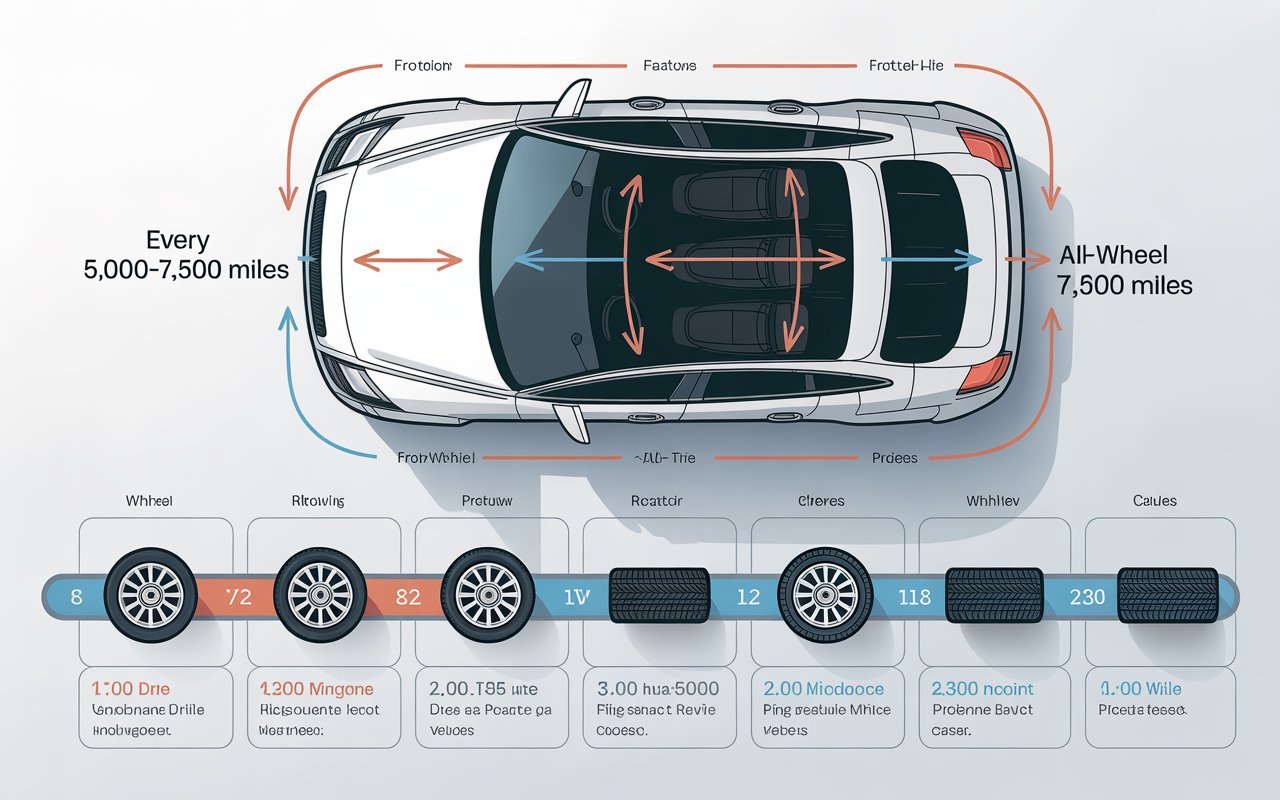
Not all rotations are the same. The pattern depends on tire type and drivetrain.
Forward Cross
-
Common for front-wheel drive
-
Front tires go to the back
-
Rear tires cross to the front
Rearward Cross
-
Used for rear-wheel drive
-
Rear tires move forward
-
Front tires cross to the back
Side-to-Side
-
For directional tires
-
Tires stay on the same side
X-Pattern
-
All tires move diagonally
-
Good for even wear balance
Your owner’s manual usually recommends the best option.
How Long Tire Rotation Takes
Good news—tire rotation is quick.
-
15 to 30 minutes at most service centers
-
Often done while you wait
-
Sometimes free with oil changes or tire purchases
For such a short task, the payoff is huge.
Can You Rotate Tires Yourself?
Yes, if you’re comfortable and prepared.
You’ll need:
-
A jack and jack stands
-
A lug wrench
-
Torque wrench
-
Flat, safe working space
That said, if you’re unsure, it’s better to let a professional handle it. Safety always comes first.
Cost of Tire Rotation: What to Expect
Tire rotation is surprisingly affordable.
-
Free at many dealerships
-
$20–$50 at independent shops
-
Often bundled into maintenance plans
Compared to replacing tires early, this is one of the best deals in car care.
Best Time to Rotate Tires
The best time?
-
During an oil change
-
Before long road trips
-
When switching between summer and winter tires
Set a reminder, make it routine, and you’ll never have to think twice.
Final Thoughts: Making Tire Rotation a Habit
Understanding how often to rotate tires isn’t about being a car expert—it’s about being a smart driver. Tire rotation protects your investment, keeps your family safer, and makes every drive smoother.
Treat your tires fairly, and they’ll return the favor mile after mile. Just like brushing your teeth, it’s a small habit with big rewards.
Frequently Asked Questions
How often to rotate tires if I drive less than average?
Even with low mileage, rotate tires every 6 months to prevent uneven aging.
Is tire rotation necessary for new tires?
Yes. New tires need rotation early to establish even wear patterns.
Can uneven tires affect fuel efficiency?
Absolutely. Uneven wear increases rolling resistance and lowers mileage.
Do all tires need rotation at the same time?
Yes. Rotating all four together keeps balance and handling consistent.
What happens if I rotate tires too late?
Late rotation won’t fix existing uneven wear, but it can prevent further damage.
