


Five Lighting Upgrades You Can Do Yourself in a Weekend
If you love working on DIY projects for your home, but only have time for it during the weekend, then you know the feeling of how a single project can turn into a three-week saga (if you’re lucky, more if not).
This is why lighting upgrades are particularly good, since with most systems, you can finish setting up before Sunday evening. Five of the projects that fit into this category are plug-in under-cabinet lighting, plug-and-play stair lighting kits, smart bulbs, LED strip accent lighting, and motion-sensor night lights.
None of these lighting projects requires rewiring your home, which means that there’s no need to hire an electrician.
All you need are basic tools, a free afternoon, and a willingness to read the instructions before you start (seriously, it’s alarming how people consider them optional).
Here’s how to tackle each one.
1. Plug-In Under-Cabinet Lighting
The problem with overhead lighting in the kitchen is that they tend to cast shadows exactly where you need light most: the worktops.
Under-cabinet lights solve this dilemma by directing illumination straight onto worktops, creating a brighter and more practical workspace. So, even when you have super bright lights in the middle of the ceiling, you can still find yourself chopping vegetables where your own silhouette should have been.
The good news is that many modern systems are completely plug-and-play. Some use adhesive backing, while others clip neatly into place beneath cabinets. You just need to make sure there’s a socket nearby to plug them into.
From a DIY perspective, it’s hard to beat. No cutting into walls. No altering circuits. Some you can even completely install in less than an hour.
The visual impact? Functional and beautiful at the same time.
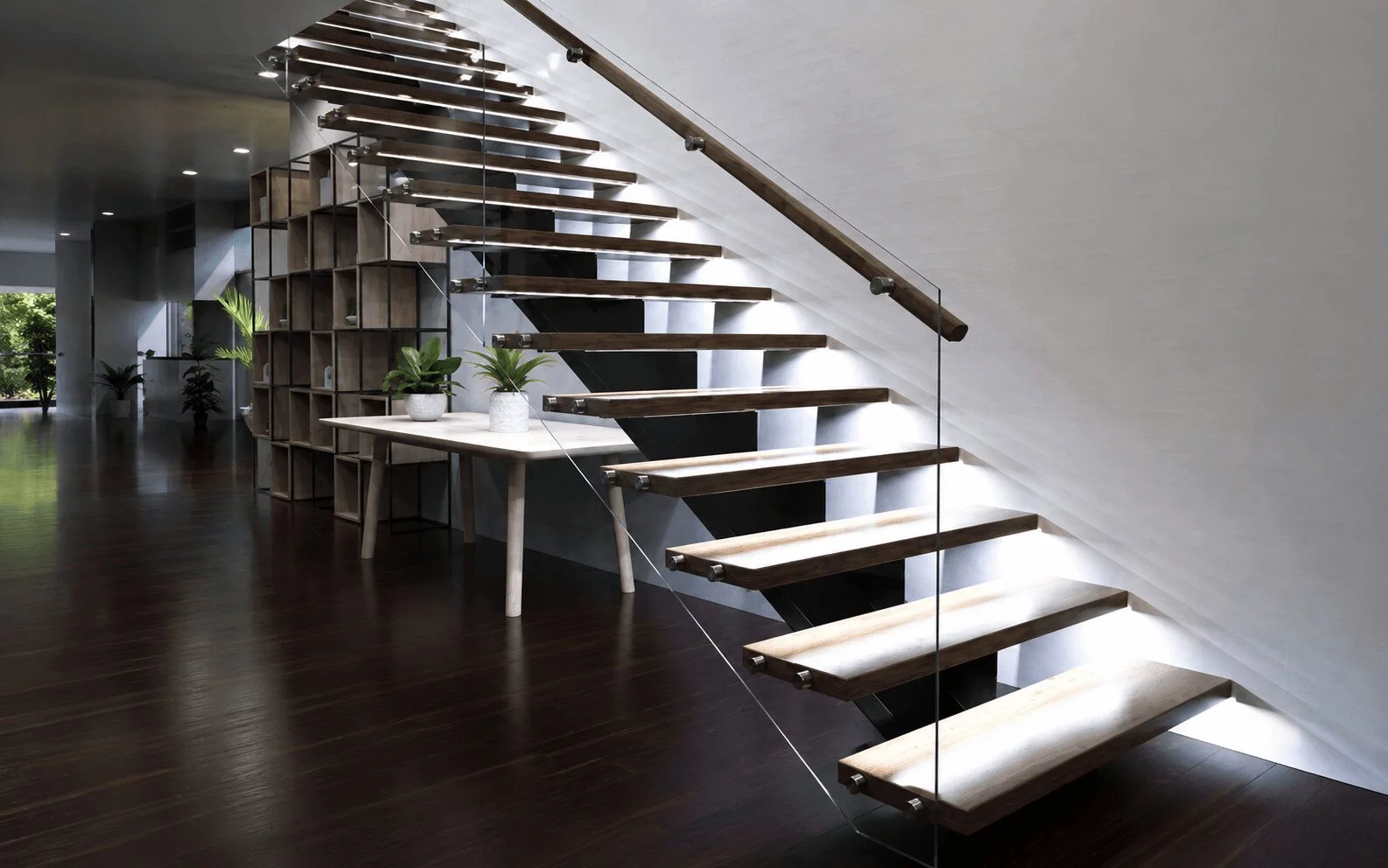
2. Plug-and-Play Stair Lighting
Be honest. When you think about home lighting, the first areas that come to mind are the main rooms: kitchen, living room, bedroom, bathroom, and home office. Staircases, they’re often overlooked. And we can’t really blame you.
Staircases are quiet, transitional spaces that connect two “main areas” together. So, most would understandably push lighting them aside for last… if ever. Yet the staircase is one of the areas where additional lighting can make the biggest difference.
In recent years, we’ve seen the increasing popularity of stair lighting, and many modern systems even come with a plug-and-play setup, making installation simple.
You don’t need extensive electrical work, as many use modular components that connect to one another via low-voltage systems. Some include sensors that automatically activate the lights when movement is detected.
But just a bit of a disclaimer and a warning: That doesn’t mean every stair lighting solution is suitable for complete beginners.
Some systems do need a direct wiring connection to the mains circuit, which, in most cases, requires professional intervention for safety reasons. You also still need proper planning, cable management, and basic DIY confidence to complete the rest of the installation.
However, when you compare that with traditional hardwired alternatives, modular systems are considerably more approachable.
Once everything is properly in place, the steps become easier to navigate after dark and even serve as an additional architectural feature of the home. Who knew, right?
3. Smart Bulbs
You probably already swap broken light bulbs on your own. They’re quick, and they’re easy to do. Why not swap them with smart bulbs? You basically just do what you already do.
That simplicity explains why they’re so popular in modern homes.
Modern smart bulbs screw into existing fittings just like conventional lamps. Connect them to an app, and you can control them remotely through your phone. You can adjust brightness, set schedules, group them into rooms, change their colour (if they have that feature), and even control them through voice assistants.
Switching the lights on or off without leaving the sofa? “Alexa, turn on the living room lights.”
Useful? Absolutely. Slightly dangerous for motivation levels? Also yes.
For many DIY enthusiasts, smart bulbs offer an easy entry point into home automation. There’s no drilling, wiring, or specialist knowledge required… yet. You can save that for the more intricate setups later on.
But if you want an easy-to-set-up, works-immediately smart solution, this is the way.
They’re particularly effective in living rooms, bedrooms, and home offices where lighting requirements change throughout the day.
4. LED Strip Accent Lighting
If there’s a “Jack of all trades” in lighting, it’s the good ol’ LED strip lights. You can use them practically anywhere and in anything.
Need to highlight shelving? LED strips can do that. Want to add a soft glow behind a television? They’ll happily do that too. Fancy making kitchen plinths, alcoves, coving, or display units feel more bespoke? You know which fitting to use.
LED strip lights come with pre-applied adhesive backing and can be cut to the length you need, which are major contributing factors to their popularity. Installation is fairly simple as well:
- Measure the area
- Cut the strips
- Clean the surface
- Apply the strips
- Connect to power
Voila! You have successfully transformed your ordinary space with an “Instagrammable” level aesthetic.
If that’s not one of the pleasures of DIY, then I don’t know what is.
5. Motion-Sensor Night Lights
We’ve all navigated our homes in the middle of the night while it’s dark. Perhaps it’s to go to the bathroom, or go down to drink water, or a midnight kitchen raid you’ll regret later.
Simple actions, but each comes with danger, especially if you’re going down the stairs.
Enter motion sensor lights.
These compact fittings automatically illuminate when movement is detected and switch off shortly afterwards. No need for manual intervention. Most of these night lights don’t flood the space with bright lights. Just enough for easy navigation, so you don’t get your eyes burned by the glare.
They’re also very energy efficient since they only operate when needed.
Hallways, landings, utility rooms, wardrobes, and bathrooms all benefit from this approach. The lights remain unnoticed during the day but become surprisingly useful after dark.
It’s a small upgrade, but the impact is massive.
A Weekend Project Worth Starting
The best DIY projects are the ones you can easily complete in a weekend, yet have a significant effect on your daily life. The five upgrades mentioned above all fit that category. They’re practical and capable of transforming how your space feels.
Remember that one of the crucial steps in achieving high-quality lighting is getting high-quality fittings. LED suppliers like Simple Lighting have a wide range of modern lighting options available for aspiring and experienced DIY enthusiasts alike.
So pick one project, gather your tools, and get started. Come Sunday evening, your home is noticeably brighter.
