


Does Chai Tea Have Caffeine? Complete Guide for Tea Lovers
Have you ever taken a sip of warm, fragrant chai and wondered whether it contains caffeine? You’re not alone. Many people enjoy this flavorful beverage for its comforting taste and aromatic spices, but they are often unsure about its caffeine content.
The short answer is yes, most traditional chai contains caffeine. However, the amount can vary depending on how it’s prepared, the ingredients used, and the brewing method. Understanding what’s inside your cup can help you make informed choices, especially if you’re sensitive to stimulants or trying to reduce your intake.
In this comprehensive guide, we’ll explore everything you need to know about chai, its ingredients, caffeine levels, health benefits, and how it compares to other popular beverages.
What Is Chai Tea?
The word “chai” simply means tea in many parts of the world, particularly in India. Traditional chai, often called masala chai, combines black tea leaves with a blend of spices such as:
- Cardamom
- Cinnamon
- Ginger
- Cloves
- Black pepper
The mixture is usually simmered with milk and sweetener to create a rich and flavorful drink.
Think of chai as an orchestra. The tea leaves provide the foundation, while the spices act like musicians adding layers of complexity and warmth. Together, they create a beverage that is both comforting and energizing.

Does Chai Tea Contain Caffeine?
The Simple Answer
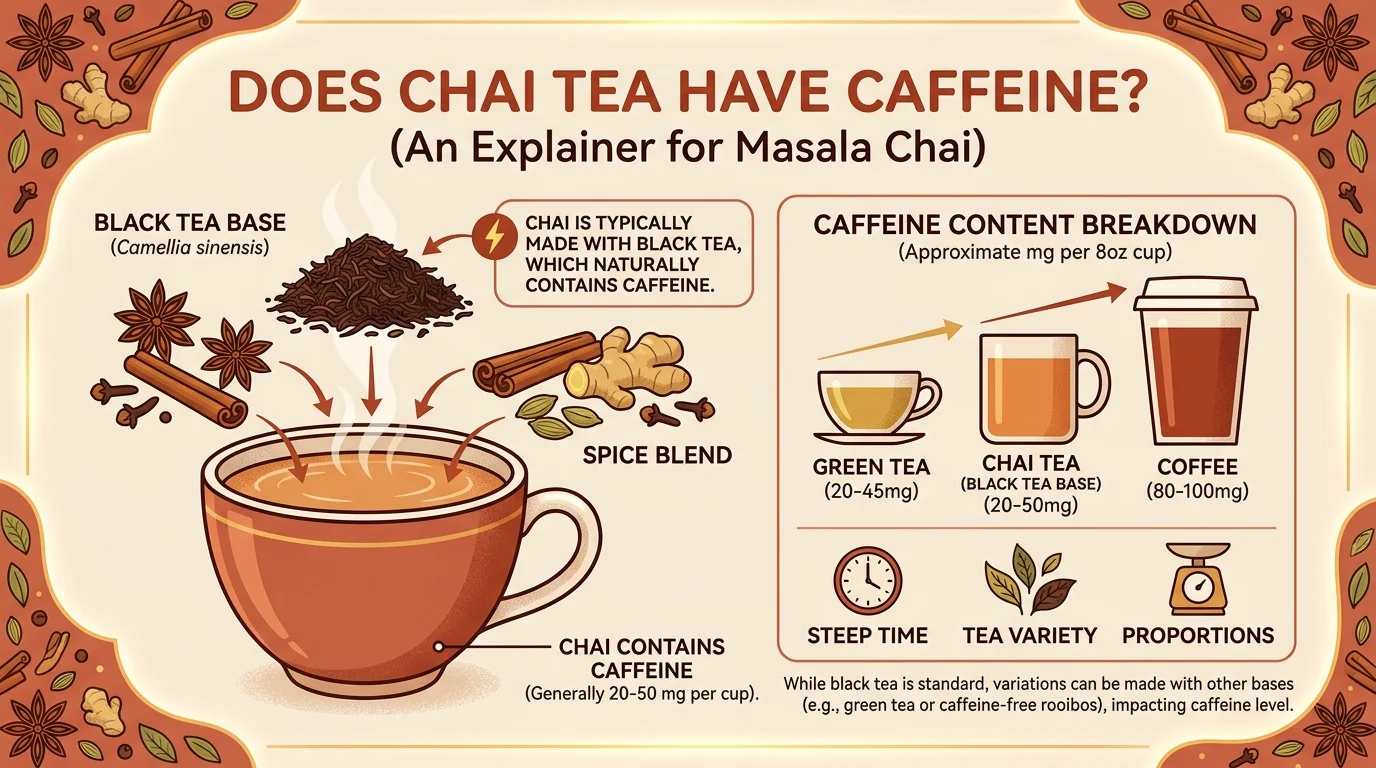
Yes, most traditional chai contains caffeine because it is made using black tea leaves.
Black tea naturally contains caffeine, a stimulant that helps increase alertness and reduce feelings of fatigue.
However, chai generally contains less caffeine than coffee, making it a popular option for people who want a gentle energy boost without the intense effects often associated with coffee.
Exceptions
Not all chai beverages contain caffeine. Herbal versions made without black tea can be naturally caffeine-free.
Examples include:
- Rooibos chai
- Herbal spice chai
- Caffeine-free chai blends
Always check the ingredients if caffeine content is important to you.
Where Does the Caffeine Come From?
The Role of Black Tea
The caffeine in chai comes primarily from the black tea leaves used in the recipe.
Tea plants naturally produce caffeine as a protective compound. When the leaves are harvested and processed into black tea, they retain much of this natural stimulant.
Spices Do Not Add Caffeine
Many people assume spices contribute caffeine, but this is not true.
Ingredients such as:
- Cinnamon
- Cardamom
- Ginger
- Cloves
contain no caffeine at all.
These spices add flavor, aroma, and potential health benefits without increasing stimulant levels.
How Much Caffeine Is in a Cup?
Average Amounts
A typical 8-ounce cup of chai contains approximately:
| Beverage | Average Caffeine |
|---|---|
| Chai Tea | 25–60 mg |
| Black Tea | 40–70 mg |
| Green Tea | 20–45 mg |
| Coffee | 80–120 mg |
These numbers are estimates and can vary significantly.
Why the Range Is So Wide
Different recipes use different amounts of tea leaves. Some chai concentrates are highly concentrated and may contain more caffeine than traditional homemade versions.
The brewing process also plays a major role.
Factors That Affect Caffeine Levels
Brewing Time
The longer tea steeps, the more caffeine is extracted.
A chai brewed for five minutes generally contains more caffeine than one brewed for two minutes.
Tea Quantity
Using more tea leaves increases caffeine content.
A strong chai made with extra black tea will naturally contain more caffeine.
Preparation Style
Different preparation methods influence the final caffeine level.
Examples include:
- Traditional stovetop brewing
- Tea bags
- Chai concentrates
- Powdered chai mixes
Each method produces different results.
Serving Size
A larger cup means more caffeine overall.
A 16-ounce serving can contain nearly twice the caffeine of an 8-ounce serving.
Chai vs Coffee
Energy Boost Comparison
Coffee is known for delivering a quick and powerful burst of energy.
Chai offers a gentler experience.
Many people describe chai’s effect as smoother and more balanced because the caffeine level is lower.
Taste Experience
Coffee often has bold, bitter notes.
Chai combines sweetness, spice, creaminess, and warmth, creating a more complex flavor profile.
Which Is Better?
Neither is universally better.
Choose coffee if you need a stronger caffeine kick.
Choose chai if you prefer a milder, more gradual increase in alertness.
Chai vs Green Tea and Black Tea
Compared with Green Tea
Green tea generally contains slightly less caffeine than many chai blends.
However, the difference is often small.
Compared with Black Tea
Since chai is typically made from black tea, caffeine levels can be similar.
The main difference is that chai often contains milk and spices, which alter the flavor and drinking experience.
Flavor Differences
- Green tea: Light and grassy
- Black tea: Bold and robust
- Chai: Spiced and creamy
Each beverage appeals to different tastes and preferences.
Benefits of Drinking Chai
Provides Gentle Energy
The caffeine content may help improve focus and alertness without overwhelming the body.
Rich in Antioxidants
Black tea contains compounds that help protect cells from oxidative stress.
Contains Beneficial Spices
Many chai spices have been traditionally used for wellness purposes.
Examples include:
- Ginger for digestion
- Cinnamon for flavor and warmth
- Cardamom for aroma
Comforting and Satisfying
Chai’s rich flavor can be a satisfying alternative to sugary drinks and high-calorie specialty beverages.
Potential Side Effects
Caffeine Sensitivity
Some individuals are more sensitive to caffeine than others.
Possible symptoms include:
- Nervousness
- Restlessness
- Rapid heartbeat
- Difficulty sleeping
Digestive Discomfort
Strong tea may occasionally irritate sensitive stomachs.
Added Sugar Concerns
Many commercial chai products contain significant amounts of sugar.
Reading nutrition labels can help you avoid excessive intake.
Can You Get Decaffeinated Chai?
Yes, You Can
Many companies now offer decaffeinated versions.
These products use decaffeinated black tea while maintaining the traditional spice blend.
Naturally Caffeine-Free Alternatives
Another option is choosing blends made from:
- Rooibos
- Herbal ingredients
- Pure spice mixtures
These alternatives provide chai flavor without caffeine.
Best Time to Drink Chai
Morning
Many people enjoy chai as a morning beverage because it provides a moderate energy boost.
Afternoon
Chai can be an excellent afternoon pick-me-up when energy levels begin to dip.
Evening Considerations
If you’re sensitive to caffeine, avoid drinking traditional chai close to bedtime.
Opt for caffeine-free versions instead.
Homemade vs Store-Bought Chai
Homemade Chai
Making chai at home offers complete control over:
- Tea strength
- Sweetness
- Spice intensity
- Caffeine content
Store-Bought Chai
Convenient options include:
- Tea bags
- Concentrates
- Powder mixes
- Ready-to-drink bottles
These products vary widely in caffeine levels and ingredients.
Which Option Wins?
Homemade chai often provides greater customization and freshness, while store-bought options offer convenience.
Who Should Limit Consumption?
Certain individuals may benefit from monitoring caffeine intake.
These include:
- People with caffeine sensitivity
- Those experiencing insomnia
- Individuals prone to anxiety
- People advised by healthcare professionals to reduce stimulants
Moderation is usually the key.
If you have specific health concerns, consult a qualified healthcare provider.
Tips for Reducing Caffeine Intake
Choose Decaffeinated Versions
This is one of the simplest solutions.
Use Less Tea
Reducing the amount of black tea lowers caffeine levels.
Shorten Brewing Time
A shorter steep generally extracts less caffeine.
Try Herbal Alternatives
Herbal chai blends can provide the same comforting spice profile without caffeine.
Watch Portion Sizes
Smaller servings naturally contain less caffeine.
Final Thoughts
So, does chai tea have caffeine? In most cases, yes. Traditional chai is made with black tea, which naturally contains caffeine. However, the amount is usually lower than what’s found in coffee, making it an appealing option for those seeking a gentler source of energy.
The exact caffeine content depends on several factors, including the type of tea, brewing method, serving size, and preparation style. Fortunately, there are also decaffeinated and herbal alternatives available for people who want the delicious flavor of chai without the stimulant effects.
Whether you enjoy chai for its warming spices, comforting aroma, or mild energy boost, understanding its caffeine content can help you enjoy every cup with confidence.
FAQs
1. Does chai tea have more caffeine than coffee?
No. Most chai contains significantly less caffeine than coffee. A typical cup of chai has around 25–60 mg, while coffee often contains 80–120 mg or more.
2. Can I drink chai tea before bed?
If you’re sensitive to caffeine, traditional chai may interfere with sleep. Consider choosing a decaffeinated or herbal version in the evening.
3. Is caffeine-free chai available?
Yes. Many brands offer decaffeinated chai, and herbal chai blends made with rooibos or spices contain no caffeine.
4. Does chai latte contain caffeine?
Most chai lattes contain caffeine because they are made with chai concentrate or black tea. The exact amount varies by recipe and serving size.
5. Is chai healthier than coffee?
Both beverages can be part of a healthy diet. Chai offers beneficial spices and generally contains less caffeine, while coffee provides its own antioxidants and potential health benefits. The healthiest choice depends on your personal preferences and dietary needs.
