


Your espresso tastes flat. The shots come out slower than they used to, the machine groans like it’s tired, and there’s a chalky crust around the steam wand. Most people blame the beans, but the real culprit is usually limescale.
Knowing how to descale espresso machine parts properly is one of the cheapest ways to protect a machine that may have cost you hundreds. It takes about 30 to 40 minutes, needs no special skills, and can add years to your machine’s life. This guide walks you through the whole process, from choosing a descaler to rinsing out the last traces, plus the mistakes that quietly ruin machines.
Why Learning How to Descale Espresso Machine Parts Matters
Water contains dissolved minerals, mainly calcium and magnesium. Every time your machine heats water, a little of those minerals stays behind as limescale. Over weeks and months, that scale builds up inside the boiler, heating element, pipes and valves.
Here is what that does to your coffee and your machine:
- Worse flavour. Scale makes it harder for the machine to hold a steady brewing temperature, so shots taste sour or bitter.
- Slower flow and weaker pressure. Narrow pipes clog, and a pump working against blockages wears out faster.
- Higher repair costs. Scale is one of the most common reasons heating elements fail.
- Shorter lifespan. A well-maintained machine can last a decade. A neglected one often dies in three or four years.
Think of descaling the way you think of an oil change. It isn’t exciting, but skipping it costs far more than doing it.
How Often Should You Descale Your Espresso Machine?
The short answer: every one to three months for most households. The right schedule depends mainly on your water.
- Hard water: descale every four to six weeks.
- Medium hardness: every two to three months.
- Soft or filtered water: every three to four months.
Not sure how hard your water is? Water suppliers usually publish hardness data for your area, and cheap test strips from a pet shop or hardware store give a quick reading. Many modern machines also show a descale reminder light, so don’t ignore it.
What You Need Before You Start
Gather these first so you aren’t hunting for things mid-process:
- A descaling solution made for espresso machines, or citric acid powder
- Fresh, clean water
- A large container or jug to catch the liquid
- The user manual, if you still have it (or look it up online)
- A soft cloth and a small brush
Check your manual for the manufacturer’s recommended descaler. Brands such as Breville, De’Longhi, Gaggia, Jura and Nespresso often specify their own products, and using something different can affect your warranty.
 How to Descale Espresso Machine Models Step by Step
The exact buttons differ between brands, but the process follows the same pattern.
Step 1: Empty and Prepare the Machine
Remove the portafilter, any pods and the water filter if your model has one. Empty the drip tray and the water tank, and rinse the tank.
Step 2: Mix the Descaling Solution
Follow the dilution ratio on your descaler’s packaging. If you’re using citric acid, a common mix is about 20 to 30 grams of powder per litre of water, but check your manual first. Pour the solution into the water tank.
Step 3: Run the Solution Through the Machine
Place a large container under the group head and another under the steam wand. Run roughly half of the solution through the group head, then let the machine sit for 10 to 15 minutes. This waiting time lets the acid break down the scale.
Step 4: Flush the Steam Wand
Open the steam wand and let some solution run through it for about 30 seconds. Steam wands clog easily and often get forgotten.
Step 5: Finish the Cycle
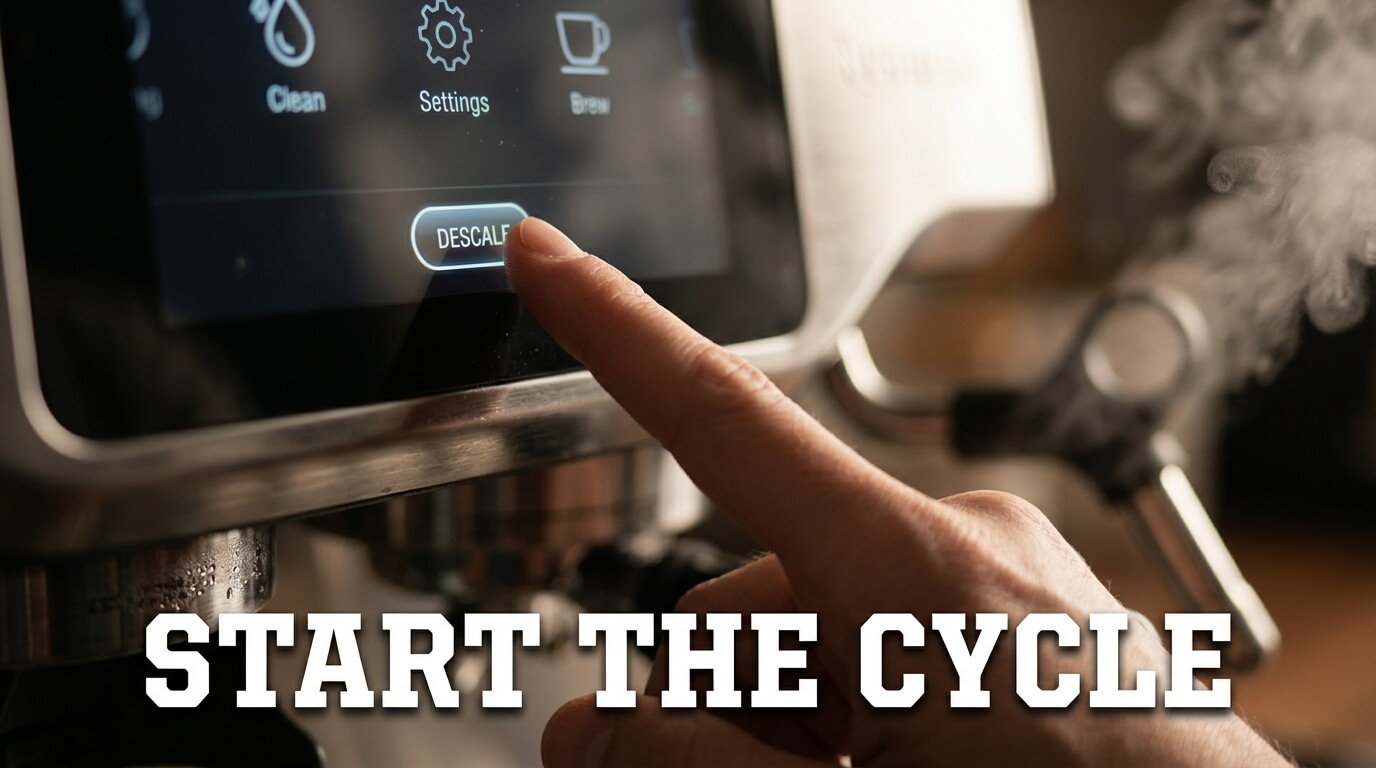
Run the remaining solution through both the group head and the steam wand. If your machine has an automatic descale programme, start it and follow the on-screen prompts instead.
Step 6: Rinse Thoroughly
This step matters more than people think. Refill the tank with fresh water and run at least two or three full tanks through the machine. Descaler left behind will ruin your next coffee and can damage seals. If you can still taste or smell anything sharp, keep rinsing.
How to Descale Espresso Machine Types That Work Differently
Semi-Automatic and Manual Machines
Follow the steps above. These machines usually give you the most control, so use the waiting time to clean the portafilter basket and shower screen.
Super-Automatic Machines
Most have a built-in descaling programme. Start it from the menu and follow the prompts, since the machine controls the timing and flushing for you. Use only the manufacturer’s recommended descaler.
Pod and Capsule Machines
Run the descaler through using the manufacturer’s procedure, which often involves holding certain buttons. Brands like Nespresso publish exact instructions for each model, so look yours up.
Can You Use Vinegar to Descale an Espresso Machine?
You’ve probably seen this tip everywhere. Vinegar can dissolve scale, but it isn’t the best choice. Many manufacturers advise against it because the acetic acid can damage rubber seals and gaskets over time, and the smell tends to linger in the machine and show up in your coffee.
If vinegar is all you have, use a mix of one part white vinegar to one part water, run it through carefully, and rinse many more times than you would with a commercial product. For regular use, citric acid or a dedicated descaler is the safer, cleaner option. Citric acid is gentle on seals and has no strong smell.
Mistakes That Can Damage Your Machine
After seeing how often these come up, I’d call these the most common problems:
- Skipping the rinse. Leftover descaler affects taste and can harm internal parts.
- Using the wrong product. Bleach, dishwasher tablets and harsh household cleaners don’t belong anywhere near your machine.
- Descaling too rarely. Waiting for a breakdown means scale has already done its damage.
- Ignoring the manual. Some machines have specific programmes that must be run in order.
- Forgetting the steam wand. It collects scale just like the boiler does.
 Simple Habits That Reduce Limescale
Descaling is only half the story. These habits slow scale build-up between sessions:
- Use filtered or softened water, but don’t use distilled water unless your manual allows it, as some machines need minerals to detect water levels.
- Replace the water filter on schedule.
- Empty the tank if you won’t use the machine for a few days.
- Wipe down the steam wand after every use.
FAQ
What is the easiest way to descale espresso machine parts at home?
Mix a dedicated descaling solution with water, run it through the group head and steam wand, let it sit for 10 to 15 minutes, then rinse with several tanks of fresh water. Always follow your manual’s instructions first.
How often should I descale my espresso machine?
Every one to three months for most households. Hard water means more frequent descaling, roughly every four to six weeks.
Is vinegar safe for descaling an espresso machine?
It works on scale, but many manufacturers advise against it because it can wear rubber seals and leave a smell. Citric acid or a branded descaler is a safer choice.
How do I know my machine needs descaling?
Warning signs include slower brewing, weaker or cooler coffee, louder pump noise, white residue around the spouts, and a descale light on the display.
Can I skip descaling if I use filtered water?
Filters reduce scale but don’t eliminate it. You can descale less often, but you still need to do it.
Conclusion: Keep Your Espresso Tasting Great
Now that you know how to descale espresso machine parts the right way, you can protect your investment and get better coffee every morning. Pick the right descaler, follow the steps, rinse thoroughly, and stick to a schedule based on your water hardness.
Check your machine today. If it’s been more than three months since the last descale, set aside 30 minutes this weekend and do it. Your next shot will taste noticeably better. Have a question about your specific model? Leave it in the comments and I’ll help you work it out.
