

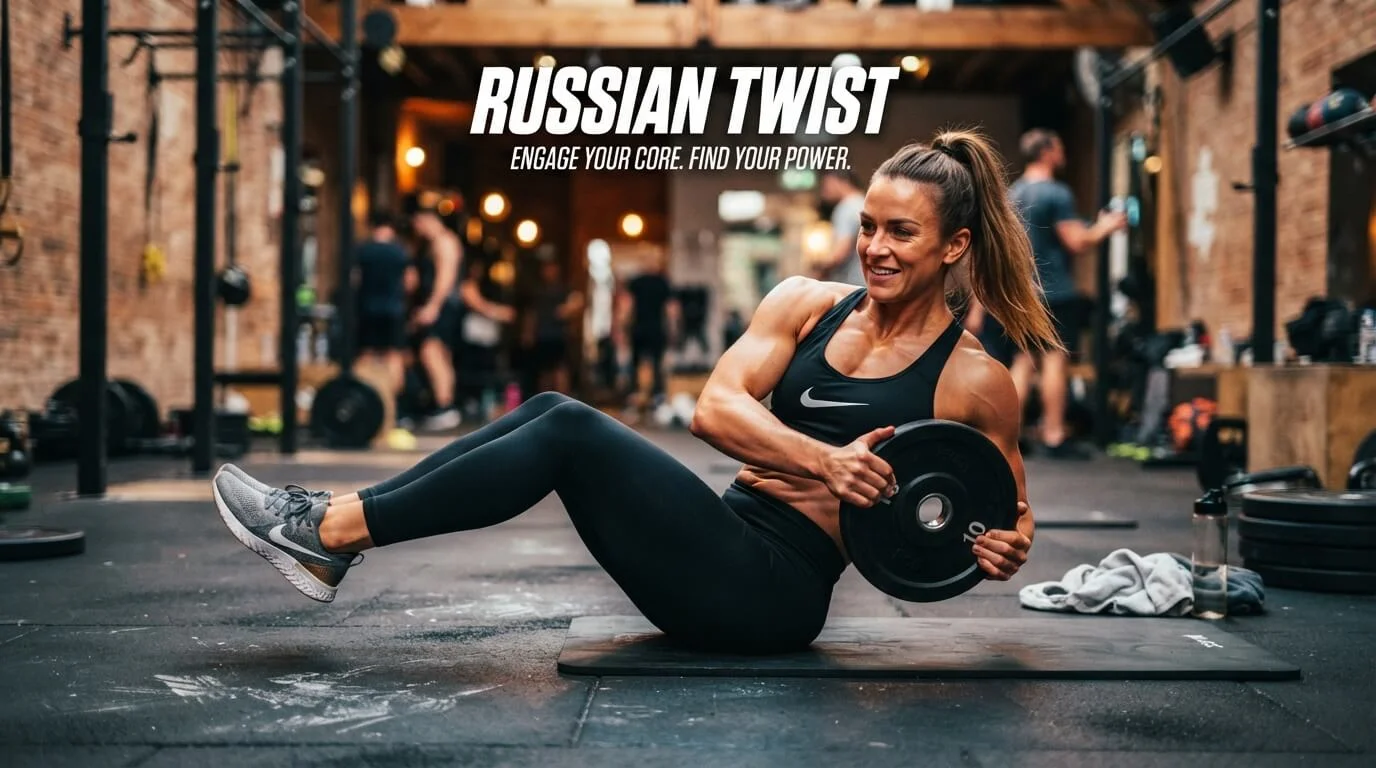

A strong core is the foundation of good movement, better posture, and overall fitness. Whether you’re lifting groceries, playing your favorite sport, or simply getting out of bed, your core muscles work behind the scenes to support every motion. One exercise that has remained popular for years is the Russian Twist. It’s simple, requires little equipment, and can be performed almost anywhere.
But is it really worth adding to your workout routine? How do you perform it correctly without hurting your back? And what benefits can you expect?
This complete guide answers those questions and more. By the end, you’ll understand how this exercise works, who should do it, and how to make it part of a balanced fitness plan.
What Is the Russian Twist?
The Russian Twist is a seated core exercise that focuses on rotational movement. You sit on the floor with bent knees, lean your upper body slightly backward, and rotate your torso from one side to the other. The movement can be performed using only your body weight or by holding a medicine ball, dumbbell, kettlebell, or weight plate for added resistance.
Although it is widely recognized as an abdominal exercise, it actually trains several muscle groups that work together to stabilize your body.
Imagine your body as a ship sailing through rough water. Your arms and legs may provide movement, but your core acts like the anchor that keeps everything balanced. Without that anchor, every movement becomes less stable and more difficult.
Why Core Strength Is Important
Many people think the core is only about getting six-pack abs. In reality, it includes multiple muscles that support your spine, pelvis, and hips.
A strong core helps you:
- Improve posture
- Maintain better balance
- Protect your lower back
- Enhance athletic performance
- Perform everyday tasks with greater ease
- Reduce the risk of certain injuries
Even activities like bending down, climbing stairs, reaching overhead, or carrying shopping bags rely on core stability.
Building these muscles isn’t just about appearance—it’s about improving how your body functions every day.
Muscles Targeted by the Exercise
One reason the Russian Twist is so effective is that it activates several muscles at once.
Obliques
These muscles run along the sides of your waist and are primarily responsible for twisting your torso.
Rectus Abdominis
Known as the “six-pack” muscle, it helps stabilize your upper body during the exercise.
Transverse Abdominis
This deep core muscle acts like a natural support belt for your spine and abdomen.
Hip Flexors
They help keep your legs stable while maintaining the seated position.
Lower Back Muscles
Your spinal stabilizers remain active throughout the movement to support proper posture.
Shoulders and Arms
When weights are used, your upper body contributes to maintaining control and stability.
How to Perform the Russian Twist Properly
Proper technique is essential for maximizing results and reducing the chance of injury.
Step 1: Sit Comfortably
Sit on the floor with your knees bent and feet flat.
Step 2: Lean Back Slightly
Lean your upper body backward about 45 degrees while keeping your back straight.
Step 3: Tighten Your Core
Brace your abdominal muscles before moving.
Step 4: Hold Your Hands Together
You can clasp your hands together or hold a light weight.
Step 5: Rotate Slowly
Twist your shoulders and torso toward one side.
Return to the center.
Rotate toward the opposite side.
Continue alternating sides with slow, controlled movements.
Step 6: Breathe Naturally
Exhale while twisting.
Inhale as you return to the center.
Avoid holding your breath during the exercise

Common Mistakes to Avoid
Many people unknowingly reduce the effectiveness of this exercise by making simple mistakes.
Moving Too Fast
Quick repetitions rely on momentum rather than muscle control.
Only Swinging the Arms
The movement should come from your torso—not your hands.
Rounding the Back
A curved spine places unnecessary pressure on your lower back.
Using Heavy Weights Too Soon
Start with body weight until you master proper technique.
Holding Your Breath
Steady breathing improves stability and endurance.
Ignoring Pain
Muscle fatigue is normal.
Sharp or stabbing pain is not.
Stop immediately if discomfort occurs
Top Benefits of Russian Twists
Adding this movement to your routine offers several physical benefits.
Better Core Stability
A stronger core supports nearly every movement you perform throughout the day.
Improved Balance
Training your stabilizing muscles improves body control and coordination.
Enhanced Athletic Performance
Sports such as tennis, cricket, baseball, golf, swimming, and boxing require rotational strength.
Developing this movement pattern can improve power and efficiency.
Better Posture
Strong abdominal and back muscles help maintain proper spinal alignment.
Increased Functional Fitness
Twisting, reaching, lifting, and turning are common daily movements.
This exercise prepares your body for those real-life activities.
Greater Muscle Endurance
Regular practice helps your muscles perform longer without becoming fatigued
Beginner to Advanced Variations
One of the biggest advantages of this exercise is its flexibility.
Beginner Version
- Feet remain on the floor
- Hands together
- Slow bodyweight twists
This version allows you to learn proper technique before increasing difficulty.
Intermediate Version
- Lift your feet slightly off the floor
- Maintain balance
- Add a light medicine ball
Advanced Version
Increase the challenge by:
- Holding heavier resistance
- Extending your legs
- Slowing each repetition
- Increasing training volume
Resistance Band Variation
A resistance band provides constant tension during the rotation.
Stability Ball Variation
Performing the movement while seated on a stability ball increases balance demands.

How Often Should You Do Russian Twists?
Like any exercise, consistency matters more than excessive training.
A general guideline is:
Beginners
- 2–3 sets
- 10–12 repetitions per side
Intermediate
- 3 sets
- 15–20 repetitions per side
Advanced
- 4 sets
- 20–25 repetitions per side
Allow at least one day of recovery between intense core workouts.
Remember, quality repetitions produce better results than rushing through large numbers.
Safety Tips and Precautions
Although the Russian Twist is safe for many people, it isn’t appropriate for everyone.
Consult a healthcare professional before performing this exercise if you have:
- Chronic lower back pain
- Herniated discs
- Recent spinal surgery
- Hip injuries
- Pregnancy without medical clearance
General Safety Tips
- Warm up before exercising.
- Maintain a neutral spine.
- Avoid jerky movements.
- Start without weights.
- Increase resistance gradually.
- Stop if sharp pain develops.
Listening to your body is one of the smartest fitness habits you can develop.
Russian Twist vs. Other Core Exercises
No single exercise develops every part of the core equally.
| Exercise | Main Focus | Difficulty |
|---|---|---|
| Russian Twist | Rotation | Moderate |
| Plank | Stability | Beginner |
| Bicycle Crunch | Obliques | Moderate |
| Dead Bug | Deep Core | Beginner |
| Mountain Climbers | Cardio + Core | Moderate |
| Hanging Leg Raise | Lower Abs | Advanced |
The best workout combines multiple exercises rather than relying on just one.
A balanced routine challenges the body in different ways and creates better overall strength.
Nutrition and Recovery Tips
Exercise is only one piece of the fitness puzzle.
Without proper nutrition and recovery, progress slows significantly.
Eat Enough Protein
Protein supports muscle repair after workouts.
Good options include:
- Chicken
- Fish
- Eggs
- Greek yogurt
- Lentils
- Beans
- Tofu
Stay Hydrated
Water improves exercise performance and recovery.
Aim to drink fluids consistently throughout the day.
Prioritize Sleep
Your body repairs itself while you sleep.
Most adults benefit from seven to nine hours each night.
Stretch Regularly
Gentle stretching after exercise helps improve flexibility and reduce muscle tightness.
Progress Gradually
Increase repetitions or resistance slowly over time instead of making sudden jumps.
Small improvements made consistently often produce the biggest long-term results.
Conclusion
The Russian Twist remains one of the most effective exercises for developing rotational strength, improving balance, and building a stable core. While it may look simple, proper technique is essential for getting the best results and protecting your lower back. By focusing on controlled movements, maintaining good posture, and progressing at a steady pace, you can safely include this exercise in your fitness routine.
Remember that no single exercise creates a strong, healthy body on its own. Pair the Russian Twist with other core exercises, strength training, cardiovascular activity, proper nutrition, and adequate recovery for the best overall results. Stay patient, remain consistent, and your efforts will pay off with improved strength, better movement, and greater confidence in your everyday activities.
Frequently Asked Questions
1. Is the Russian Twist suitable for beginners?
Yes. Beginners should start with the basic bodyweight version while keeping their feet on the floor. Once proper form is mastered, they can gradually add resistance.
2. Does the Russian Twist help burn belly fat?
The exercise strengthens the core but does not specifically burn fat from the stomach area. Fat loss occurs through a combination of regular exercise, a balanced diet, and maintaining a calorie deficit.
3. Should I lift my feet during the Russian Twist?
Lifting your feet increases the difficulty and challenges your balance. Beginners can keep their feet on the floor until they develop enough strength and stability.
4. Can I do Russian Twists every day?
It is generally better to train your core two to three times per week, allowing enough time for muscle recovery between sessions.
5. What equipment can I use for Russian Twists?
You can perform the exercise using body weight alone or increase resistance with a medicine ball, dumbbell, kettlebell, or weight plate once you have mastered proper technique.
