


Magnifying Glass: The Ultimate Guide for Everyday Use
A magnifying glass is one of those simple tools that has stood the test of time. Despite modern digital technology, it remains incredibly useful for reading fine print, examining tiny objects, exploring nature, repairing electronics, crafting, and even solving mysteries—just like the classic detective image many of us remember.
Think of a magnifying glass as a window that lets your eyes see what they normally cannot. It enlarges details without changing the object itself, making everyday tasks easier and more enjoyable. Whether you’re a student, hobbyist, senior citizen, collector, or professional, understanding how this handy optical tool works can help you choose the right one for your needs.

What Is a Magnifying Glass?
A magnifying glass is an optical device consisting of a convex lens mounted in a frame with a handle or stand. Its primary purpose is to enlarge the appearance of small objects so they become easier to see.
Although simple in design, this tool has countless practical applications. It helps people inspect fine details without requiring expensive equipment or complicated technology.
People of all ages use magnifying glasses for both work and leisure.
How a Magnifying Glass Works
The science behind a magnifying glass is surprisingly straightforward.
A convex lens bends incoming light rays toward your eyes. When an object is placed within the lens’s focal length, it creates a larger virtual image that appears closer than it actually is.
Key Components
- Convex lens
- Frame
- Handle
- Protective coating (on some models)
Magnification Power
Magnification is commonly measured in “X.”
Examples include:
- 2X – Reading newspapers
- 3X – Books and maps
- 5X – Coins and stamps
- 10X – Jewelry and electronics
- 20X or higher – Scientific inspection
Higher magnification shows more detail but usually offers a smaller viewing area.
History of the Magnifying Glass
Humans have experimented with lenses for thousands of years.
Ancient Beginnings
Early civilizations discovered that polished crystals could enlarge objects.
Middle Ages
Scholars improved glass-making techniques, leading to better reading aids.
Scientific Revolution
Magnifying lenses became essential for biology, astronomy, and medicine.
Modern Era
Today’s magnifying glasses include:
- LED lighting
- Anti-glare lenses
- Lightweight materials
- Digital displays
- Rechargeable batteries
Technology has made magnification more convenient than ever before.

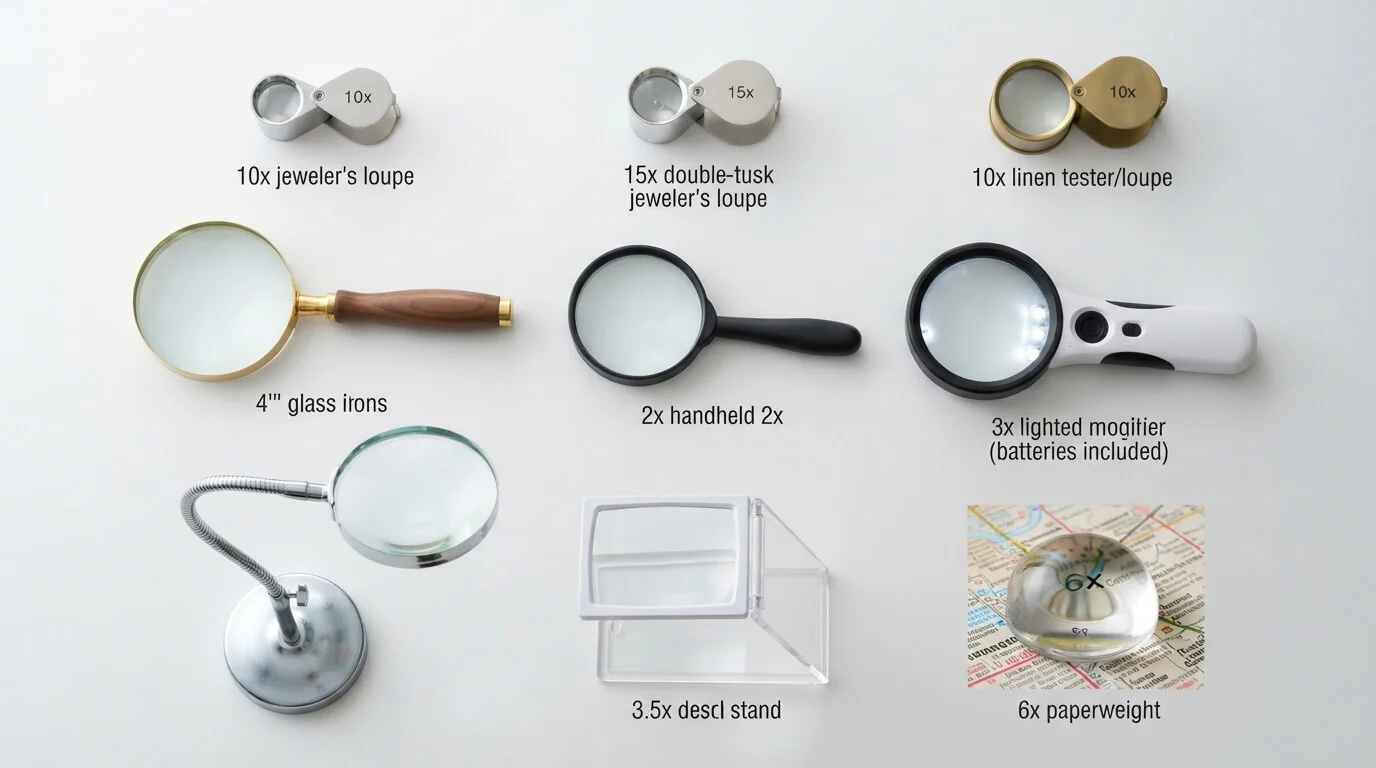
Common Types of Magnifying Glasses
Not every magnifier is designed for the same purpose.
Handheld Magnifying Glass
The traditional model.
Best for:
- Reading
- Maps
- Newspapers
- Labels
Stand Magnifier
Rests directly on documents.
Ideal for:
- Seniors
- Long reading sessions
- Crafts
Headband Magnifier
Worn like a headset.
Perfect for:
- Jewelry
- Electronics
- Needlework
- Repairs
Pocket Magnifier
Small and portable.
Useful for:
- Shopping
- Travel
- Restaurants
- Outdoor activities
LED Magnifying Glass
Built-in lights improve visibility in dim environments.
Popular among:
- Collectors
- Hobbyists
- Readers
Digital Magnifier
Uses cameras and electronic displays.
Excellent for people with low vision.
Everyday Uses
Many people underestimate how useful a magnifying glass can be.
Reading Small Print
Medicine labels, warranties, instructions, and receipts often use tiny fonts.
A magnifying glass makes them much easier to read.
Coin and Stamp Collecting
Collectors inspect:
- Dates
- Mint marks
- Printing details
- Condition
Jewelry Inspection
Jewelers use magnification to examine:
- Gem clarity
- Scratches
- Settings
- Hallmarks
Nature Exploration
Children and adults enjoy observing:
- Leaves
- Insects
- Flowers
- Rocks
It’s like giving your eyes a mini microscope.
Electronics Repair
Tiny circuit boards require close inspection.
Magnification improves accuracy during repairs.
Arts and Crafts
Ideal for:
- Embroidery
- Painting miniatures
- Model building
- Diamond painting
Benefits of Using a Magnifying Glass
A magnifying glass offers more than enlarged images.
Reduced Eye Strain
Reading tiny text becomes less tiring.
Improved Accuracy
Small details become easier to identify.
Better Productivity
Professionals complete delicate tasks faster.
Enhanced Learning
Students observe scientific specimens more effectively.
Affordable Solution
Compared to advanced optical devices, magnifying glasses are inexpensive.
Portable Convenience
Many models fit inside pockets or bags.
Important Features to Consider
Choosing the right magnifier depends on several factors.
Lens Material
Glass
Advantages:
- Clear image
- Scratch-resistant
- Durable
Disadvantages:
- Heavier
- More expensive
Acrylic
Advantages:
- Lightweight
- Affordable
Disadvantages:
- Scratches more easily
Magnification Strength
Avoid choosing the strongest magnification unless necessary.
Higher isn’t always better.
Lens Size
Larger lenses show wider viewing areas.
Smaller lenses provide portability.
LED Lighting
Built-in lights improve visibility indoors and at night.
Handle Design
Comfortable grips reduce hand fatigue during extended use.
How to Choose the Right One
Before purchasing, ask yourself a few questions.
Why will you use it?
Different tasks require different magnification levels.
How often will you use it?
Frequent users should invest in higher-quality models.
Will you travel with it?
Pocket-sized options are best for portability.
Do you have vision challenges?
Large lenses with LED lighting can significantly improve readability.
Recommended Magnification
| Purpose | Suggested Power |
|---|---|
| Reading | 2X–4X |
| Maps | 3X |
| Crafts | 5X |
| Coins | 10X |
| Jewelry | 10X–20X |
| Electronics | 10X+ |
Cleaning and Maintenance
Proper care extends the life of your magnifying glass.
Cleaning Tips
- Use a microfiber cloth.
- Avoid paper towels.
- Remove dust gently.
- Clean fingerprints immediately.
Storage Tips
- Store in a protective case.
- Keep away from excessive heat.
- Avoid dropping it.
- Protect the lens from scratches.
Regular maintenance keeps images crystal clear.
Common Mistakes to Avoid
Many users accidentally reduce the effectiveness of their magnifying glass.
Choosing Too Much Magnification
Extremely high power narrows the viewing area.
Ignoring Lens Quality
Cheap lenses may distort images.
Looking at the Sun
Never use a magnifying glass to observe the sun directly. Doing so can seriously damage your eyes.
Using the Wrong Lighting
Good lighting always improves visibility.
Improper Storage
Leaving the lens exposed increases the risk of scratches.
Future of Magnification Technology
Magnification tools continue to evolve.
Emerging innovations include:
- Smart digital magnifiers
- AI-assisted image enhancement
- Voice controls
- Wireless connectivity
- Rechargeable lighting systems
- Adjustable electronic zoom
- High-definition displays
Even with these advancements, traditional magnifying glasses remain popular because they are reliable, simple, and affordable.
Conclusion
The humble magnifying glass proves that even the simplest tools can make a remarkable difference in everyday life. From reading fine print and exploring nature to repairing electronics and inspecting collectibles, it serves countless purposes with ease. By understanding how magnifying glasses work, comparing different types, and selecting the right magnification level, you can find a model that perfectly matches your needs. Whether you’re buying your first magnifier or upgrading to a more advanced option, investing in a quality lens will help you see the world with greater clarity and confidence.
Frequently Asked Questions
1. What is a magnifying glass used for?
A magnifying glass enlarges small objects or text, making them easier to see. It is commonly used for reading, crafts, inspections, collecting, and repairs.
2. Which magnification is best for reading?
Most readers find 2X to 4X magnification comfortable because it enlarges text while maintaining a wide viewing area.
3. Are glass lenses better than acrylic lenses?
Glass lenses usually provide sharper images and resist scratches better, while acrylic lenses are lighter and more affordable.
4. Can children safely use a magnifying glass?
Yes, children can safely use a magnifying glass with adult supervision, especially during science projects or nature exploration. However, they should never use it to look at the sun.
5. How do I clean a magnifying glass properly?
Use a clean microfiber cloth to wipe the lens gently. Avoid abrasive materials or harsh chemicals, and store the magnifier in a protective case when not in use.
