


Clifton Suspension Bridge: History, Architecture, and Everything You Need to Know
The Clifton Suspension Bridge is one of the world’s most famous bridges and an enduring symbol of the city of Bristol, England. Gracefully spanning the dramatic Avon Gorge, this remarkable structure combines breathtaking scenery with exceptional engineering. Whether you are interested in history, architecture, photography, or simply exploring iconic landmarks, the bridge offers something for everyone.
More than just a crossing over the River Avon, the bridge represents determination, innovation, and the vision of engineers who dared to imagine what once seemed impossible. Like a thread connecting two cliffs, it has united communities and inspired generations for over 150 years.

1. Introduction to Clifton Suspension Bridge
The Clifton Suspension Bridge stretches across the spectacular Avon Gorge, linking Clifton in Bristol with Leigh Woods in North Somerset. Every year, millions of visitors admire its elegant design and panoramic views.
The bridge is much more than a transportation route. It is a landmark that showcases Victorian engineering, attracts tourists from around the world, and remains one of Britain’s most photographed structures.
2. The History Behind the Bridge
The Need for a Crossing
During the eighteenth century, crossing the Avon Gorge was both difficult and time-consuming. Local residents and traders wanted a direct route between Clifton and the surrounding countryside.
A wealthy Bristol merchant left money in his will to fund a bridge. However, the available funds were not enough to build such an ambitious project immediately.
Early Design Competitions
Several architects submitted designs before a competition was held in 1829. Although many creative ideas were proposed, one young engineer stood out.
That engineer was Isambard Kingdom Brunel, whose revolutionary concept eventually became the foundation of today’s bridge.
3. Isambard Kingdom Brunel’s Vision
Brunel was only in his twenties when he designed the bridge. Despite his age, he had extraordinary confidence and imagination.
His original design featured grand Egyptian-inspired towers and a graceful suspension system that would safely carry traffic across the deep gorge.
Although construction faced many setbacks due to financial difficulties and political unrest, Brunel’s innovative vision survived.
Sadly, Brunel passed away before the bridge was completed. His colleagues later finished the project while preserving much of his original design.
4. Engineering and Construction
A Remarkable Achievement
Construction officially began in 1831 but experienced several long interruptions.
The bridge finally opened in 1864, five years after Brunel’s death.
Key Engineering Features
Some impressive engineering specifications include:
- Total length of approximately 412 meters
- Main span of about 214 meters
- Height of around 75 meters above the River Avon
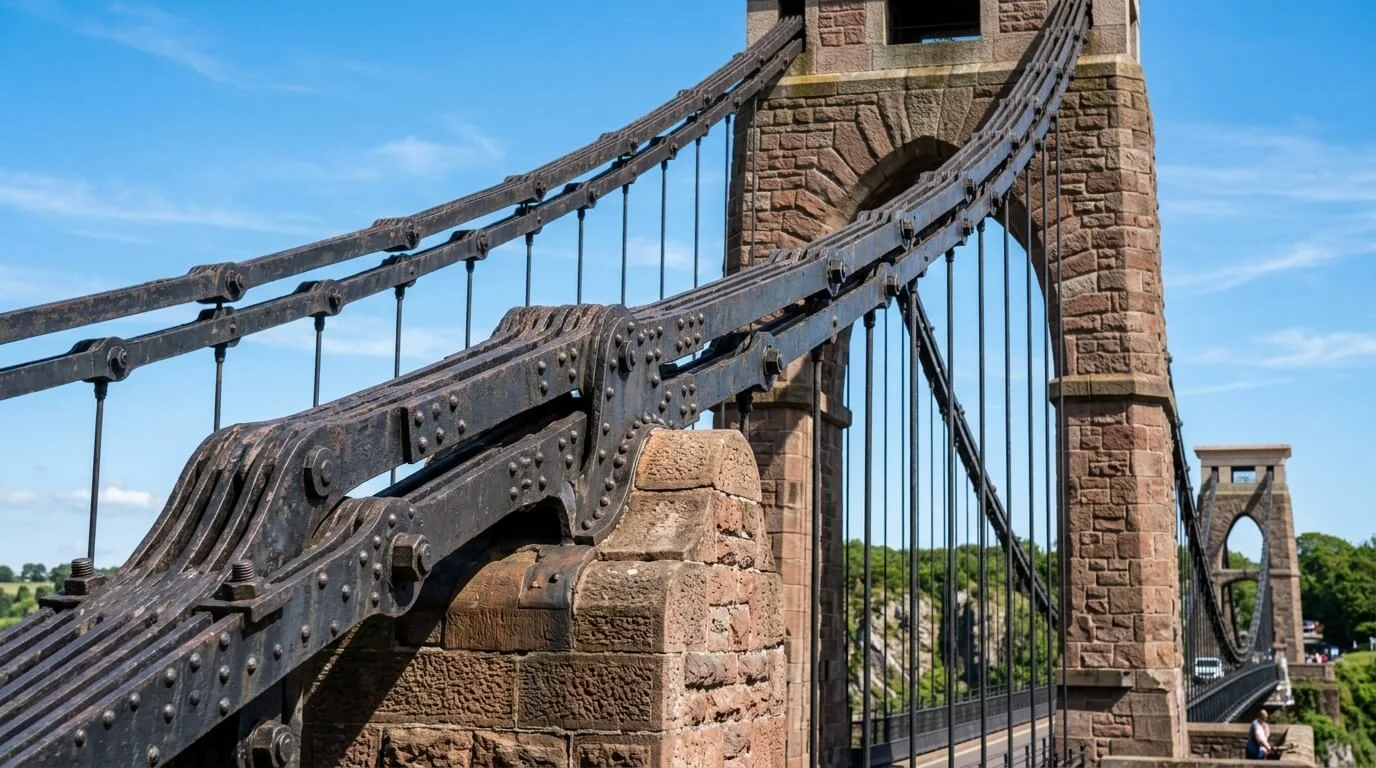
- Iron suspension chains supporting the roadway
- Limestone towers standing proudly on both sides
For the nineteenth century, these achievements were extraordinary.

5. Architectural Features
Elegant Suspension Design
The bridge appears remarkably light despite carrying thousands of vehicles every day.
Its suspension chains distribute weight evenly while allowing the structure to flex slightly during strong winds and heavy traffic.
Distinctive Towers
The stone towers blend perfectly with the surrounding cliffs.
Rather than overwhelming the natural landscape, they complement it, creating one of Britain’s most recognizable skylines.
Night Illumination
After sunset, carefully positioned lighting transforms the bridge into a glowing landmark visible across Bristol.
The illuminated cables create an unforgettable scene for photographers.
6. Why the Bridge Is So Famous
Several factors contribute to its worldwide reputation.
Engineering Excellence
It remains one of the greatest examples of Victorian engineering.
Scenic Beauty
Few bridges combine architecture with natural surroundings as beautifully as Clifton Suspension Bridge.
Historical Importance
The bridge reflects Britain’s industrial development and engineering innovation.
Tourist Attraction
Visitors enjoy walking across the bridge while taking in spectacular views of:
- Avon Gorge
- River Avon
- Bristol skyline
- Leigh Woods
- Clifton Village
7. Best Things to See and Do
Walk Across the Bridge
Walking across the bridge is completely different from simply viewing it from a distance.
Every step offers changing perspectives of the gorge below.
Visit the Visitor Centre
The nearby visitor centre explains:
- Brunel’s life
- Original construction methods
- Historic photographs
- Engineering models
- Interactive exhibits
Photography
Popular photography locations include:
- Observatory Hill
- Leigh Woods
- Clifton Observatory
- River paths
- Sion Hill
Sunrise and sunset provide especially beautiful lighting.
Explore Clifton Village
After visiting the bridge, many tourists enjoy:
- Independent cafés
- Boutique shopping
- Historic buildings
- Local restaurants
- Art galleries
8. Wildlife and Natural Beauty
The Avon Gorge is a protected natural environment filled with unique wildlife.
Visitors may spot:
- Peregrine falcons
- Rare wildflowers
- Foxes
- Bats
- Various woodland birds
The limestone cliffs support plant species that grow in very few other places in Britain.
Nature lovers often combine a bridge visit with hiking trails through Leigh Woods.
9. Visitor Information
Best Time to Visit
Each season offers something unique.
Spring
Colorful flowers and mild temperatures.
Summer
Long daylight hours and lively tourist activity.
Autumn
Golden woodland scenery creates beautiful photography opportunities.
Winter
Quieter surroundings and dramatic mist over the gorge.
Accessibility
The bridge is accessible throughout the year and can be crossed on foot or by vehicle.
Nearby walking paths offer varying levels of difficulty.
Parking
Several parking areas are available near Clifton Village and Leigh Woods.
Public transport also provides convenient access from Bristol city centre.
10. Cultural Significance
The Clifton Suspension Bridge has become much more than a piece of infrastructure.
It appears in:
- Films
- Television programs
- Travel documentaries
- Postcards
- Tourism campaigns
- Books
- Paintings
For Bristol residents, it represents local pride and identity.
Many celebrations and public events also use the bridge as a symbolic backdrop.
11. Interesting Facts
Here are some fascinating facts about the bridge:
- Construction took over 30 years due to delays.
- Brunel never saw the completed bridge.
- The suspension chains were reused from another bridge project.
- Millions of people cross the bridge every year.
- The bridge has become one of England’s most photographed landmarks.
- It has survived severe weather for over 150 years.
- Engineers continuously monitor its condition to ensure safety.
12. Preservation and Future
Maintaining a historic bridge requires constant care.
Specialist engineers regularly inspect:
- Suspension chains
- Stone towers
- Road surface
- Structural movement
- Metal components
Modern technology helps preserve the bridge while respecting Brunel’s original design.
Conservation work ensures future generations can continue enjoying this remarkable landmark.
The bridge demonstrates how historic engineering can remain functional while preserving its heritage.
Conclusion
The Clifton Suspension Bridge is far more than a crossing over the Avon Gorge. It represents imagination, perseverance, and engineering brilliance that has stood the test of time. From Brunel’s ambitious vision to today’s carefully preserved landmark, every part of the bridge tells a story of innovation and determination.
Whether you visit for its stunning views, fascinating history, or architectural beauty, the bridge leaves a lasting impression. It continues to inspire engineers, photographers, historians, and travelers from around the world, proving that great design never goes out of style.
Frequently Asked Questions (FAQs)
1. Who designed the Clifton Suspension Bridge?
The bridge was designed by the famous Victorian engineer Isambard Kingdom Brunel, although it was completed after his death.
2. When was the Clifton Suspension Bridge completed?
The bridge officially opened in 1864, more than thirty years after construction first began.
3. Can people walk across the Clifton Suspension Bridge?
Yes. Visitors can freely walk across the bridge and enjoy spectacular views of the Avon Gorge and Bristol.
4. Why is the Clifton Suspension Bridge famous?
It is celebrated for its outstanding engineering, beautiful design, historical significance, and breathtaking location above the Avon Gorge.
5. Is the Clifton Suspension Bridge worth visiting?
Absolutely. Whether you enjoy history, architecture, photography, or nature, the bridge offers a memorable experience for visitors of all ages.
