

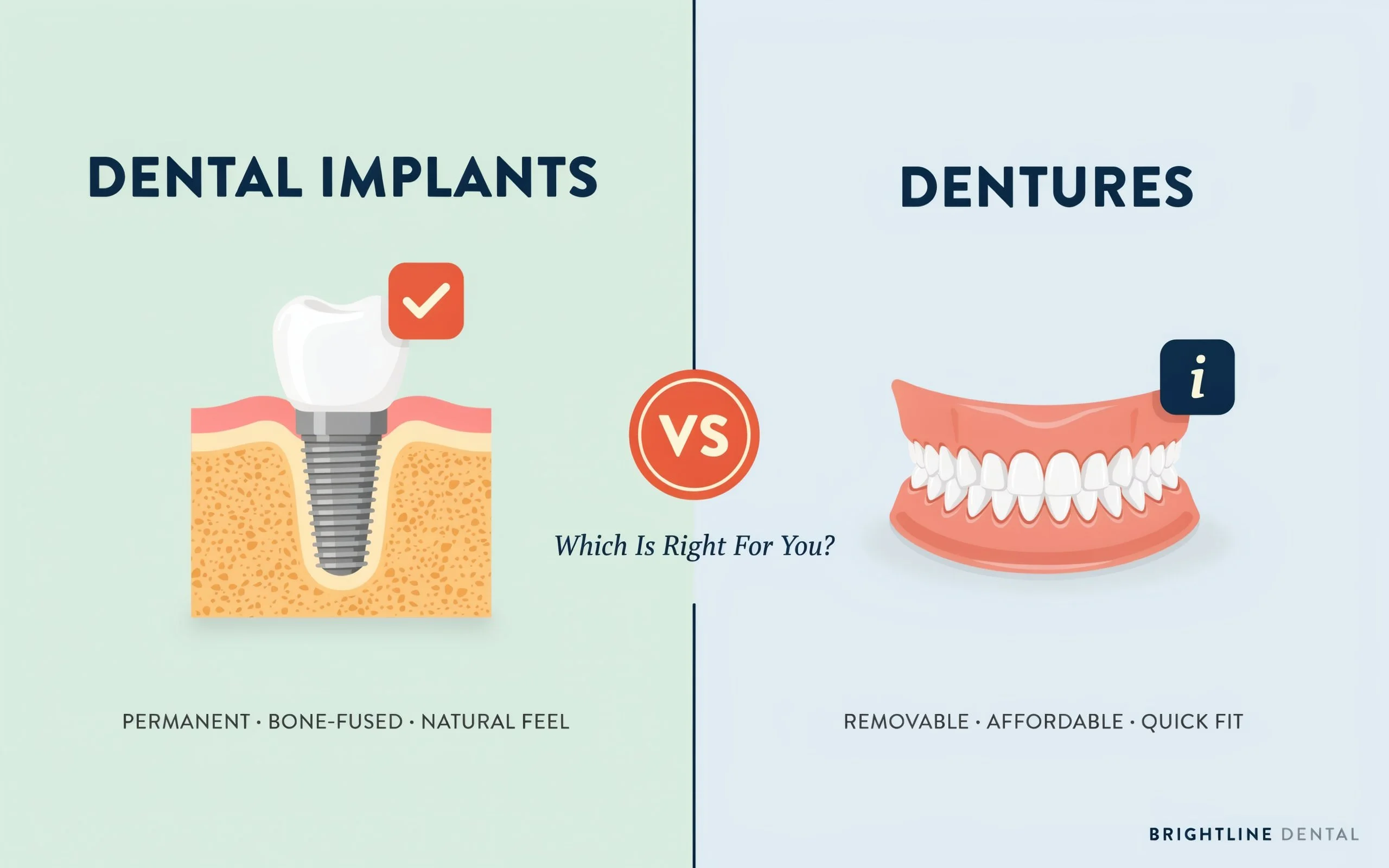

When you are missing one or more teeth, there are usually several ways to replace them. Two of the most common options are dental implants and dentures. Both can restore appearance and function, but they work in very different ways. Understanding the differences can help you have a more informed conversation with your dentist.
Dentures are removable appliances that replace missing teeth. They can replace a few teeth or a full set of teeth, depending on the patient’s needs. Dental implants, on the other hand, are fixed into the jawbone and used to support crowns, bridges or dentures.
Neither option is automatically right for everyone. The most suitable choice depends on your oral health, the number of missing teeth, bone levels, budget, lifestyle and personal preferences.
How dentures work
Dentures are made to fit over the gums and replace missing teeth. They can be full dentures, replacing all the teeth in the upper or lower jaw, or partial dentures, replacing a smaller number of teeth.
Modern dentures can look natural and can be a practical option for many people. They are often less invasive than implants because they do not require surgical placement into the jawbone. They may also be more affordable initially, which is one reason they remain a common tooth replacement option.
However, dentures are removable. Some people adapt to them very well, while others find they move when eating or speaking. They may need adjustments over time as the mouth changes shape. Full lower dentures in particular can sometimes feel less stable than upper dentures.
How dental implants work
A dental implant is a small titanium post that is placed into the jawbone. It acts like an artificial root. Once healed, it can support a crown, bridge or denture.
Implants can be used in different ways. A single implant may replace one missing tooth. Several implants may support a bridge. In some cases, implants can be used to secure a denture, making it feel more stable than a traditional removable denture.
Because implants are fixed into the jaw, many people find that implant-supported teeth feel more secure. They can help with chewing and confidence, particularly for people who have struggled with loose dentures.
Comfort and stability
One of the biggest differences between dentures and dental implants is stability.
Dentures sit on the gums and may rely on suction, fit, clasps or adhesive. They can be comfortable when well made and properly adjusted, but they may still move slightly during eating or speaking.
Dental implants are fixed into the jawbone. Once restored, they are designed to provide a stable foundation for replacement teeth. This can make them feel more like natural teeth in everyday use.
For people who are frustrated with loose dentures, implant-supported options may be worth discussing with a dentist. However, suitability depends on bone levels, gum health and general health.
Appearance
Both dentures and dental implants can look natural when carefully planned. A good result depends on the quality of the assessment, design and fitting.
Dentures replace the visible teeth and can also support the lips and cheeks where teeth have been lost. This can be helpful for people who have lost several or all of their teeth.
Implant-supported crowns and bridges are often designed to blend with the surrounding teeth. For a single missing tooth, an implant crown can be a discreet replacement that avoids the need for a removable appliance.
Maintenance and daily care
Dentures and dental implants both need regular care, but the routines are different.
Dentures are usually removed for cleaning. They should be cleaned carefully each day and stored as advised by the dentist. The gums and any remaining natural teeth also need to be looked after.
Dental implants are fixed, so they are cleaned in the mouth. Although the implant itself cannot decay, the gum and bone around it can still become inflamed if plaque builds up. Brushing, interdental cleaning and regular dental visits are important.
Anyone considering dental implant treatment in Bristol should ask about long-term maintenance as well as the initial procedure, because looking after the implant properly is essential for protecting the result.
Cost considerations
Dentures are often less expensive at the start than dental implants. This can make them a practical option, especially where several teeth need to be replaced.
Dental implants usually involve a higher initial investment because they require detailed planning, implant placement and restoration. If bone grafting or other preparatory treatment is needed, this can also affect the overall cost.
However, cost should be considered alongside comfort, function, longevity and maintenance. For some patients, the stability of implants makes them a worthwhile choice. For others, dentures may be more appropriate.
Treatment time
Dentures can often be made and fitted more quickly than dental implants, although the timescale varies depending on the case.
Dental implants usually take longer because the implant needs time to heal and integrate with the jawbone before the final tooth or teeth are fitted. Some cases can be completed more quickly than others, but it is sensible to expect a staged process.
Patients should be cautious of any approach that promises a result without proper assessment. A careful plan is important, especially where several teeth are missing or where the mouth has changed over time.
Which option is right for you?
The right option depends on your individual circumstances. Dentures may be suitable if you want a removable option, need to replace several teeth, or are looking for a less invasive treatment. Dental implants may be suitable if you want a fixed option and have the oral health and bone support needed for treatment.
In some cases, the best solution may involve both. For example, implant-retained dentures can provide more stability than traditional dentures while still replacing a larger number of teeth.
Final thoughts
Dental implants and dentures both have an important role in replacing missing teeth. Dentures can be a practical and effective option, while implants can provide a fixed, stable alternative for suitable patients.
The best way to decide is to have a dental consultation. A dentist can assess your mouth, explain your options and help you choose the approach that fits your health, lifestyle and expectations.
