

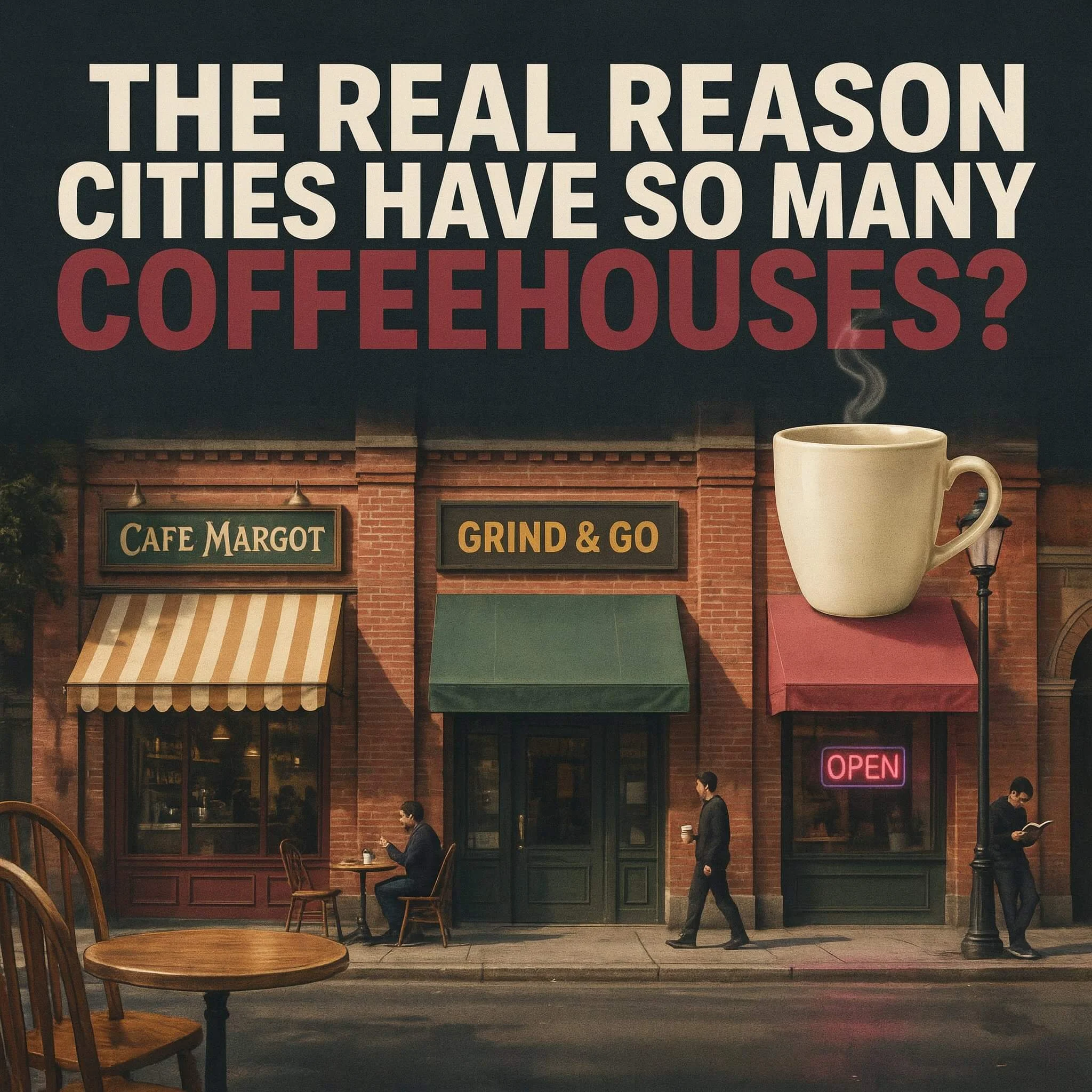

7 Surprising Reasons Cities Have So Many Coffeehouses Exist
Walk through any large city early in the morning and the pattern appears quickly. A small queue forms outside a station kiosk. A corner café fills with office workers. A bakery sells flat whites beside sourdough loaves. A quiet independent shop opens near a university. A chain café takes the ground floor of a glass office block. Two streets away, another one does the same.
At first, it looks excessive. How many places can a city need for coffee? How many cappuccinos, lattes, espressos and filter coffees can people buy in one day? The answer is more complicated than simple demand. Coffeehouses are common in big cities because they sit at the crossing point of history, profit, habit, work, property, loneliness, status and routine.
Coffee is not the full product. The drink matters, but the setting matters too. A coffeehouse gives people a reason to pause without committing to a meal, a meeting room, a bar, or someone’s home. It offers a public place with a private feeling. That combination has made coffeehouses useful for centuries.
The profit question is also more mixed than it appears. A cup of coffee can carry a strong gross margin, especially compared with many food items. The beans used in one espresso cost far less than the selling price. But rent, wages, equipment, milk, energy, rates, waste, card fees and slow table turnover can quickly reduce that margin. Some cafés make excellent money. Many survive with discipline. Others look busy and still struggle.
To understand why coffeehouses are everywhere in big cities, it helps to look beyond the cup.
 1. Coffeehouses Became Urban Rooms Before Modern Offices Existed
Coffeehouses grew with city life because they answered a problem that homes, churches, markets and taverns did not fully solve. People needed places to talk, trade, read, argue and wait. Coffee gave those places a business model.
Early coffeehouses in the Ottoman world were known as social spaces where men gathered for conversation, games, music and news. They were not only drink shops. They became informal public rooms. People came for the coffee, but they stayed for company and information.
European cities later developed their own coffeehouse cultures. London coffeehouses became famous for trade, newspapers, politics and business talk. Merchants, writers, brokers and shipowners used them as meeting points. Some coffeehouses were linked to specific professions or interests. A person could walk into the right room and hear shipping news, insurance gossip, political argument, literary debate, or financial rumour.
This mattered because communication was slow. Before phones, email, messaging apps and company dashboards, people had to be physically present where information moved. A coffeehouse was useful because it gathered people with similar interests under one roof.
Coffee also offered a different atmosphere from alcohol. Taverns and alehouses were important social spaces, but they carried a different mood. Coffee sharpened attention rather than softening it. It suited business, reading, planning and debate. That gave coffeehouses a serious edge. They felt social without being fully leisure-based.
In Vienna, Paris, Venice and later many other cities, cafés became part of intellectual and cultural life. Writers used them. Artists used them. Political groups used them. Students used them. Business people used them. A café table could become a desk, a stage, a newsroom, or a private corner in a public place.
That role has never fully disappeared. The objects have changed: newspapers became laptops, letters became emails, notebooks became phones. But the core function remains. A coffeehouse lets people leave home without needing a formal appointment.
Cities still need these in-between places. Not everyone wants to meet in an office. Not everyone wants to invite someone home. Not everyone wants to drink alcohol at 11 in the morning. Coffeehouses fill that gap neatly.
This explains why they cluster in urban centres. Large cities produce many small reasons to meet. A recruiter meets a candidate. A student reviews notes. A freelancer works between appointments. A friend waits before a train. A parent sits for twenty minutes after school drop-off. A tourist checks a map. A lawyer meets a client without booking a boardroom.
Each reason may be small. Together, they create constant demand.
2. Big Cities Create More Coffee Moments Than Small Places
A coffeehouse depends on frequency. Big cities produce frequency better than almost anywhere else.
Dense populations create repeat buyers. A café near a station may serve the same people five mornings a week. A shop beside a university may sell to students all day during term time. A café near a hospital may serve staff, visitors, patients’ relatives and contractors. One near a shopping street may catch people who did not plan to buy coffee at all.
Coffee fits city movement because it is quick. People can buy it on the way to somewhere else. They do not need a knife, fork, booking, or long break. A takeaway cup can join the commute. A seated coffee can fill a spare half-hour. This makes coffee one of the easiest purchases to attach to daily life.
Large cities also produce more fragmented days. People move between offices, gyms, schools, stations, shops, appointments and social plans. Every gap creates a possible coffee sale. A person may not need a full meal, but they may want a drink, warmth, a toilet, a socket, or a place to sit.
Small homes also play a part. Many city residents live in flats with limited space. Shared housing, compact kitchens, noisy neighbours and remote working make cafés feel like extensions of the home. A person may technically have a desk at home, but not the calm, separation, or background energy they need.
The same applies to students and young workers. A café can feel cheaper than renting a better flat and easier than joining a members’ club. It gives access to light, music, heating, seating and other people for the price of a drink.
Tourism adds another layer. Visitors use cafés as anchors. They need places to rest between museums, shops, walks and transport. They may choose a café because it feels local, safe, familiar, stylish, famous, or simply available. In tourist-heavy cities, cafés sell more than coffee. They sell orientation.
City routines also spread across the full day. The morning rush brings commuters. Mid-morning brings parents, remote workers and local business meetings. Lunchtime brings sandwiches and second coffees. Afternoon brings students, tourists and people between appointments. Early evening brings friends and casual dates. Some cities also support late-night cafés for people who do not want pubs or clubs.
This broad daypart coverage makes the model attractive. A restaurant may rely heavily on lunch and dinner. A bar may rely on evening trade. A coffeehouse can earn in smaller waves throughout the day.
Location still matters. A café on the wrong side of a street can fail while a weaker operator opposite succeeds. Corners, stations, office clusters, universities, hospitals and residential high streets all create different patterns. Good operators study these flows carefully. They count commuters, watch dwell time, check nearby competitors, examine office occupancy and look at whether people stop or only pass through.
The best city cafés often sit where several types of customer overlap. A shop that only serves office workers may suffer when people work from home. A café that also serves residents, students and weekend visitors has more protection. This is why mixed-use streets are so valuable. They keep trade alive across more hours and more days.
Big cities do not just have more people. They have more repeated movements, smaller homes, more visitors, more waiting time and more social friction. Coffeehouses convert those pressures into transactions.
3. The Profit Looks Simple, But the Business Is Tight
Many people assume coffeehouses are highly profitable because the raw ingredients seem cheap. There is some truth in that. The cost of the coffee in one espresso-based drink is usually a small part of the selling price. A bag of beans can produce many cups. Milk, cups, lids and sugar add cost, but the gross margin on a drink can still look attractive.
That is why coffee is appealing as a product. It is habit-forming, quick to serve, easy to customise and suitable for repeat purchase. A customer may buy it daily without feeling they are making a major spending decision. Small purchases at high frequency can build strong revenue.
A café can also increase order value with extras. Pastries, cakes, sandwiches, toasties, bottled drinks, protein snacks, retail beans and branded cups all help. A customer who planned to buy a £3.50 coffee may leave with a £7.50 order. That difference matters.
Food can also protect a café from weak coffee-only spending. A morning customer may buy a croissant. A lunchtime customer may buy soup or a sandwich. An afternoon customer may buy cake. A well-chosen food offer can lift revenue without turning the café into a full restaurant.
But the cost side is serious. Rent is often the biggest pressure in major cities. The same foot traffic that makes a location attractive pushes up property costs. A café near a station or in a busy office district may need high daily sales just to cover the site.
Labour is another major cost. A good café needs staff before customers arrive. Someone opens, checks machines, prepares food, receives deliveries, cleans, serves, clears tables, handles payments and closes. Skilled baristas cost more than untrained counter staff, and poor training can damage speed, quality and repeat trade.
Equipment also requires real investment. Espresso machines, grinders, water filtration, fridges, dishwashers, display units, tills, extraction, furniture, lighting and signage all cost money. Machines need maintenance. Grinders need calibration. Water quality affects taste and equipment life. A café that skimps on basics often pays later through breakdowns or weak reviews.
Waste can quietly drain profit. Unsold pastries, over-ordered milk, stale sandwiches and badly forecast stock all cut into margins. A busy-looking counter can hide poor control. Food waste hurts more when the café tries to look abundant all day.
Seating creates another tension. Seats attract customers, but they can also reduce turnover. A person who buys one coffee and works for three hours may enjoy the space, but they use a table that could have served several customers. This is why some coffeehouses design different zones. Small tables near the window suit quick visits. Communal tables suit laptops. Benches and ledges support takeaway drinkers. Operators even think carefully about coffee shop chairs, because comfort, durability and turnover all affect how the room works.
Takeaway trade can be more profitable when volume is high. It uses less space and reduces table cleaning. But takeaway also depends on speed, queue management and location. A commuter will not wait ten minutes for a cappuccino if another café can serve in three.
Chains often handle these pressures better because they have scale. They buy supplies in bulk, use tested layouts, train staff through systems and recognise good sites quickly. Independent cafés compete through personality, better coffee, stronger neighbourhood ties, food quality, design, or owner presence.
Still, chains are not invincible. High rent, weak local relevance, tired interiors and poor service can hurt them. Independent cafés can win when they understand a street better than a national property team.
So is there so much profit? Sometimes. A compact shop with strong takeaway volume, controlled rent, limited waste and steady repeat customers can be very profitable. A beautiful café with high rent, slow service, heavy staffing and customers who sit too long may struggle. The product margin is only the start. The business succeeds when the operator manages speed, space, rent, labour and repeat behaviour.
4. Coffeehouses Sell Routine, Status and Belonging
Coffeehouses spread because they serve emotional needs as well as practical ones.
A daily coffee gives structure to the day. It marks the start of work, a break from childcare, a pause between meetings, or a small reward after errands. People often attach the habit to identity. They have “their” café, “their” order, “their” barista, “their” seat.
This sense of ownership matters in large cities, where people can feel anonymous. A regular café creates recognition without deep commitment. The barista remembers a name. The customer sees familiar faces. Nobody needs to become close friends. The contact is light, but it still counts.
For many people, this low-pressure social contact is valuable. A city can be crowded and lonely at the same time. Coffeehouses soften that contradiction. A person can sit alone without looking isolated. They can read, work, text, watch the street, or simply be around people.
Cafés also help people manage personal image. A sleek specialty coffee bar says something different from a vintage neighbourhood café, a chain branch, a hotel lounge, or a student-heavy study café. People choose places that match how they want to feel or be seen.
This is why design carries commercial value. Lighting, music, cups, counter layout, menu wording, staff clothing and seating all signal the type of place. A minimalist café with single-origin pour-over coffee attracts one crowd. A warm bakery-café with big tables attracts another. A fast chain branch near a station attracts people who value predictability and speed.
Remote work has strengthened this role. Many people do not want to work from home every day, but they also do not need a formal office. A café offers background movement, a change of scene and a small sense of public life. For freelancers and solo workers, that can make the day feel less flat.
Students use cafés in a similar way. They need study space, but libraries can feel too strict and bedrooms can feel too distracting. A café gives enough noise to feel alive and enough order to keep working.
First dates also support café culture. Coffee is low-risk. It is cheaper than dinner, shorter than drinks and easy to leave if the chemistry is not there. That makes coffeehouses useful in cities with large dating pools and busy schedules.
Business meetings add another layer. Many early conversations do not justify a boardroom. A coffee meeting is informal, quick and socially acceptable. It works for interviews, sales introductions, mentoring, creative reviews and catch-ups.
The drink itself is also easy to personalise. Oat milk, almond milk, decaf, extra shot, iced latte, flat white, cortado, matcha, chai and syrups allow people to make small choices. These choices create a sense of control. The order becomes part of the ritual.
Speciality coffee deepens that identity. It turns coffee into craft. Customers learn about origin, roast, brewing method, tasting notes and farm relationships. Some care deeply. Others only care that the café feels serious. Either way, the coffeehouse gains a story beyond caffeine.
At the other end, chain cafés sell comfort through sameness. A person in London, Manchester, Birmingham, Paris, Berlin or Tokyo can walk into a known brand and understand the menu quickly. Familiarity reduces decision fatigue. In a busy city, that has real value.
Coffeehouses also suit modern moderation. Many people want places to meet that are not alcohol-led. Pubs and bars remain important, but they do not fit every age, culture, health choice, working pattern, or time of day. Coffeehouses offer public social space without the pressure to drink alcohol.
This is one reason they have become common across different cultures and neighbourhoods. They adapt. One café may centre on espresso and pastries. Another on Turkish coffee. Another on Vietnamese iced coffee. Another on cardamom buns and filter coffee. The model bends without breaking.
5. The Future Will Bring More Specific Cafés, Not Fewer
Coffeehouses are unlikely to disappear from big cities, but the format will keep changing.
The old idea of a café as a simple counter with tables is no longer enough in many areas. Competition forces clearer purpose. A new café must know whether it is built for speed, food, work, community, specialty coffee, late-night trade, tourists, parents, students, or neighbourhood loyalty.
Hybrid spaces will keep growing. Some cafés already work like informal coworking rooms during the day and event spaces at night. Others combine coffee with bakeries, bookshops, galleries, bicycle repairs, florists, record shops, or small retail corners. The goal is not novelty for its own sake. It is to create more reasons to visit and more ways to earn from the same rent.
Bakery-café models are especially strong because they lift food sales. Fresh bread, pastries, sandwiches and cakes give customers a reason to spend more than the price of a drink. They also create visual appeal from the street. A full pastry counter can do the selling before staff speak.
Coffee carts and kiosks will also remain common in transport-heavy areas. They suit stations, office entrances, markets and parks. Their advantage is lower space cost and quick service. Their weakness is limited shelter, storage and seating. In the right spot, they can still make strong returns.
Speciality roasters will keep using cafés as brand showrooms. The café sells drinks, but it also sells bags of beans, subscriptions, brewing equipment and wholesale credibility. A customer may spend £4 today and later buy beans every month. That wider revenue model can protect the business from relying only on cups.
At the same time, pressure will rise. Rent in strong locations remains hard. Wages are not optional. Energy costs affect refrigeration, heating, lighting and machines. Coffee bean prices can move because of weather, crop disease, shipping costs and global demand. Climate risk matters because coffee depends on specific growing conditions.
Changing office patterns also affect cafés. In districts where office attendance remains lower than before, coffeehouses that relied on five-day commuter trade may struggle. Residential neighbourhood cafés may benefit from remote workers, but only if those workers spend enough and do not occupy tables all day for one drink.
Technology will shape operations but will not replace the core appeal. Mobile ordering, loyalty apps, self-service screens and data-driven stock control can help speed and forecasting. Yet most cafés still depend on human feeling. A cold, clumsy café with good software will not easily beat a well-run room where people feel comfortable.
Some neighbourhoods may already have too many cafés. When several operators chase the same morning trade, weak ones close. But closures do not prove the model is dead. They show that the market is selective. A good café must be specific about who it serves and why those people return.
Large cities will continue to support many coffeehouses because city life keeps producing the same needs: movement, waiting, work, privacy, contact, routine and rest. Coffee remains a neat answer because it is affordable enough for regular purchase, quick enough for busy schedules and social enough to justify a seat.
The real story is not that coffee itself creates endless profit. Coffeehouses multiply because they turn small urban problems into small purchases. Need ten minutes before a train? Buy coffee. Need a neutral place to meet? Buy coffee. Need to work away from home? Buy coffee. Need to feel part of the street without speaking to anyone? Buy coffee.
That is why big cities never seem to run out of them. Some cafés make strong profits. Some barely cover their costs. Some become part of a neighbourhood’s daily memory. Their success depends on rent, timing, service, product quality and the number of people who decide that, at that moment, a cup of coffee is also a place to be.
