


Introduction
Have you ever picked up a manga and felt a little lost? Maybe the panels looked different, or you weren’t sure where to start reading. You’re not alone. For many beginners, diving into manga can feel like opening a book written in a completely new language.teach me first manga
But here’s the good news—you don’t need to be an expert to enjoy it. Think of manga like learning to ride a bicycle. At first, it feels unfamiliar, maybe even confusing. But once you get the balance, everything suddenly clicks.
In this guide, we’ll walk through everything you need to know—from the basics to deeper insights—so you can confidently explore and enjoy manga.
1. What Is Manga?

Manga refers to Japanese-style comics or graphic novels that cover a wide range of stories—from action and romance to horror and slice-of-life.
Unlike traditional Western comics, manga is usually serialized, meaning stories are released in chapters and later compiled into volumes. This format allows for deeper storytelling and character development.
2. The Origins of Manga
Over time, manga evolved into the style we recognize today, especially after World War II. Artists began experimenting with storytelling techniques, giving rise to the dynamic, expressive format we love.
3. How Manga Is Different from Comics
You might wonder—how is manga different from Western comics?
Here are a few key differences:
- Reading direction: Right to left instead of left to right
- Art style: More expressive and emotional
- Story depth: Often longer and more detailed
- Themes: Covers a wider variety of topics
Manga feels more like watching a movie on paper, while traditional comics often feel like short episodes.
4. How to Read Manga Properly
This is where most beginners struggle—but it’s easier than you think.
Manga is read:
- From right to left
- Top to bottom within each panel
At first, it might feel awkward—like trying to write with your non-dominant hand. But after a few pages, your brain adjusts naturally.
Tip: Start with beginner-friendly manga that clearly guide panel flow.
5. Popular Manga Genres Explained
Manga has something for everyone, no matter your taste.
Some popular genres include:
- Shonen: Action-packed stories for young audiences
- Shojo: Romance and emotional storytelling
- Seinen: Mature themes for adults
- Josei: Realistic romance and life stories
- Isekai: Characters transported to another world
Think of genres as doorways—each one leads you into a different experience.
6. Understanding Manga Art Styles
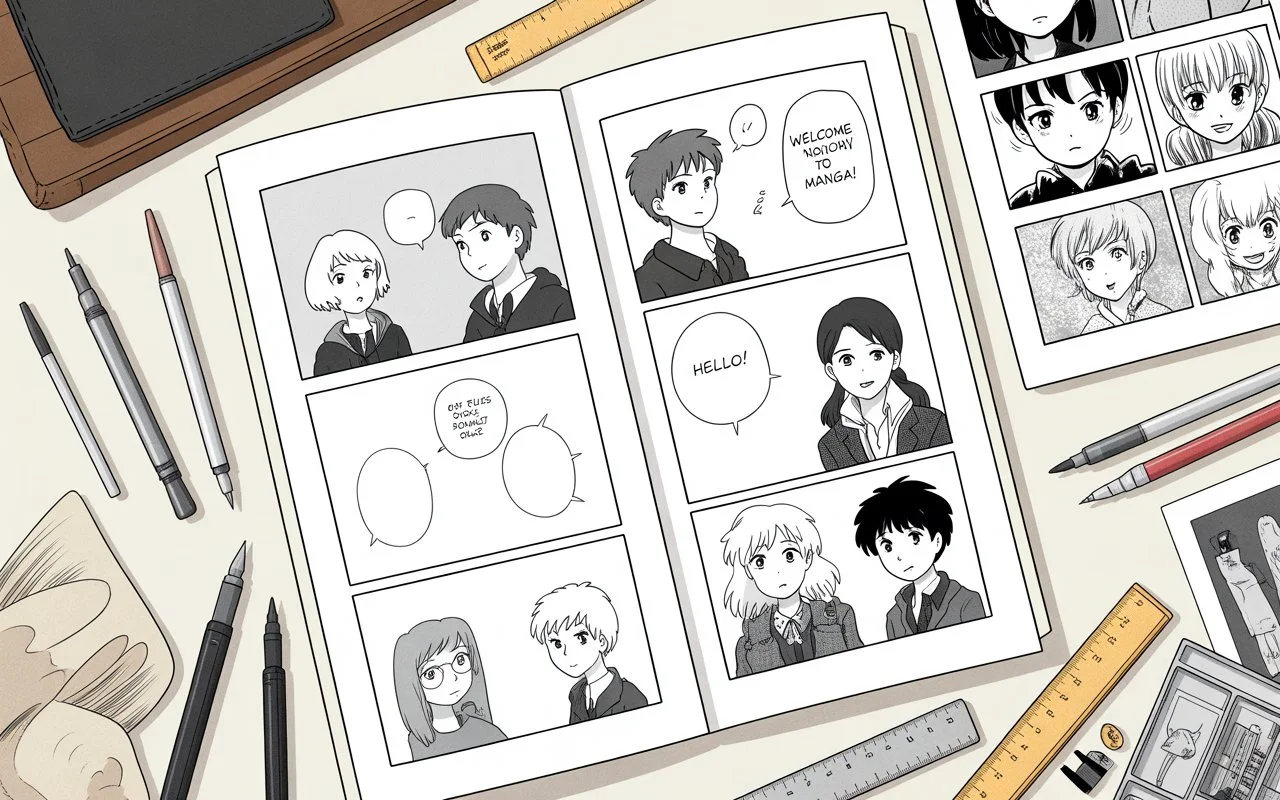
Art is a huge part of manga’s charm.
You’ll notice:
- Big expressive eyes
- Detailed backgrounds
- Creative panel layouts
Artists use visuals to show emotions instead of words. A single facial expression can say more than a paragraph.
It’s like watching silent acting—your eyes do most of the listening.
7. Common Manga Terms You Should Know

Learning a few terms can make your experience smoother.
- Mangaka: Manga artist or creator
- Volume (Tankobon): A collection of chapters
- Panel: A single frame in a page
- Scanlation: Fan-translated manga
Knowing these terms helps you feel more connected to the culture.
8. How to Choose Your First Manga
Feeling overwhelmed by choices? Don’t worry.
Ask yourself:
- Do I like action or romance?
- Do I prefer short or long stories?
- Do I want something light or deep?
Start simple. Choose something popular and beginner-friendly. It’s like tasting food—you don’t need to try everything at once.
9. Benefits of Reading Manga
Manga isn’t just entertainment—it offers real benefits.
- Improves reading habits
- Boosts imagination
- Helps you understand different cultures
- Reduces stress
It’s like a workout for your brain—but way more fun.
10. Digital vs Physical Manga
Should you read manga online or buy books?
Digital Manga:
- Convenient
- Affordable
- Accessible anytime
Physical Manga:
- Tangible experience
- Better for collectors
- No screen strain
Both options are great—it depends on your preference.
11. Tips for Beginners
Starting something new can feel tricky, but these tips help:
- Begin with short series
- Don’t rush—enjoy the pace
- Explore different genres
- Join online communities
Remember, there’s no “right” way to enjoy manga. It’s your journey.
12. Building a Manga Habit
Consistency makes the experience richer.
Try this:
- Read a few pages daily
- Set aside relaxing time
- Track your favorite series
Over time, reading manga becomes part of your routine—like your favorite cup of tea.
Conclusion
Starting manga might feel confusing at first, but once you understand the basics, it opens up an entirely new world of storytelling. From emotional narratives to thrilling adventures, there’s something for everyone.
Think of manga as a bridge—it connects art, culture, and imagination in a way few mediums can. And once you step onto that bridge, you may never want to turn back.
FAQs
1. What is the best manga for beginners?
Start with simple, popular series that have clear storytelling and engaging plots. Avoid overly complex stories in the beginning.
2. Why is manga read from right to left?
Manga follows traditional Japanese reading patterns, which are naturally right to left.
3. Is manga suitable for all ages?
Yes, but it depends on the genre. Some are made for kids, while others are for adults.
4. Can I read manga without knowing Japanese?
Absolutely. Many manga are translated into English and other languages.
5. How long does it take to get used to reading manga?
Most people adjust within a few chapters. It becomes natural very quickly.
