

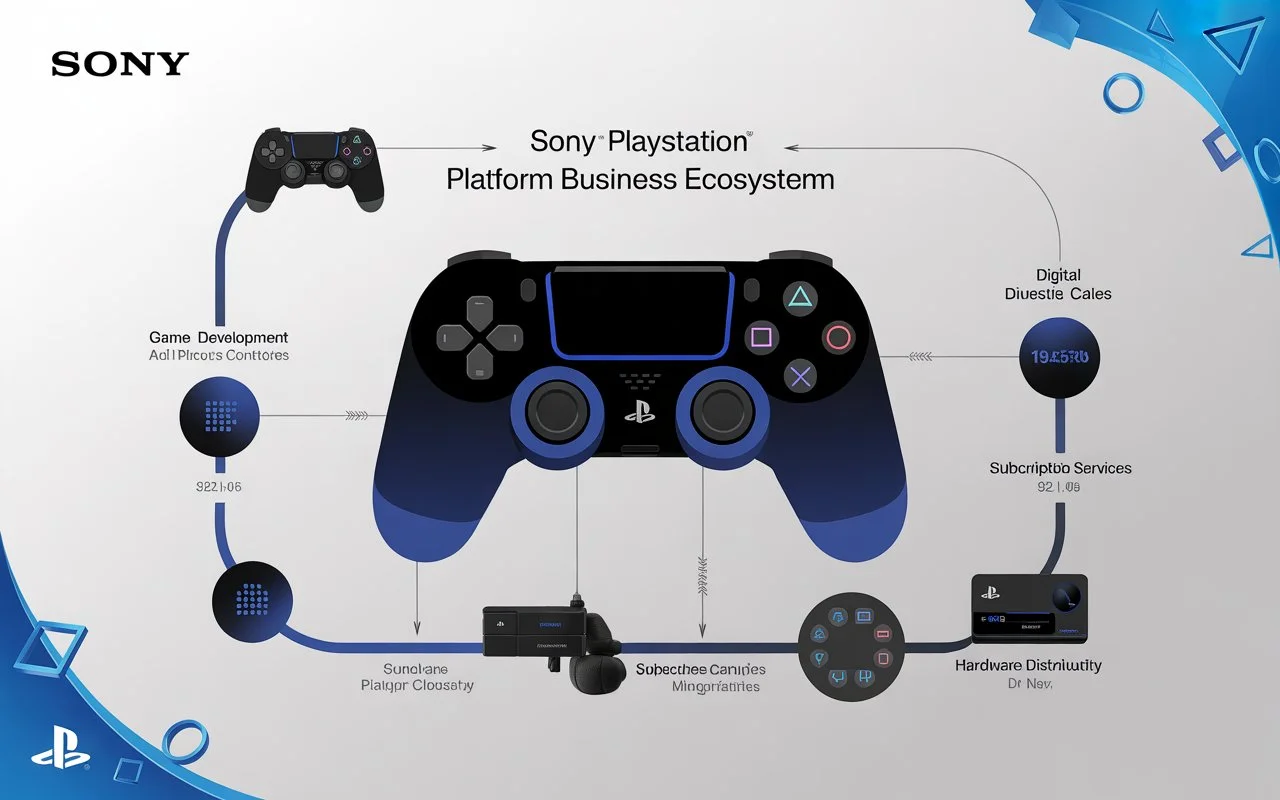

Introduction
Video gaming has evolved dramatically over the past few decades, transforming from simple entertainment into a powerful global industry. 🎮
What once began as simple pixel-based entertainment has evolved into massive digital worlds connecting millions of players around the globe. At the center of this transformation stands the Sony PlayStation platform business, one of the most influential forces in modern entertainment.
But have you ever wondered how a gaming console became an entire digital ecosystem? It’s not just about playing games anymore. Today, it’s about online communities, streaming, digital marketplaces, and immersive experiences.
Think of the PlayStation platform like a digital city. The console acts as the city itself, developers build the “buildings” (games), and players become the residents who explore, interact, and create stories together. This interconnected system is what makes the PlayStation ecosystem so powerful.
In this article, we’ll explore how the PlayStation platform business works, how it evolved, and why it continues to shape the gaming industry worldwide.
1. The Origins of the PlayStation Brand

The story of PlayStation began in the early 1990s when Sony decided to enter the gaming industry. At the time, gaming was already dominated by companies like Nintendo and Sega.
However, Sony saw an opportunity to combine cutting-edge technology with entertainment. When the first PlayStation console launched in 1994, it quickly captured attention thanks to its powerful graphics and CD-based games.
This early success wasn’t just about hardware. Sony understood something important: gaming is an experience, not just a device. That philosophy became the foundation of its platform strategy.
2. Evolution of PlayStation Consoles
Over time, the PlayStation family expanded with several generations of consoles, each bringing major technological improvements.
Key milestones include:
PlayStation (1994)
The original console introduced 3D gaming to a wider audience.
PlayStation 2 (2000)
One of the best-selling consoles in history, combining gaming with DVD playback.
PlayStation 3 (2006)
Introduced online gaming and digital services through PlayStation Network.
PlayStation 4 (2013)
Focused on social features, streaming, and powerful game development tools.
PlayStation 5 (2020)
Brought ultra-fast SSD technology, advanced graphics, and immersive gameplay.
Each generation strengthened the platform by expanding both technology and digital services.
3. Understanding the Platform Business Model

At its core, the PlayStation business operates on a platform model. This means it connects three key groups:
-
Players
-
Game developers
-
Publishers
The console acts as the bridge that brings everyone together.
Developers create games. Publishers distribute them. Players purchase and enjoy them. Sony earns revenue through hardware sales, software royalties, digital services, and subscriptions.
In simple terms, the platform works like a marketplace where entertainment meets technology.
4. Hardware as the Foundation
The console itself remains the backbone of the entire ecosystem.
Sony invests heavily in hardware innovation to ensure each new console generation delivers improved performance and immersive gameplay.
Key hardware features include:
High-performance processors
These allow complex game worlds and realistic physics.
Advanced graphics technology
Modern consoles support ray tracing, enhancing lighting and reflections.
Ultra-fast storage systems
Fast SSDs reduce loading times dramatically.
Innovative controllers
The PlayStation controller adds tactile feedback and adaptive triggers to increase immersion.
Hardware innovation keeps the platform competitive and attractive to both gamers and developers.
5. Game Development and Publishing Strategy
A platform becomes powerful only when it offers great games.
Sony supports game creation in two major ways:
First-Party Studios
Sony owns several development studios that produce exclusive titles for the platform. These games often showcase the full capabilities of the hardware.
Examples include action adventures, cinematic storytelling experiences, and visually stunning worlds.
Third-Party Partnerships
Independent and major studios also publish games on the platform.
This mix ensures a wide variety of experiences, from indie creativity to blockbuster releases.
6. Digital Distribution and Online Store
Physical discs were once the primary way to buy games. Today, digital distribution plays a huge role in the gaming industry.
The PlayStation Store allows players to:
-
Buy games instantly
-
Download content updates
-
Purchase expansions
-
Access demos
This digital marketplace transformed the platform into a 24/7 entertainment hub.
Developers also benefit because digital distribution lowers costs and increases global reach.
7. Subscription Services and Revenue Streams
Modern gaming platforms rely heavily on subscription services.
These services provide recurring revenue while offering players more value.
Popular features include:
Online multiplayer access
Allows players to compete and cooperate with friends worldwide.
Monthly game libraries
Subscribers receive new games regularly.
Cloud storage
Player progress is saved online.
Exclusive discounts
Members often receive special deals.
Subscriptions help turn gaming from a one-time purchase into a long-term relationship between players and the platform.
8. Community and Online Gaming
Gaming today is deeply social.
Players stream gameplay, chat with friends, and join online tournaments.
PlayStation built tools to support these experiences, including:
-
voice chat
-
party systems
-
streaming integration
-
friend networks
These features transform gaming from a solo hobby into a shared digital adventure.
Imagine thousands of players exploring the same world, competing in tournaments, or collaborating on challenges. That sense of community strengthens platform loyalty.
9. Exclusive Titles and Their Strategic Value
Exclusive games are one of the biggest drivers of console success.
When a game is only available on a particular platform, it encourages players to choose that console.
Sony invests heavily in creating memorable exclusive titles.
These games often feature:
-
cinematic storytelling
-
high production values
-
innovative gameplay mechanics
Exclusive titles not only boost console sales but also strengthen the brand identity of the platform.
10. Virtual Reality and Future Innovation
Technology continues to reshape the gaming experience.
One area where Sony has invested heavily is virtual reality (VR).
VR allows players to step directly into game worlds using headsets and motion controls.
The PlayStation VR ecosystem demonstrates how the platform expands beyond traditional gaming.
Future innovations may include:
-
cloud gaming
-
artificial intelligence-driven experiences
-
advanced haptic technology
-
deeper virtual worlds
These developments could redefine how players interact with digital environments.
11. Competition in the Console Market
The gaming industry is highly competitive.
Major technology companies constantly push new ideas and innovations.
Competition encourages:
-
better hardware
-
improved services
-
more creative games
For players, this competition is beneficial because it leads to higher quality experiences and more choices.
Sony’s success comes from balancing technology, creativity, and community engagement.
12. The Global Impact of the PlayStation Ecosystem
The PlayStation platform has grown into a global entertainment network.
Millions of players across continents connect through the system every day.
Its influence extends beyond gaming into:
-
film and television storytelling
-
esports competitions
-
digital media streaming
-
interactive entertainment
What started as a gaming console has evolved into a massive cultural platform shaping how people play, connect, and experience stories.
Conclusion
The PlayStation platform business is far more than a gaming console. It’s a complex ecosystem connecting technology, creativity, and community.
Through powerful hardware, innovative services, and unforgettable games, Sony built a platform that continues to evolve with the digital age.
Like a thriving digital city, the PlayStation ecosystem grows every year—adding new experiences, new players, and new possibilities.
As technology advances, one thing is clear: the PlayStation platform will likely remain a major force shaping the future of interactive entertainment.
FAQs
1. What is the Sony PlayStation platform business?
It refers to Sony’s gaming ecosystem that includes consoles, digital services, online gaming, subscriptions, and game publishing.
2. How does PlayStation make money?
Revenue comes from console sales, game purchases, digital downloads, subscription services, and licensing fees from game developers.
3. Why are exclusive games important for PlayStation?
Exclusive titles attract players to the platform because they cannot be played on competing consoles.
4. What role does online gaming play in the PlayStation ecosystem?
Online gaming connects players worldwide, enabling multiplayer experiences, community interaction, and esports competitions.
5. What future technologies could impact PlayStation?
Innovations such as cloud gaming, virtual reality, artificial intelligence, and advanced controllers could shape the next generation of gaming experiences.
