


Introduction
Have you ever sat down to watch a football game thinking it would last a tidy hour—only to glance at the clock three hours later and wonder what happened? You’re not alone.how long is a football game
If you’re new to the sport or just curious about how timing really works, you might be surprised to learn that the official playing time and the real-world viewing time are very different things. Let’s break it all down in simple, clear language so you know exactly what to expect the next time kickoff rolls around.
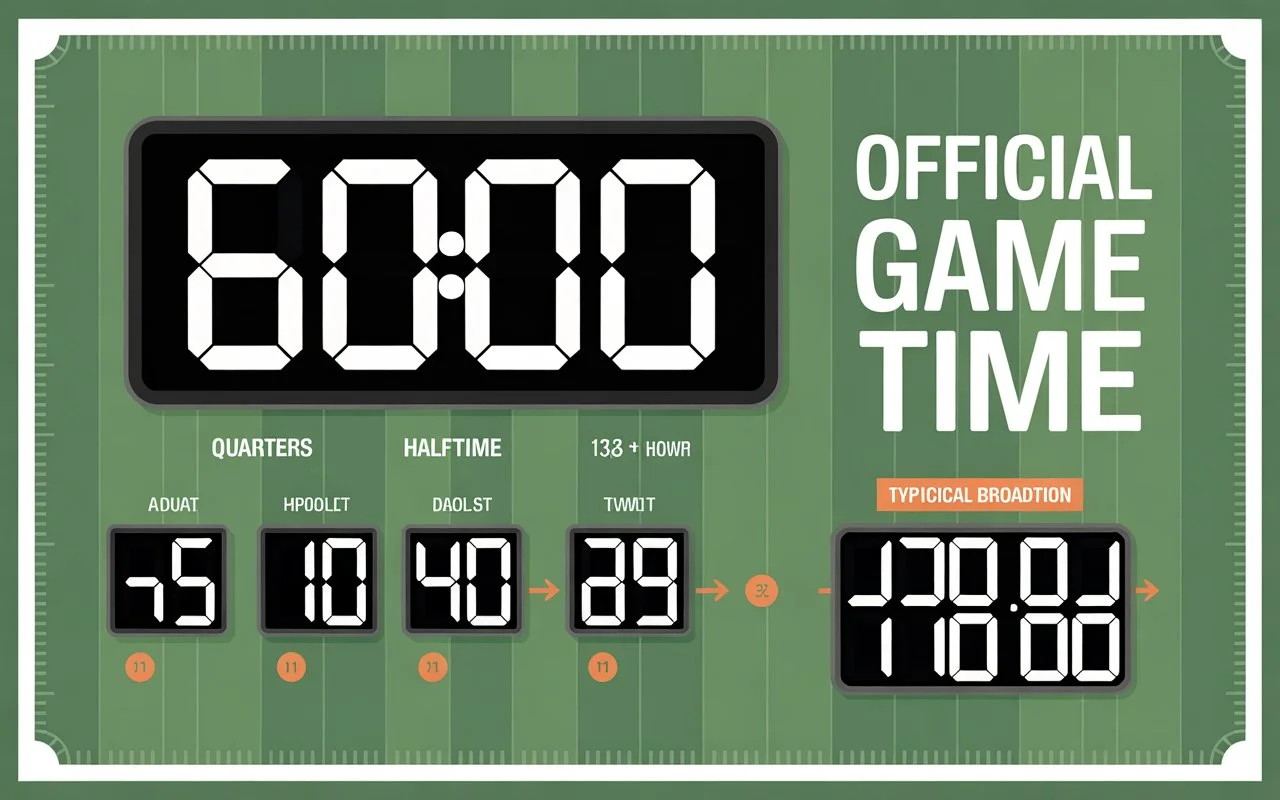
The Official Game Clock: 60 Minutes on Paper

In professional American football, including leagues like the National Football League, the official playing time is 60 minutes.
That time is divided into:
-
Four quarters
-
Each quarter lasting 15 minutes
At first glance, it seems straightforward. Sixty minutes equals one hour. Easy, right?
Not quite.
The game clock frequently stops, which dramatically extends the real duration. So while the rulebook says 60 minutes, your evening plans might need more flexibility.
Why Does It Last So Much Longer?
If the official time is one hour, why does watching a game often take three hours or more?
Here’s the simple explanation: the clock stops—a lot.
Clock Stoppages
The timer pauses for several reasons:
-
Incomplete passes
-
Players stepping out of bounds
-
Timeouts
-
Penalties
-
Injuries
-
Scoring plays
Each of these breaks adds small chunks of time. Add them together, and the total stretches significantly.
Think of it like microwaving popcorn. The instructions might say two minutes, but you’re standing there longer because you’re waiting for the popping to slow down.
How Long Is an Average NFL Game?
A standard professional matchup typically lasts about 3 hours and 10–15 minutes.
Prime-time games, especially nationally televised ones, can run even longer due to:
-
Commercial breaks
-
Video reviews
-
Halftime entertainment
High-profile events like the Super Bowl often exceed four hours because of extended halftime shows and additional media coverage.
So if you’re planning snacks or scheduling dinner afterward, keep that in mind.
College Football: Even Longer?
If you watch games governed by the National Collegiate Athletic Association, you might notice they tend to run slightly longer than professional matchups.
College contests often last around 3.5 hours.
Why?
-
Different timing rules
-
More frequent clock stoppages
-
Replay reviews
-
Larger halftime bands and performances
It’s not unusual for major rivalry games to stretch toward four hours.
High School and Youth Football: Shorter but Still Eventful
At the high school level, games are typically divided into:
-
Four quarters
-
Each lasting 12 minutes
Younger age groups may use 10-minute quarters.
Despite shorter periods, the actual viewing time still extends due to stoppages. A high school game usually lasts around 2 to 2.5 hours.
Shorter than college and professional—but still not a quick watch.
Halftime: A Longer Break Than You Think
Halftime is a big contributor to overall duration.
In professional leagues, halftime typically lasts 12 to 15 minutes.
College games often extend halftime to 20 minutes, especially when marching bands perform.
The Super Bowl halftime show can last nearly 30 minutes.
So halftime alone can add substantial time to the broadcast.
Overtime: What Happens If It’s Tied?
Sometimes 60 minutes aren’t enough.
In the NFL, regular season overtime lasts up to 10 additional minutes. In playoff games, periods continue until a winner is determined.
College football uses a different system: each team gets a possession from the opponent’s 25-yard line until someone wins.
Overtime adds unpredictability. You may settle in expecting three hours—and suddenly find yourself watching well past that.
Television Broadcasts and Commercial Breaks
 Let’s be honest: advertising plays a big role.
Professional games are structured around television breaks. After touchdowns, field goals, timeouts, and quarter changes, commercials appear.
In fact, many studies show that only about 11 to 15 minutes of a three-hour broadcast involve active gameplay.
The rest includes:
-
Analysis
-
Commentary
-
Replays
-
Commercials
-
Huddles
It’s less a continuous race and more like a chess match with pauses between moves.
Soccer vs. American Football: A Big Difference
If you’re comparing American football to global football—better known as soccer—there’s a noticeable contrast.
Organizations like FIFA regulate soccer matches that consist of:
-
Two 45-minute halves
-
A running clock
-
Minimal stoppages
A typical soccer match lasts about 90 minutes plus added time, usually finishing within two hours.
No commercial breaks between play sequences. No frequent clock stoppages.
It flows differently—like a continuous river versus a series of strategic pauses.
What Actually Happens During All Those Breaks?
You might wonder, what are players doing during stoppages?
Here’s what fills the time:
-
Play selection discussions
-
Strategy adjustments
-
Defensive substitutions
-
Injury evaluations
-
Official reviews
-
Resetting formations
It may look slow on TV, but intense thinking and planning happen between plays.
Football is as much mental as physical.
Does Weather Affect Game Length?
Yes, sometimes.
Severe weather conditions—lightning, heavy snow, extreme storms—can lead to delays.
While rain alone typically won’t stop play, lightning can cause mandatory pauses lasting 30 minutes or more.
Outdoor stadium games are more vulnerable to such interruptions.
International Games and Special Events
When professional teams play overseas—such as in London or Germany—the timing rules stay the same because they still follow the NFL structure.
However, special events, playoffs, and championships naturally extend length due to:
-
Extra coverage
-
Ceremonies
-
Trophy presentations
A playoff game may edge closer to 3.5 hours depending on intensity and overtime.
Planning Your Time Around a Football Game
If you’re attending in person, expect even more time due to:
-
Parking
-
Security checks
-
Halftime movement
-
Postgame traffic
A live experience can easily turn into a five-hour commitment from arrival to departure.
Watching at home? Plan for at least three hours, maybe more if it’s a big matchup.
Why the Length Isn’t a Bad Thing
Some people ask, “Why does it take so long?”
But for fans, the slow pacing is part of the drama.
Each snap builds anticipation. Each timeout heightens tension. Each replay adds clarity.
It’s not meant to feel rushed. It’s structured like a carefully written novel, not a short story.
You’re there for the journey, not just the final score.
A Quick Summary of Typical Durations
Here’s a general overview:
-
NFL: About 3 hours and 10–15 minutes
-
College: Around 3.5 hours
-
High School: 2 to 2.5 hours
-
Soccer comparison: About 2 hours total
Of course, overtime and delays can change everything.
Final Thoughts: So, How Long Is a Football Game Really?
Technically, it’s 60 minutes of play. Realistically, it’s closer to three hours.
If you’re new to the sport, knowing this helps set expectations. If you’re hosting a viewing party, now you know how much food to prepare. And if you’re heading to a stadium, you can plan your transportation wisely.
Football isn’t just about time—it’s about experience. The pauses, the tension, the strategy, the buildup—it all adds layers to the story unfolding on the field.
Once you understand why it lasts as long as it does, you might even start appreciating those breaks.
Frequently Asked Questions (FAQs)
1. Why does a football game take longer than 60 minutes?
Because the clock stops frequently for incomplete passes, timeouts, penalties, injuries, and scoring plays, extending the real-time duration.
2. How long is halftime in professional football?
Halftime usually lasts 12 to 15 minutes, but special events like championships can extend that significantly.
3. Can a football game last more than four hours?
Yes, especially during playoff games or major events with overtime and extended halftime performances.
4. Is college football longer than NFL games?
Yes. College games often last around 3.5 hours due to different clock rules and longer halftime breaks.
5. How long does overtime last in the NFL?
Regular season overtime can last up to 10 minutes, but playoff games continue until a winner is decided.
