


Introduction
“wyf meaning”Language is always on the move. New words pop up, old ones evolve, and some phrases suddenly appear everywhere—texts, comments, memes—leaving many people scratching their heads. One such expression that has sparked curiosity is WYF. You may have seen it in a message and wondered, “Did I miss a memo?” Don’t worry—you’re not alone.
This article takes a deep, friendly dive into the meaning of WYF, where it comes from, how it’s used, and why it matters in modern communication. Think of it as a guided tour through a small but fascinating corner of today’s digital language. Let’s unpack it together.
What Does WYF Mean?
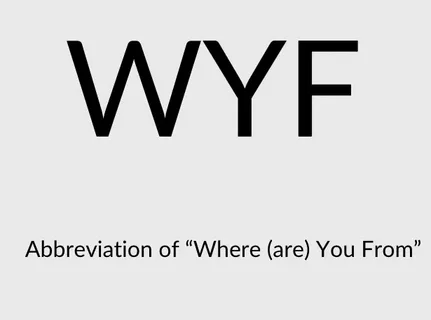
At its core, WYF is an abbreviation commonly used in casual digital conversations. It usually stands for “Where You From?”
Simple, right? Yet, like many short forms, its meaning depends heavily on context. In most cases, it’s a quick way to ask someone about their origin, location, or background—especially in chats where speed matters.
Imagine language as a backpack. When we’re walking slowly, we can carry full sentences. But when we’re sprinting through texts and DMs, we toss in shortcuts like WYF to lighten the load.
The Origins of WYF in Digital Culture

WYF didn’t come from a dictionary or a classroom. It grew naturally from online spaces where fast typing and informal tone rule the day.
Roots in Texting and Chat Rooms
Early messaging platforms had character limits and clunky keyboards. People shortened phrases out of necessity. “Where are you from?” became “Where u from?” and eventually, WYF.
Influence of Social Media
Platforms like Instagram, Snapchat, and dating apps gave WYF a boost. When meeting someone new online, asking about their background is common—and WYF gets straight to the point.
How WYF Is Commonly Used in Conversations
WYF usually appears in relaxed, informal settings. You’re unlikely to see it in a work email or academic paper, but it thrives in personal chats.
Casual Introductions
When two people start talking, especially online, WYF often follows the initial “Hey.”
Example:
“Nice to meet you. WYF?”
Location-Based Curiosity
Sometimes, it’s less about origin and more about current location.
Example:
“Your accent sounds cool, WYF?”
In both cases, the intent is friendly curiosity rather than interrogation.
Different Interpretations Based on Context
Although “Where You From?” is the most common meaning, context can slightly shift the intent.
Geographical Background
This is the classic usage—asking about someone’s hometown, country, or region.
Cultural Identity
Sometimes, the question digs deeper, touching on heritage or cultural roots, especially in diverse communities.
Present Location
In fast-moving chats, WYF can also mean “Where are you right now?” though this is less common.
Context is the steering wheel here. Without it, the phrase can feel vague or even confusing.
WYF vs. Similar Slang Expressions

WYF isn’t alone. It belongs to a family of short forms that serve similar purposes.
“ASL?”
An older internet phrase meaning Age, Sex, Location. WYF focuses only on location or origin, making it less intrusive.
“HMU” or “WYA”
While these ask for contact or current whereabouts, WYF leans more toward background than immediacy.
Think of WYF as a polite knock on the door rather than barging in with multiple questions.
Why People Prefer Using WYF
Why shorten a perfectly good sentence? The answer lies in how we communicate today.
Speed and Convenience
Typing three letters is faster than a full sentence, especially on mobile devices.
Informal Tone
WYF feels relaxed and friendly. It lowers the stakes and keeps the conversation light.
Social Belonging
Using shared slang creates a sense of connection. It signals, “I speak your language.”
It’s like wearing casual clothes instead of a suit—more comfortable and approachable.
Is WYF Polite or Rude?
This question comes up often, and the answer isn’t black and white.
When It Feels Appropriate
Among peers, friends, or in casual online spaces, WYF is generally fine and expected.
When It Might Feel Abrupt
In formal settings or with strangers who value traditional etiquette, it can seem too blunt.
Tone matters. Adding a greeting or emoji can soften the message and make it feel more human.
WYF in Pop Culture and Online Communities
Slang doesn’t survive unless people use it—and WYF has found a comfortable home online.
Memes and Comments
It often appears in comment sections, sometimes humorously, sometimes sincerely.
Music and Street Language
In some music genres and youth culture, WYF reflects everyday speech patterns and social curiosity.
These appearances keep the term alive and evolving, much like a living organism adapting to its environment.
Generational Perspectives on WYF
Not everyone reacts to WYF the same way. Age and experience play a role.
Younger Users
For teens and young adults, WYF is normal, almost invisible in its familiarity.
Older Generations
Some may find it confusing or overly casual, especially if they’re less immersed in digital slang.
This gap highlights how language changes—and how each generation leaves its fingerprint on communication.
How to Respond When Someone Says WYF
If you receive a WYF, there’s no single “correct” reply. It depends on comfort and context.
Direct Answer
Simply share your city, country, or background.
Playful Reply
Some people answer with humor to keep things light.
Setting Boundaries
If you’re not comfortable sharing details, a vague response works just fine.
Communication is a two-way street—you’re allowed to choose how much you reveal.
The Evolution of Short Forms Like WYF
WYF is just one example of how language adapts to technology.
From Full Sentences to Symbols
We’ve moved from long letters to brief texts, emojis, and abbreviations.
A Reflection of Modern Life
Fast-paced lives demand quick communication. Short forms are the linguistic equivalent of fast food—quick, convenient, and satisfying in the moment.
Yet, just like food trends, some expressions fade while others stick around.
Why Understanding WYF Matters
You might wonder, “Is this really important?” In a small way, yes.
Understanding terms like WYF helps avoid confusion, reduces miscommunication, and keeps you connected in digital spaces. It’s not about sounding trendy—it’s about understanding the language people around you are using.
Language is a bridge. The more expressions you recognize, the easier it is to cross into meaningful conversations.
Conclusion: WYF as a Snapshot of Modern Communication
WYF may be short, but it carries a lot of cultural weight. It reflects how we value speed, informality, and connection in today’s world. While it may not belong in formal writing, it plays a clear role in everyday digital interactions.
By understanding what WYF means and how it’s used, you’re better equipped to navigate modern conversations without feeling lost or out of the loop. After all, language isn’t just about words—it’s about understanding each other.
Frequently Asked Questions
What does WYF usually stand for?
WYF most commonly means “Where You From?” and is used to ask about someone’s origin or location.
Is WYF only used in texting?
It’s mainly used in digital communication like texts and social media, though some people may say it out loud informally.
Can WYF have different meanings?
While rare, context can slightly change its meaning, such as asking about current location instead of background.
Is it okay to use WYF with strangers?
It depends on the setting. In casual online spaces it’s common, but in formal situations it may feel too abrupt.
Will WYF remain popular in the future?
Slang constantly evolves. WYF may stick around or be replaced, but it represents a broader trend toward shorter, faster communication.
