

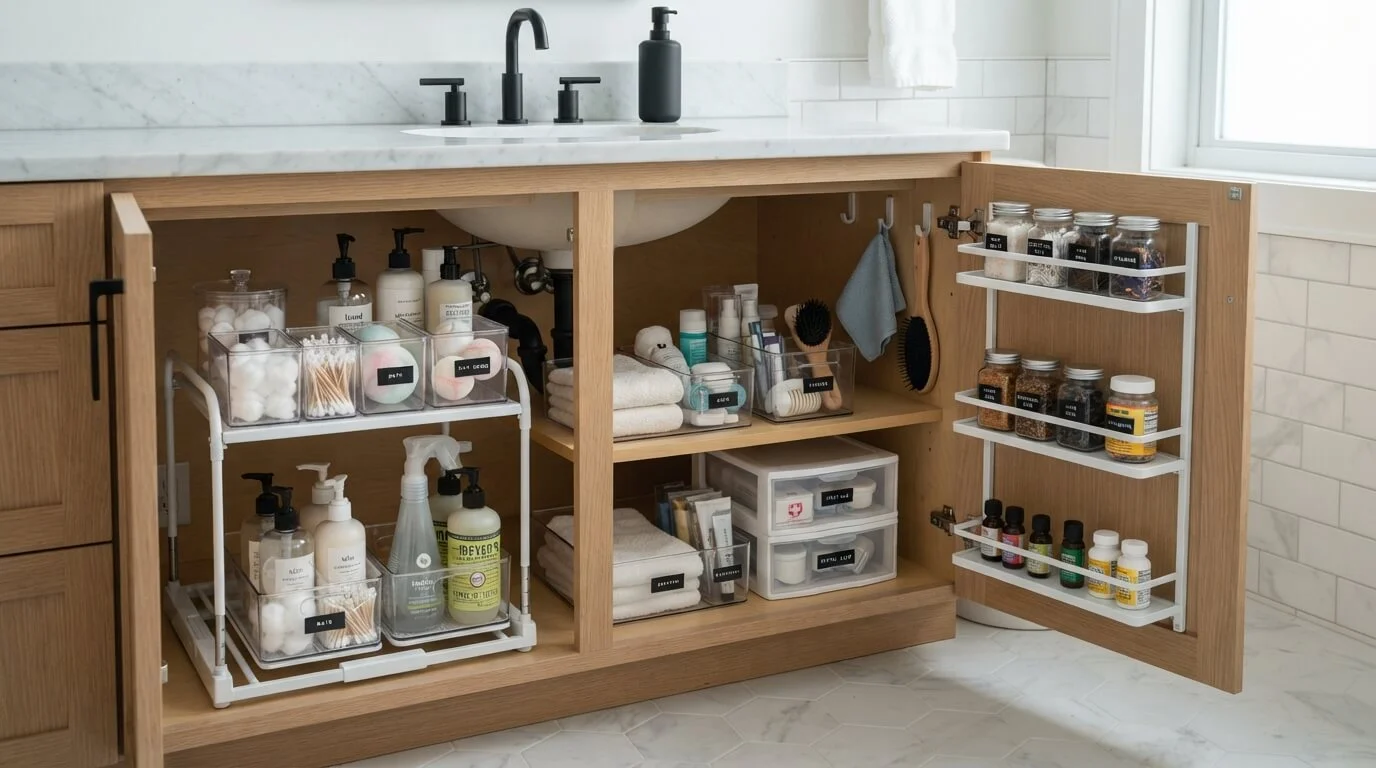

The space beneath your sink is often one of the most overlooked areas in a home. Many people simply toss cleaning supplies, extra sponges, or random household items into the cabinet until it becomes impossible to find anything. Sound familiar?
An under sink cabinet can be much more than a hidden storage spot. With the right organization, materials, and accessories, it can become one of the most functional spaces in your kitchen or bathroom. Think of it as a small toolbox—when everything has its place, every task becomes quicker and easier.
Whether you’re remodeling your kitchen, upgrading your bathroom, or simply looking for better storage ideas, this guide covers everything you need to know about choosing, organizing, and maintaining an under sink cabinet.
1. What Is an Under Sink Cabinet?
An under sink cabinet is a specially designed storage unit that fits beneath a sink while leaving space for plumbing pipes. Unlike standard cabinets, these units include cutouts or open areas that accommodate drains and water supply lines.
These cabinets are commonly found in:
- Kitchens
- Bathrooms
- Laundry rooms
- Utility spaces
Their primary purpose is storage, but modern designs also improve the overall appearance of a room.
2. Why Under Sink Cabinets Matter
Many homeowners underestimate how valuable this storage area can be.
Keeps Your Home Organized
Cleaning products, trash bags, brushes, and towels all need a designated place. An organized cabinet prevents clutter from spreading across countertops.
Maximizes Limited Space
Small kitchens and bathrooms benefit greatly from every inch of storage. Proper cabinet organization makes even compact homes feel larger.
Protects Household Items
Instead of leaving supplies exposed to dust or moisture, cabinets keep everything safely stored.
Improves Appearance
A tidy cabinet reflects an organized home. Even if guests never see inside it, you’ll appreciate the difference every day.

3. Types of Under Sink Cabinets
Different homes require different cabinet styles.
Freestanding Cabinets
These stand independently beneath the sink and are popular in bathrooms.
Benefits
- Easy installation
- Affordable
- Replaceable without major remodeling
Built-In Cabinets
These are permanently attached to surrounding cabinetry.
Advantages
- Seamless appearance
- More storage
- Better durability
Corner Cabinets
Perfect for L-shaped kitchens where the sink sits in a corner.
These designs make use of otherwise wasted space.
Open Shelf Cabinets
Instead of traditional doors, these cabinets feature open shelving.
Ideal for:
- Decorative baskets
- Towels
- Frequently used supplies
4. Choosing the Right Material
Material determines how long your cabinet will last.
Solid Wood
One of the most durable choices.
Pros
- Beautiful appearance
- Strong construction
- Long lifespan
Cons
- Higher cost
- Requires sealing against moisture
Plywood
A popular balance between price and quality.
Benefits include:
- Moisture resistance
- Good strength
- Lightweight construction
MDF (Medium-Density Fiberboard)
A budget-friendly option.
Pros:
- Smooth finish
- Easy to paint
- Affordable
Cons:
- Swells if exposed to water
PVC Cabinets
Increasingly popular in bathrooms.
Advantages include:
- Waterproof
- Lightweight
- Low maintenance
Stainless Steel
Common in commercial kitchens.
Benefits:
- Rust resistant
- Easy to clean
- Highly durable

5. Measuring Before Buying
Buying without measuring is one of the biggest mistakes homeowners make.
Measure:
- Cabinet width
- Cabinet depth
- Cabinet height
- Pipe placement
- Water valves
- Drain location
Always leave enough clearance for plumbing repairs.
A few extra centimeters today can save hours of frustration later.
6. Smart Storage Solutions
Storage accessories transform an ordinary cabinet into a highly efficient space.
Pull-Out Drawers
These make reaching the back of the cabinet much easier.
Perfect for:
- Spray bottles
- Soap
- Cleaning supplies
Stackable Bins
Bins separate similar items.
For example:
- Dishwashing products
- Bathroom supplies
- Extra toiletries
Label each container for faster access.
Door Organizers
The inside of cabinet doors is often unused.
Install:
- Hooks
- Small baskets
- Towel holders
This instantly increases storage.
Lazy Susan
Round rotating organizers work surprisingly well beneath larger sinks.
Ideal for:
- Bottles
- Sponges
- Gloves
Adjustable Shelves
Because plumbing gets in the way, adjustable shelving offers more flexibility than fixed shelves.
7. Kitchen vs. Bathroom Cabinets
Although they appear similar, their storage needs differ.
Kitchen Under Sink Cabinets
Typically store:
- Dish soap
- Garbage bags
- Cleaning sprays
- Dishwasher tablets
- Recycling bags
Many homeowners also place pull-out trash bins here.
Bathroom Under Sink Cabinets
Usually contain:
- Towels
- Toilet paper
- Hair products
- Cosmetics
- First aid supplies
Moisture-resistant materials are especially important in bathrooms.
8. Common Organization Mistakes
Avoid these common problems.
Overloading the Cabinet
Too many products create clutter.
Instead, keep only frequently used items.
Ignoring Moisture
Leaks happen.
Use waterproof liners to protect shelves.
Mixing Everything Together
Separate products into categories.
For example:
- Cleaning
- Plumbing
- Personal care
Forgetting Expiration Dates
Many cleaning products lose effectiveness over time.
Review cabinet contents every six months.
Blocking Plumbing Access
Never pack items tightly around pipes.
Future repairs become much easier with clear access.
9. Cleaning and Maintenance
Routine care extends cabinet life.
Monthly Cleaning
Remove everything.
Vacuum dust.
Wipe surfaces using mild soap and warm water.
Dry thoroughly.
Check for Leaks
Inspect:
- Pipe joints
- Drain connections
- Water valves
Small leaks become expensive repairs if ignored.
Replace Shelf Liners
Shelf liners protect against water damage.
Replace them whenever they become worn.
Remove Unused Products
Old cleaners and empty bottles only waste valuable space.
10. DIY Under Sink Cabinet Ideas
You don’t need a complete renovation.
Simple upgrades include:
Install LED Lights
Battery-powered lights improve visibility.
Use Tension Rods
Hang spray bottles from adjustable rods.
This frees valuable shelf space.
Add Sliding Baskets
These are inexpensive yet highly effective.
Label Everything
Labels reduce searching time.
Everyone in the household knows where items belong.
Create Cleaning Zones
Assign separate areas for:
- Kitchen cleaners
- Bathroom supplies
- Spare cloths
- Gloves
Organization becomes effortless.
11. Buying Guide
Before purchasing an under sink cabinet, consider these factors.
Size
Measure twice before buying.
Material
Choose moisture-resistant options whenever possible.
Storage Features
Look for:
- Adjustable shelves
- Pull-out trays
- Soft-close doors
- Built-in organizers
Style
Select a finish that complements your kitchen or bathroom.
Popular finishes include:
- White
- Gray
- Natural oak
- Walnut
- Matte black
Budget
Price ranges generally fall into three categories:
Budget: Basic MDF or PVC cabinets
Mid-range: Plywood with soft-close hardware
Premium: Solid wood or custom-built cabinets
12. Final Thoughts
An under sink cabinet may seem like a small part of your home, but it can make a remarkable difference in daily life. Instead of becoming a cluttered space filled with forgotten cleaning supplies and tangled bottles, it can serve as a well-organized storage hub that saves both time and frustration.
Choosing the right material, measuring carefully, and using smart organizers can dramatically improve functionality. Regular cleaning and simple maintenance also help extend the life of your cabinet while protecting it from moisture damage.
Whether you’re upgrading your kitchen, refreshing your bathroom, or organizing a laundry room, investing a little effort into your under sink cabinet will reward you with a cleaner, more efficient, and more enjoyable home.
Frequently Asked Questions (FAQs)
1. What is the best material for an under sink cabinet?
Solid wood, plywood, stainless steel, and PVC are excellent choices. PVC and stainless steel offer the best moisture resistance.
2. How do I organize an under sink cabinet effectively?
Use stackable bins, pull-out drawers, door organizers, labels, and adjustable shelves to maximize storage and keep items easy to access.
3. Can I install an under sink cabinet myself?
Yes. Many freestanding and ready-to-assemble cabinets are designed for DIY installation using basic household tools.
4. How often should I clean my under sink cabinet?
A thorough cleaning every month and a leak inspection every few weeks will help maintain cleanliness and prevent water damage.
5. What should not be stored under a sink?
Avoid storing electrical appliances, important documents, food, medications, or anything that could be damaged by unexpected moisture or leaks.
